Looking for an easy way to help your students review adding and subtracting decimals without another boring worksheet?
This free adding and subtracting decimals activity turns practice into a secret mystery picture puzzle your students actually enjoy solving.
Using hands-on activities like these helps students practice more and get clarity on skills they are working on, like adding and subtracting decimals or fractions, with confidence.
In this blog, I want to help you build confidence and proficiency in your students’ abilities to add and subtract decimals using mystery puzzle activities.
Why Teaching Decimal Operations Matters in 5th Grade?
Let’s be real, dealing with decimal operations is something your students will deal with in their everyday lives.
From measuring ingredients in science experiments to calculating totals with money, the skill is crucial to understand.
So, it’s very important to teach them the concept of how to add, subtract, multiply, and divide decimals.
But before starting addition and subtraction, they need to nail down their basics about decimal place values.
When students already understand whole-number place value, know their math facts, and can read, write, and compare decimals, learning how to add and subtract decimals feels much more easy.
A basic understanding of fractions, especially tenths and hundredths, also helps students see how decimals represent parts of a whole.
Having prior knowledge of decimal place values and what it represents, your students will be better able to understand decimal operations like adding and subtracting decimals.
By the way, if you need help with resources, you can try in your classroom for teaching decimal addition and subtraction. Here are my favorite ones:
Engaging Adding and Subtracting Decimals Activities PDF
Let me say this again: you need to build up your students’ basic understanding of decimal numbers and their place value understanding before using this printable mystery puzzle activity for review.
Adding and Subtracting Decimals Mystery Puzzle Activity
If you want to review adding and subtracting decimals for your 5th grade math students, and your goal is to make them capable enough to be able to think independently of the math problems.
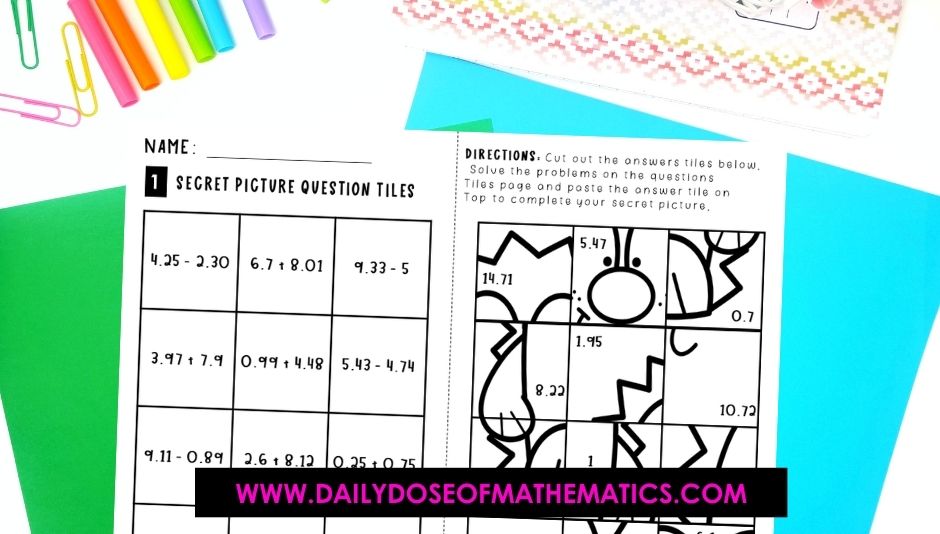
Why not try these no-prep adding and subtracting decimals activities PDF mystery puzzle? Here is an example of how it works:
How does this activity work?
Step 1: Download, print and cut the puzzle pieces (students can cut them themselves). Step 2: Solve each decimal problem on the worksheet. Step 3: Match answers to puzzle pieces. Step 4: Reveal the mystery picture!
First, download and print the activity page and cut the puzzle pieces on the right side of the page. You can even tell your students to cut the pieces themselves.
Second, they solve the problem on the left side of the page. They can use the block they are working on to show their work, or even use the back side of the page to show.
Lastly, they find the puzzle picture with the correct answer they have found and paste it on that specific question.
Encourage them to keep on working until they reveal the mystery picture.
This hands-on mystery puzzle activity on adding and subtracting decimals for 5th grade not only helps them with their decimal problem-solving skills but also makes them curious what mystery lies ahead of them.
Want to try this with your students? Sign up below, and get it delivered to your inbox.
Kids in upper elementary classrooms are more inclined to learn math through games because math games provide the same environment as today’s gadgets and screens but with the goal of learning something new.
This is why, in today’s teaching, it is more important than ever to use game-based learning methods in our math classrooms.
In my 10+ years of teaching math to elementary students, I have never encountered a time in my classes when, whenever I pull up a game, my kids do not get excited.
It has always been the case for me, no matter what the type of game is! It can be digital as well as printable but what would never happen with board games or game shows is a dry class with no learning excitement for a hard subject like math.
Honestly, I feel that having printable games or digital game-based activities should be in every teacher’s toolkit. They are a compelling way for kids to connect and engage with your teaching content. Still not convinced?
Here’s a list of why math games are important and how to integrate them into your lesson planning.
1. Enhanced Engagement during Math Class
This is what we all want? I mean, I do! And the best way to increase your class engagement is by using math games to make learning more interactive and exciting.
Gamification helps develop critical thinking skills, which are essential for children’s future success. Students are more likely to participate and stay focused when they play a game in pairs, compared to just working through a set of problems on a worksheet.
So, make your kids work in pairs next time you want them to add some accountability to your math lessons. The added accountability helps them push each other and encourages a sense of responsibility.
Looking for some fun games? Melissa, a fellow teacher, coach, and TpT author, has a blog post that can give you a comprehensive idea of the benefits of using math board games in classrooms.
2. Improved Understanding with Math Games
Understanding is the most important part of the learning process. It is the integral part that should be focused on during lesson planning.
If your kids can understand the basics of any concept, like fraction operations or the order of operations, they will be able to think through them, understand them, and solve problems on their own, which should always be the goal.
This collaborative environment that is created as a result of their teamwork can help them feel more comfortable sharing their thought processes and strategies with their class fellows.
With games, we can present kids with the same math problems in various formats like multiple choice, true-false, or even open-ended, which then helps students to see concepts from different angles.
This is crucial as it deepens their understanding and helps them apply math skills in various real world situations.
During my lessons I try to give kids as many practice problems as possible, but after we have
ended a lesson I prefer other formats like multiple choice or true false using interactive activities or riddles to check their understanding and see where the gaps are!
3. Immediate Feedback
Of course, getting feedback is important! But what’s more important is making it fun not just for kids but for you too. I try to incorporate self checking games during lessons because of the immediate feedbackkk!
We all want our kids to rise and shine but none of us want to go through the painful time taking act of grading and checking the assessments and creating the report cards.
That’s why math games can actually be a handy tool. It provides us with a way to keep ourselves on top of all the stuff other than teaching by utilizing the power of active learning, allowing students to practice and reinforce their skills in an interactive way.
It allows students to quickly see the results of their actions and understand what they need to improve. This immediate reinforcement can increase their confidence and motivate them to learn more.
4. Fun and Motivation
Let’s be honest: It is a chore to make math enjoyable and personalize activities for every kid. However, I believe learning is not only enjoyable with games; students are more than ready to engage with the material. Math games can turn a challenging subject into a fun and rewarding experience, which enhances a positive attitude towards math.
Digital games can be easily integrated into your lesson plans and are great for individual or small group work. One way is to customize games for different skill levels, making sure that all students, regardless of their abilities, are challenged appropriately and can progress at their own pace.
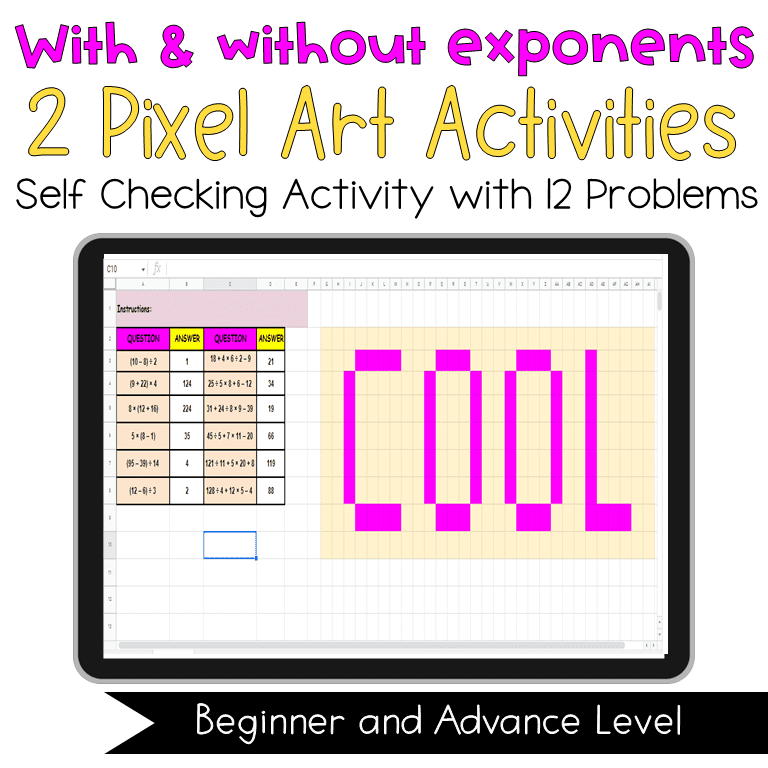
You can create different stations with various math games, like “Digital Fraction and Decimals Pixel Art Bundle.” Just assign students one of the activities and keep them engaged by exposing them to different types of problems.
Another way is to organize math game tournaments or challenges inside the classroom to add an element of friendly competition. However, this can even create a challenge of managing competitiveness among students. For this, make sure to emphasize the importance of teamwork and collaboration more. This can motivate students to practice more and improve their math skills.
Lastly, have students discuss what they learned and reflect on their strategies after playing. This will help solidify their understanding and encourage them to think critically about problem-solving techniques.
Math games are a fun and effective way to review important math concepts like decimal operations inside classrooms. Incorporating math games into your classroom can transform the way your students learn and engage with math. Making lessons interactive, engaging, and fun will help your students develop a deeper understanding and a love for the subject.
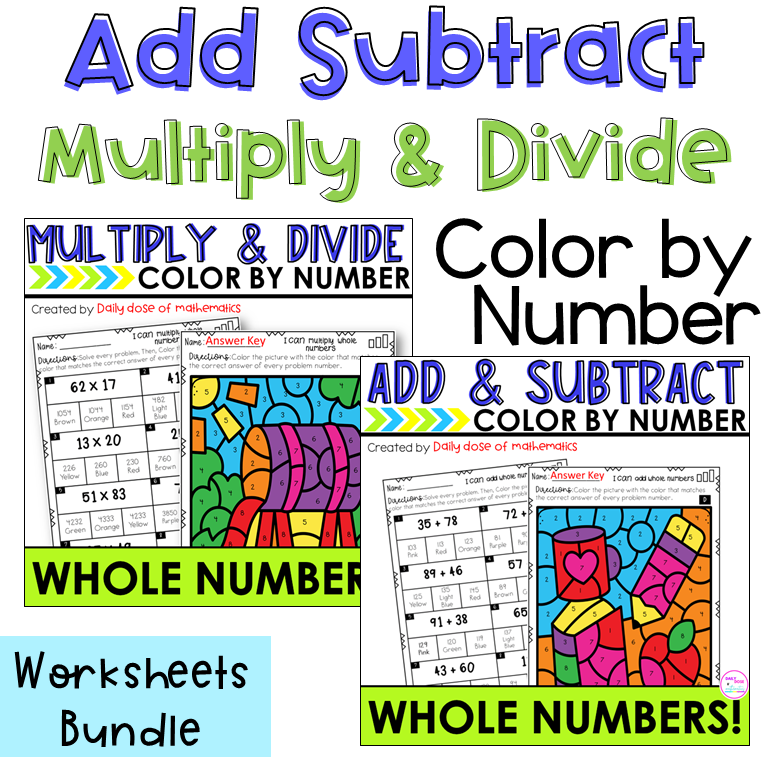
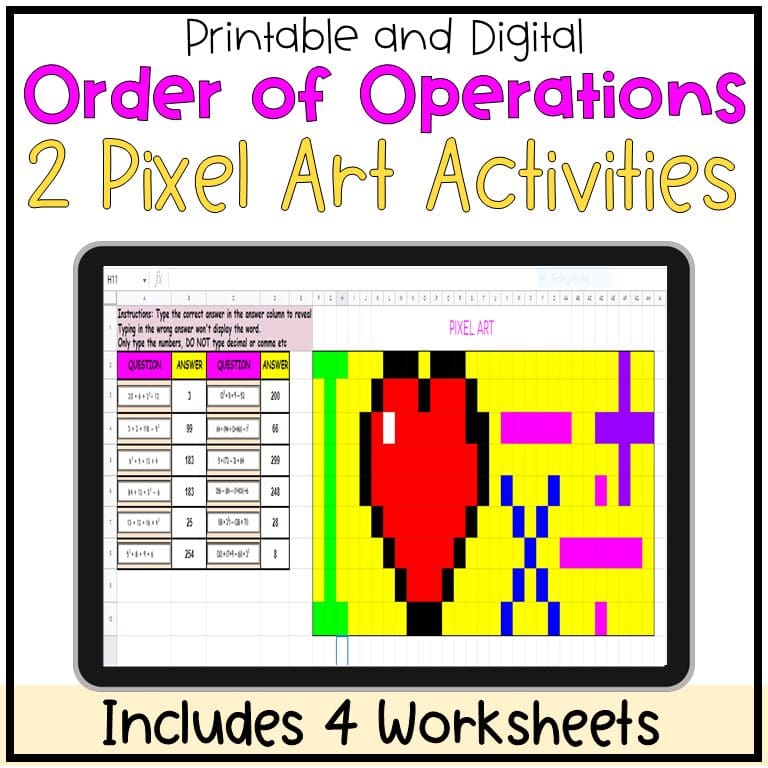
Using color by number activities in one of my favourite ways to bring excitment and fun inside classroom. I cannot tell you how much my kids look forward to using these for any topic or theme day.
Seriously its one of the best way in my opinion to keep them on the task while still interested in practicing math during math centers.
Try using the if your kids are hitting a math practicing roadblock. We even display the art result they produced in our classroom or gallery. Students feel super prod when I do that.
So today let’s discover five easy ways you can implement math color by number worksheets so you can have an engaged class that’s excited to work on them.
What is a Color by Number Worksheets:
Color by number worksheets aren’t just art and math combined today, instead they are a sure way to give your kids a more engaging and educational experience that they might miss out on during a traditional learning environment.
This way of practicing math provides a structured way to kid’s daily math practice. Today, I’m about to sow you how I use them to add engagement for any topic you want to teach be it fraction operation including word problems or order of operation along with decimal operations.
Why to use Color by number worksheets for developing understanding:
Using art in our daily learning is a fantastic way to increase our kid’s educational experience. Think of it this way: your kids solving math problems and revealing a historical place, figure, or even a themed art piece to set the mood for some festive spirit.
Coloring is also a calming activity that reduces stress and keeps them focused on the task while developing fine motor skills. This is one of the reason why I use color-by-number worksheets as a terrific way to keep them on track with their daily math progress while having fun.
Customizable Math Teaching Tool:
Every child is different, and no 2 kids can learn the same way. Customizing color by number worksheets to fit their needs and learning styles can drastically boost student’s engagement.
Here is how I achieve this. I display the finished color by number worksheets inside our classroom or hallway, which encourages students to perform better and acts as a reward for their hard work.
Develops Emotional Intelligence:
This type of activity not only gets student’s creative juices to follow but also keeps them calm and organized. This enhances their emotional intelligence and stamina to endure more demanding challenges in the learning process, which we as a teacher always strive for.
Independent and Self-Checking Practice:
If I had to pick one reason among all the above, this one would always surpass the rest. The most important thing any teacher wants is to cut down the time used for grading so we can actually do more of what we Love, aka “TEACHING“.
Color by number worksheets are a fantastic way to facilitate independent practice of topics like area of complex figures, order of operations during the math center activities or the morning bell work, or you can even leave them for a sub day and still get the teaching stuff done while you are away.
During my elementary math classroom, I like having games and activities that are not prep.
Why? Well, because it is easier for teachers to set them up and grade, and on top of that, kids ALWAYS love it when I teach subtraction and addition using board game worksheets.
In this blog post, I’m going to share 3 of the best resources you can use in your classroom to teach 3 digit subtraction and addition using worksheets.
First of all, teaching 3 digit subtraction and addition with and without regrouping isn’t just necessary at the start of the year. In fact, it’s better to set up the material as a year-long series resource that you just pull up and instantly use to teach.
Honestly, it can be hard to make something that you can use all year long. At least, it was always hard for me to decide what to use for practicing this basic addition and subtraction skill.
To overcome this problem, I created several 3 digit subtraction and addition worksheets that I keep with me whenever I need them during class.
Here are a few of them that you can use to make your life easier.
1. 3 Digit Subtraction and Addition Worksheets
As the name suggests, addition and subtraction with regrouping worksheets are best used when we are introducing these concepts to kids.
What you want at this stage is to allow your students to practice the skills they have learned without any distractions.
Once they have practiced enough, you can then use advanced pedagogical activities to reinforce their practice, like printable math board games, digital activities, or even coloring math worksheets.
This excites the students to work on their basics and get their practice done correctly.
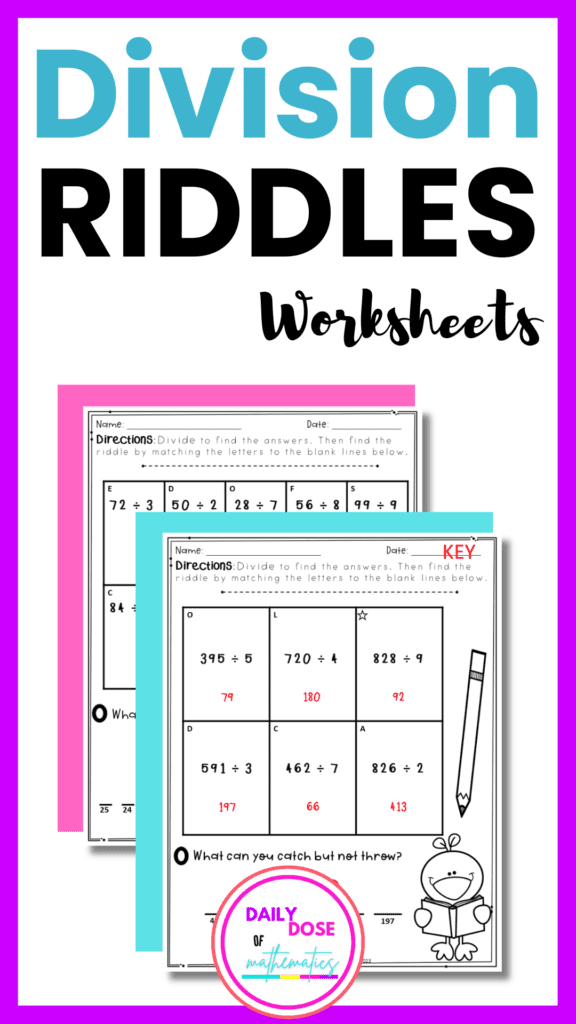
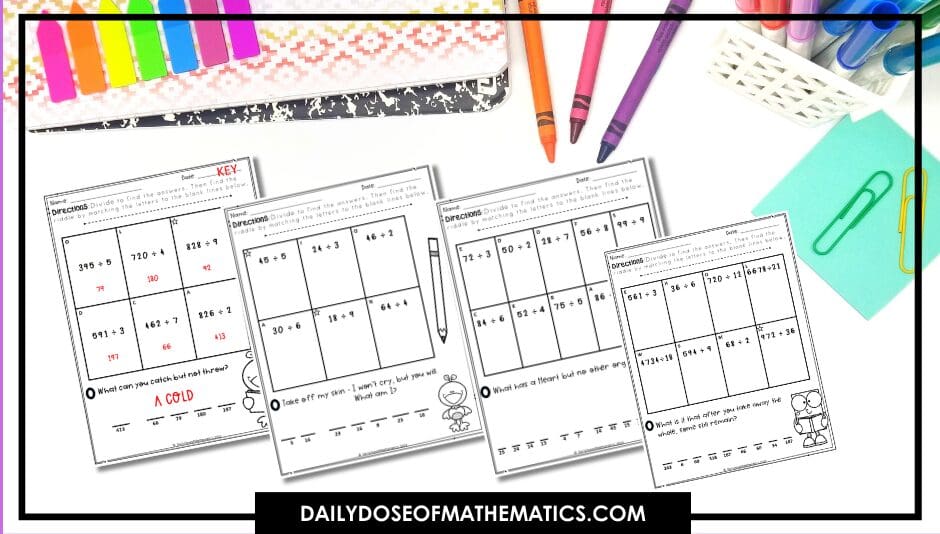
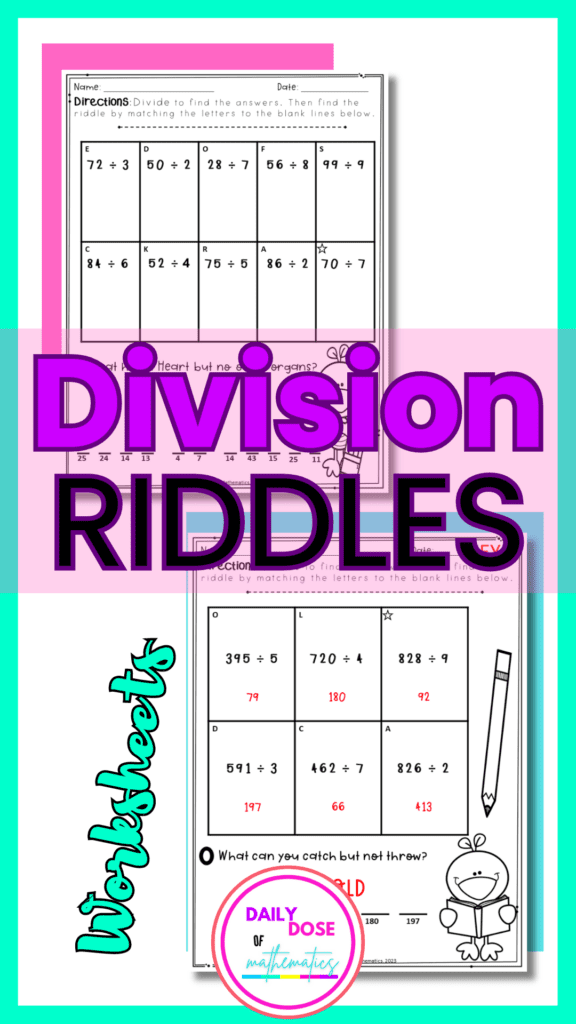
2. Addition and Subtraction Riddles Activity Worksheets
Honestly, who does not love to solve riddles? In my classroom, I always find my kids excited to practice math when done with riddles worksheets.
This activity is the single most used activity throughout my addition and subtraction practice class. Riddles not only keep them engaged in working on math but also keep them excited to know what the answer to the secret question is.
So if you want to make your kids practice 3 digit addition and subtraction, use riddle activities to keep them excited about working on their daily practice.
Another option would be to use it as a center activity or homework to reinforce what they have learned.
3. Solve The Room 3 Digit Addition and Subtraction Activity
Let’s face it math is a tough subject for some kids.
And whether you are new to teaching or you have been teaching for quite some time.
It can get frustrating to keep your kids engaged and excited to try new concepts. It can feel boring to go through the same activities day in and day out. But the good news is that it does not have to be!
If you want to make this tedious task more fun and engaging for your kids, WHY not incorporate the Solve the Room activity in your weekly math activities list?
It is not only fun and highly active, but can also be used to assess your student’s individual understanding of the concepts.
Here is how it works:
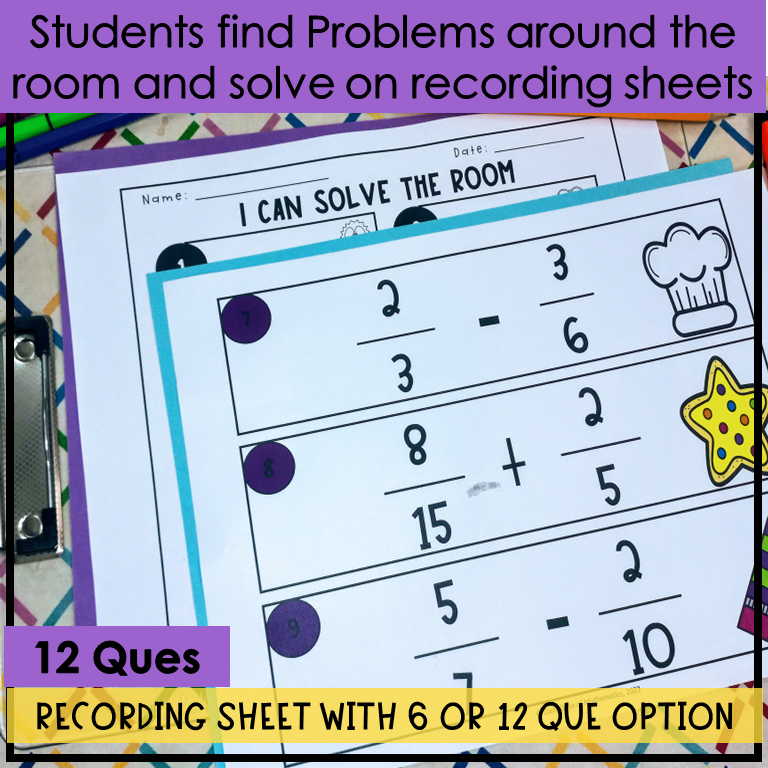
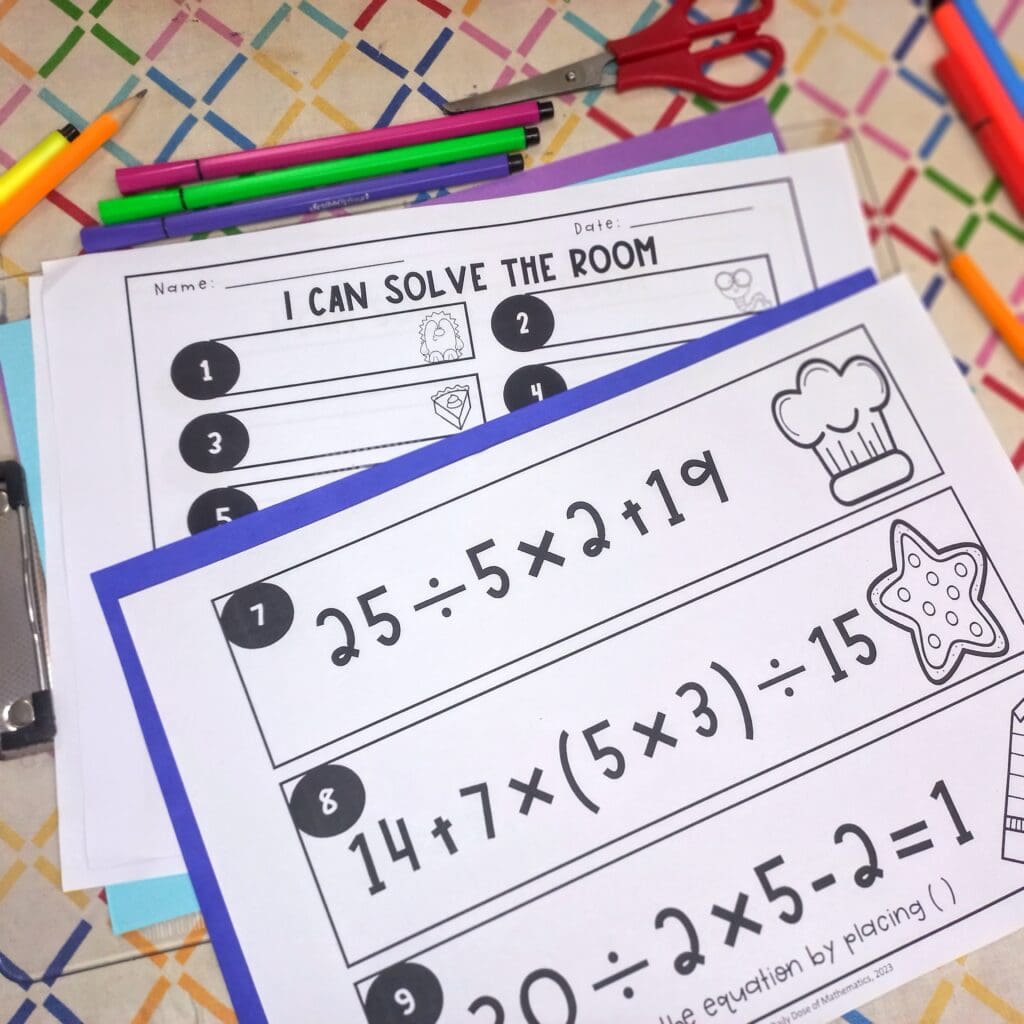
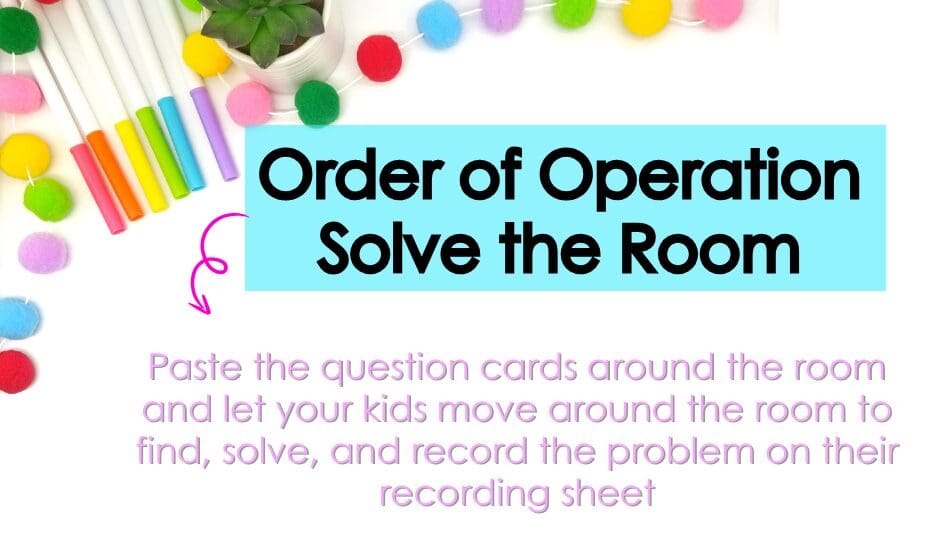
You place the question task cards at different stations inside your classroom. Give each of your students a recording sheet that they can use to solve and write their answers.
Students hop from one station to the other, solving the problems. If they get stuck, they can come to me for some help.
You can use Solve the Room activities for every 5th grade math topic. I use it for almost every 5th grade math topic, like Addition and Subtraction of Whole numbers, Fractions, and Decimals.
But just in case you do not want to make these activities yourself and want to save your valuable time, then I have one inside my TPT store for you to check out. Click here to check!
Do you want this Valentine’s Day to be the best math learning day for your kids while adapting fun and educational activities for your lesson? I got you covered so you do not have to spend a lot of your precious time thinking about what to plan for the day. In this post, I will discuss a wide variety of Valentine’s Day activities including puzzles, color-by-number games, and interactive math games, which not only captivate students’ attention but also help them learn essential math skills.
Want to know the best part? You don’t have to do anything except for taking the printouts and handing them over to your students. Good deal, right?!
Spread Math Love using Valentine’s Day Fraction Puzzles and Reinforce the Skills!
Puzzles are a great way to incorporate hands on experience in your teaching. You can use simple sorting puzzles like these Valentine’s Day adding and subtracting fractions with unlike denominators to develop math skills while providing them with gamification to enhance their learning experience. These puzzles provide a playful approach to problem solving and encourage interactive learning. You will enjoy watching your students observe how the puzzles combine to create beautiful Valentine’s Day themed images.
These activities not only enforce the faction operations skills but also help in developing a collaborative environment where kids learn to work alongside their peers and have to develop teamwork and enhance their social skills.
Engaging Valentine’s Day Activities with Word Problem
I get how difficult it can be to make kids understand and practice word problems on top of that pair it with plain boring worksheets and all you get is a recipe for disaster in class. So, how do you manage to keep students excited while keeping your lessons on point and still moving the needle? Try using fun and interactive worksheets with a touch of coloring to increase focus while staying on track.
Don’t have time to create one, no problem I have done all the grunt work for you and created this highly intriguing Valentine’s Day-themed activity “Addition and subtraction activities along with word problems”. It’s a perfect way to exercise your students’ 3 digit addition and subtraction problem solving skills in a love filled way! These activities have an enjoyable twist on the traditional learning word problems. Your students will enjoy this one and so will you.
Valentine’s Day Solve the Room Activities
Why worry about making students get tired or bored while practicing math? Why not use some unconventional ways to keep our math classes mesmerizing while challenging students at the same time? The “Valentine’s Day Solve the Room” activities are designed to do just that.
These Solve the Room activities cover basic math skills like 2 digit addition subtraction along with 2 digit multiplication and division. Use them and see kid’s faces lit with joy. All you have to do is put the question cards around the room and students need to find them, solve them, and record the answers in their record sheets.
The mere activity of walking and solving math turns it into an amusing and delightful physical experience! Students get so engaged and it’s captivating to watch them calculate and get excited!
Color By Number Activities: A Great Way to Integrate Art and Math.
For you teachers out there, do not forget to try out Color By Number Activity during the season of Love! It’s not only perfect for kids who love coloring, but the Valentine’s Day theme makes it even more fun and relevant for February.
The activity is a perfect combination of art and math. While coloring and designing something beautiful, students can learn basic addition and subtraction skills. And, the best part! they get to create a gorgeous piece of artwork that you can then hang in the hallway as a reward! It’s a win-win for both learners and teachers.
Try out these activities as a way to make math enjoyable and intriguing for students, while also keeping the holiday spirit alive. With these activities, students will have the chance to learn these topics and practice the essential skills, while having fun.
Moreover, these are great to break up your typical lesson plans and add a fun and lively aspect to your classroom. So, take advantage of these holiday-themed math activities to keep your students engaged and motivated to learn!
Fun Multiplication and Division Independent Activities Pack
Do your kids struggle with poor working memory while reviewing math multiplication or division facts? Do their weak mental math skills frustrate you? Try using interactive activity – it’s super fun and educational! Incorporating this packet into your teaching arsenal could revolutionize the way your students perceive math. No longer just numbers on a page, math becomes a gateway to creativity, problem-solving, and festive fun. It’s an excellent way to maintain academic rigor while also acknowledging the season, making it a win-win for teachers aiming to keep their lessons fresh and students motivated.
Want to get the insider’s Fun? Join the Club here!
Teaching fractions can feel like a constant struggle, especially in 5th grade. Students need to work hard on their fractions and decimals skills to become fluent in these areas.
But here’s the good news: the right activities can completely change how students understand and engage with fractions.
So if teaching fractions feel like a constant struggle or your students lose interest halfway through the lesson… fret not because you are not alone.
In this post, you’ll find easy and engaging 5th grade fraction activities, including games, movement-based tasks, and hands-on practice that help students build confidence and actually enjoy learning fractions. So, let’s dive in.
1. Fun Unlike Fractions Games
One of the most important steps in teaching fractions to upper-elementary students is to make them meaningful.
This starts with making sense of what fractions mean and why it is important to make the denominators the same before solving any fraction operations.
From what I know, by grade 5 the majority of students are fluent in multiplication facts. So solving unlike fractions is just a matter of practice for them.
What better way to practice than using Games?
Games are a powerful way to practice and review any skill as it combines repetition, motivation and low-pressure learning opportunity for students.
If you are looking for some unique fractions game ideas to implement in your classroom, here is one I would suggest.
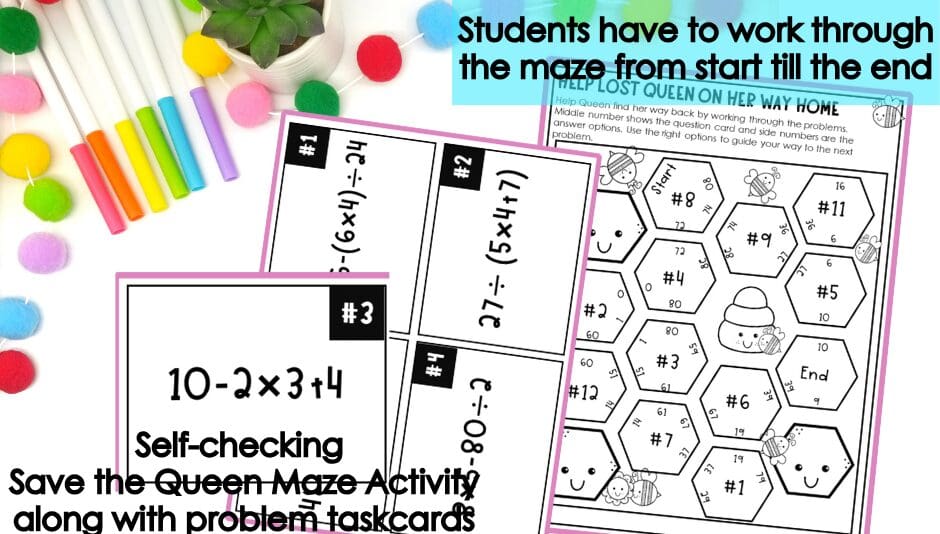
This activity includes a printable self-checking game maze that you can use with your kids to have them practice addition, subtraction, multiplication, or division of fractions with unlike denominators.
Each fraction operations maze activity comes with 12 task cards and a self-checking fun game, which keeps kids inspired to learn without you having to spend all day grading.
The game is story-based, in which your kids become detectives, helping the Queen bee, who is lost in the jungle, return home.
For that, your kids have to work through the problems and move through the maze to bring her back home.
Once the kids have completed the activity, you can use the printable reward card to reward your kid’s hard work and create a positive motivation for them to practice their math skills happily the next time!
Want a free activity to practice fraction skills? Click here to join the community today.
2. Fractions Centers Activities
Math centers are one of the easiest ways to bring structure and engagement into your classroom.
An important part of keeping your math centers engaging and exciting is rotating the learning materials that the students can use during centers.
Here are a few of my favorite fraction centers for practicing 5th grade fractions with unlike denominators and how I use them in math centers!
We love to use task cards and solve the room activities during math groups. You can any topics and have kids move while learning something new.
This is my 5th grader’s favorite activity, as it allows them not to be glued to their desks but to move around the room while working on the problems.
The best part is that it is very easy to set up. All you have to do is print the question cards and place them in different spots inside your classroom.
Next, give students their recording sheets. Kids move around the room, looking for problems with adding and subtracting fractions.
They solve the problems and record their answers on the recording sheets provided.
You can also instruct them to use the back of the recording sheet to show their work, which is always a good idea. If you want to try these activities for your next class, check them out here.
Math centers can be one of the easiest ways to bring structure, engagement, and differentiation into your classroom, especially when teaching fractions.
Because instead of teaching the whole class the same way, using centers allows your students to practice at their level and not the whole class, stay actively involved, and build confidence over time.
Here are the top reasons why you should have one set up for your classroom:
It helps break complex fraction concepts into manageable tasks
Keep your students actively engaged instead of passively listening
It will allow you to differentiate without any extra prep
Gives you time to work with small groups, which is super important
You don’t need 5 fancy centers right away. Even 2–3 well-structured centers can completely change how your fraction lessons feel for both you and your students.
3. Hands-on Fractions Activities
This is where the real understanding happens.
Fractions can feel abstract for many students. But when they can see, touch, and build their learning, everything starts to click.
Hands-on activities are the best way to help bridge the gap between memorizing steps and truly understanding what fractions mean using fraction strip manipulatives.
Why Hands-On Activities Work
• They help kids visualize fraction concepts clearly, so they develop a strong understanding • It is the best way to support struggling learners who need concrete examples • It also encourages deeper thinking instead of rote procedures
For many students, until they have analyzed the topics in multiple ways, things do not click. That’s why this is the moment fractions finally start to make sense for them.
Here are some hands-on activities my kids love and I used over and over again:
4. FRACTION WORD PROBLEM ACTIVITIES
This is where you will find many of your students struggling.
Many students can follow the steps to add or subtract fractions, but when those same skills appear in a word problem, they get stuck.
That’s because word problems require more than computation they require thinking, interpreting, and applying concepts in context.
Here are few of the reasons students often struggle with fraction word problems:
• They need to understand what the problem is actually asking • Deciding which operation to use (add, subtract, multiply, divide) • Work through multiple steps in the correct order • Represent their thinking clearly
So it does not just become math, instead it’s reading, reasoning, and problem-solving all combined in one.
Pro Tip: Start with simpler problems and gradually increase complexity. Your best bet is a mix of:
This helps students feel successful while still being challenged.
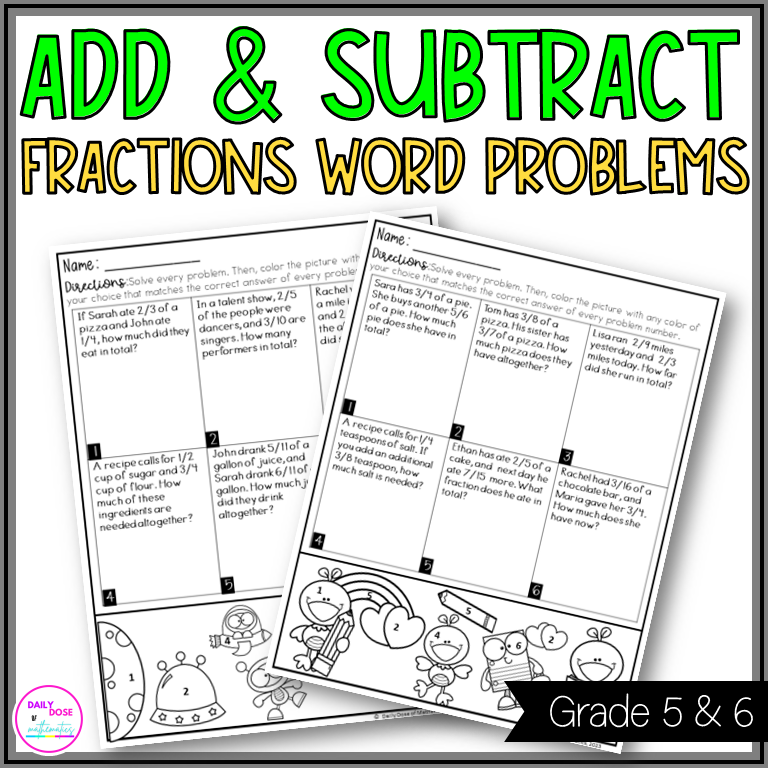
If you’re looking for ready-to-use fraction word problem activities that include both practice and deeper thinking, for math centers or engagement. Here is a color-by-number activity you might like:
5. DIGITAL FRACTION ACTIVITIES
Digital fraction activities are a strong way to keep students engaged in a meaningful practice while giving them the independence to review the concept at their own pace.
Whether you’re teaching in a classroom, assigning homework, or managing distance learning, digital tools make it easier to provide interactive, low-prep, and self-paced practice for your students.
There are a lot of options for digital activities for kids, including interactive digital slides, Boom Cards, digital task cards, digital escape rooms, and other paperless activities.
Mostly digital activities are best for centers where you want them to to work independently without constant supervision.
But the best thing I love about them is how much time these save for teachers on grading and preparations.
You do not necessarily need to use them inside the classroom, you can even assign them to kids as some extra homework practice.
I would say start simple. You don’t need complex tools, basic Google Slides or simple interactive activities can be just as effective as more advanced platforms like Kahoot or Breakoutedu.
Our goal is engagement and clarity, not more complexity.
6. FRACTION REVIEW & TEST PREP ACTIVITIES
One of the biggest challenges with teaching fractions is helping students hold on to what they learned.
They may understand a skill one week, but after moving on to the next concept, it can start to slip away.
That is exactly why fraction spiral review can be so helpful. A strong spiral review gives students repeated practice with the most important fraction skills.
Over time, instead of teaching a concept once and hoping it sticks, students keep on repeating the skills so it actually sticks.
In 5th grade, that means reviewing fraction concepts and equivalence, adding and subtracting fractions with unlike denominators, mixed numbers, multiplying fractions, dividing unit fractions, and solving real-world fraction word problems.
When these skills are revisited in a structured way, students build a stronger understanding, better retention, and more confidence.
I created this 5th grade fractions spiral review as a test prep resource to do exactly that.
7. TIPS FOR TEACHING FRACTIONS EFFECTIVELY
Fractions usually click better when students see them, touch them, talk about them, and compare them before jumping into rules.
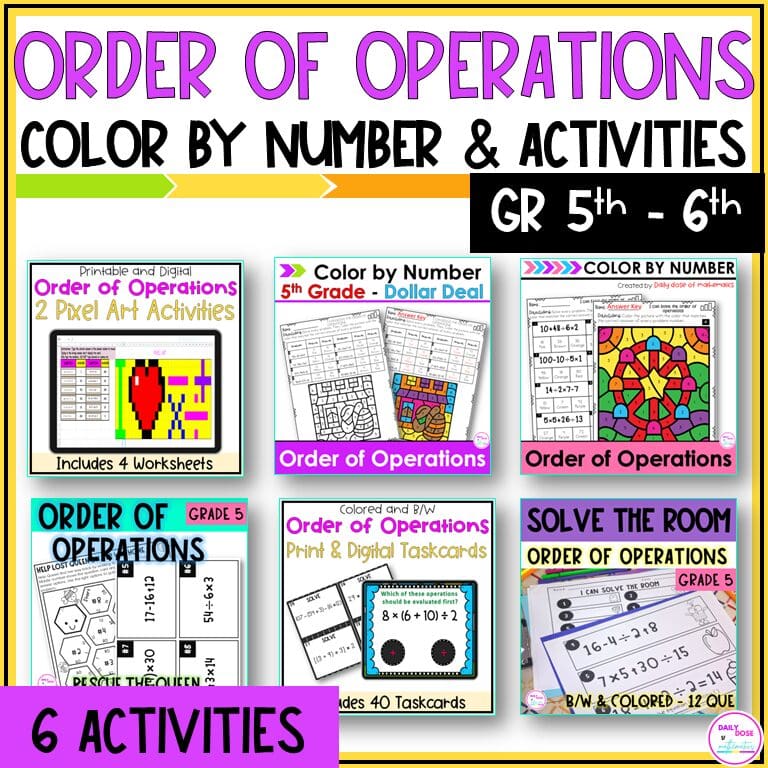
I get it, I get it, as an upper elementary math teacher, we can teach order of operation to 5th grade students for what can feel like forever. So long that you may feel like you are running low on new ideas to teach it anymore.
All these are my favorite activities. They include both printable and digital options so there is something for everyone.
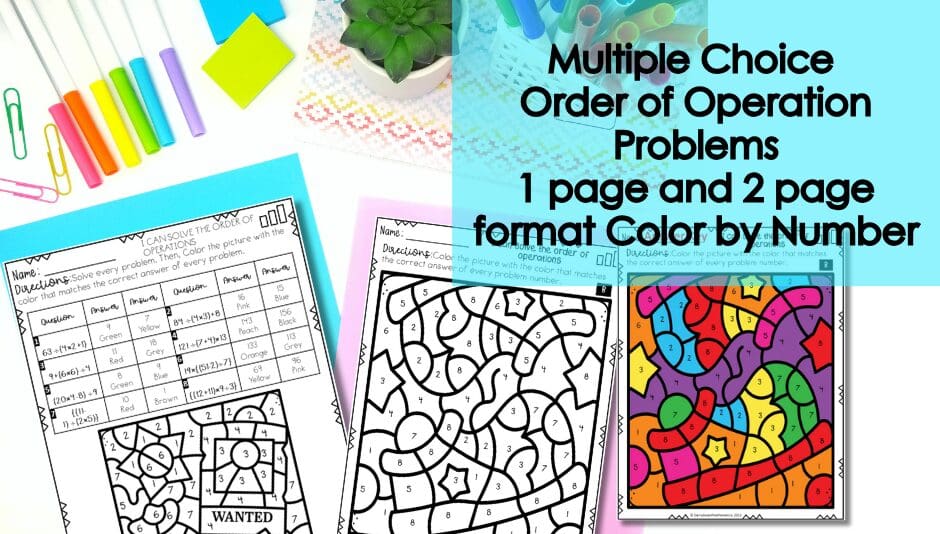
Color by Number Order of Operations Activities
Getting students excited about the order of operation topic can be a challenge but not if you are using the right activities to engage and get kids to think more about the order of operation.
Students do not just need to know how to solve order of operations problems. It is equally important that kids learn why learning about the order of operations is important.
It’s a way to make sure every one of us arrives at the same answer to a particular problem.
You can teach them various strategies like “please excuse my dear aunt sally” to make it easier for them to remember.
You post task cards with math problems for your students to work on at different stations or different areas of your classroom.
Then give each student a recording sheet to record their answers.
Students move around the room to find these problems, solve and record them on the given recording sheet.
Why this is the best activity to try:
Engagement: Traditional worksheets can sometimes bore students, but Solve the Room adds an element of excitement and movement, keeping students motivated and interested.
Concept Mastery: Students often struggle with the order of operations. This activity offers repeated practice in a fun and hands-on way, helping kids to solidify their understanding.
Classroom Management: By moving around the room and focusing on different problems, students are less likely to become restless or distracted, leading to better classroom management.
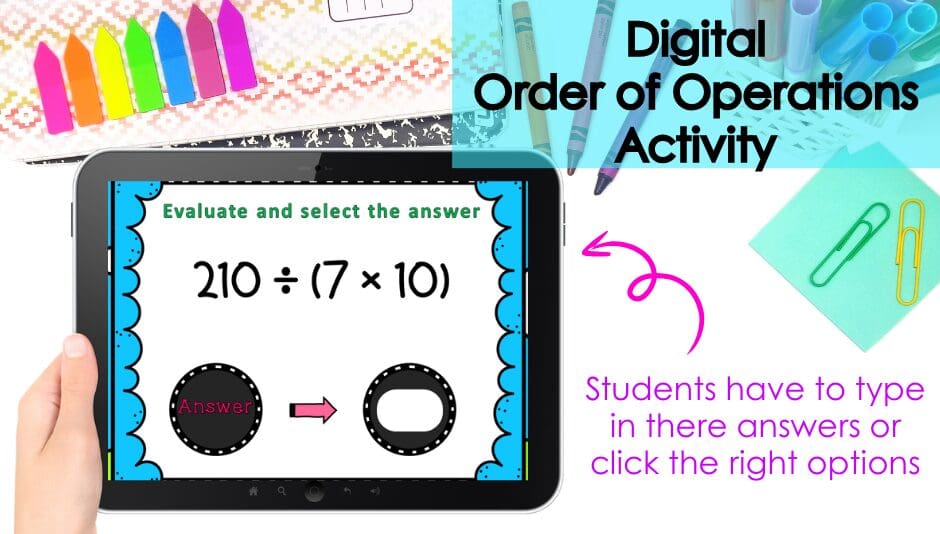
Free Order of Operations Practice Digital PowerPoint Game Activity
Couldn’t find something you were looking for?
No worries… here is a FREE fun activity to help your students master the order of operations?
This interactive game is perfect for bringing some cheer into your classroom while reinforcing this essential math skills.
What is it?
This engaging PowerPoint game challenges students to solve order of operations problems with a winter theme.
Each correct answer helps them progress through the game, while a wrong answer directs kids to try the problem again.
It helps to reinforce learning and makes sure that students understand the concepts before moving on.