If integers make your students’ eyes roll, you’re not alone. Integers and their opposites, especially negative numbers, can feel abstract and confusing.
This is where students start mixing up subtraction with “opposites” or struggle to see how positive and negative numbers relate.
The good news? With the right visuals and activities, integers don’t have to be this overwhelming.
In fact, you can make them click for students in a way that actually sticks.
1. Start with Real-Life Examples
The fastest way to make integers feel less intimidating in grade 6 is to ground them in everyday life. A few examples that always land with my students are:
Temperature: Show how 10° above zero and 10° below zero represent opposites.
Elevation: Compare a mountain peak to a cave below sea level.
Money: Talk about having $20 in your bank account versus owing $20.
The goal here is to make the concept more relatable using the example, so the students can connect faster.
You can even ask them to share their own examples, maybe like sports scores or video game points going into the negative.
2. Use a Number Line for Integers and their Opposites
A number line is the foundation for understanding integers. You should first focus on making sure students understand integers using a number line.
When students see numbers laid out visually, they notice the symmetry: every positive number has a negative counterpart that is at the same distance from zero.
Highlight how +5 and -5 “mirror” each other.
Reinforce the idea that zero is the center, it’s neutral ground, so its negative is also 0.
Use visuals (a giant number line taped on the floor works wonders).
This method makes integers less of an abstract idea and more of a pattern they can see and interact with.
3. Introduce Integer Opposites as “Math Twins”
Kids love simple, fun language. Try describing opposites as math twins:
+3 and -3 are twinssame distance, different sides of zero.
Use hand motions: one hand moves right, the other moves left.
Have students physically “be the numbers” by standing on either side of a taped zero line in the classroom.
This builds a physical connection, visualizes the concept and gets them out of their seats (which is always a win).
4. Make it Interactive (Coloring + Games)
Here is the thing: students learn best when they do. Practicing is the key to success in math. Bring integers to life with:
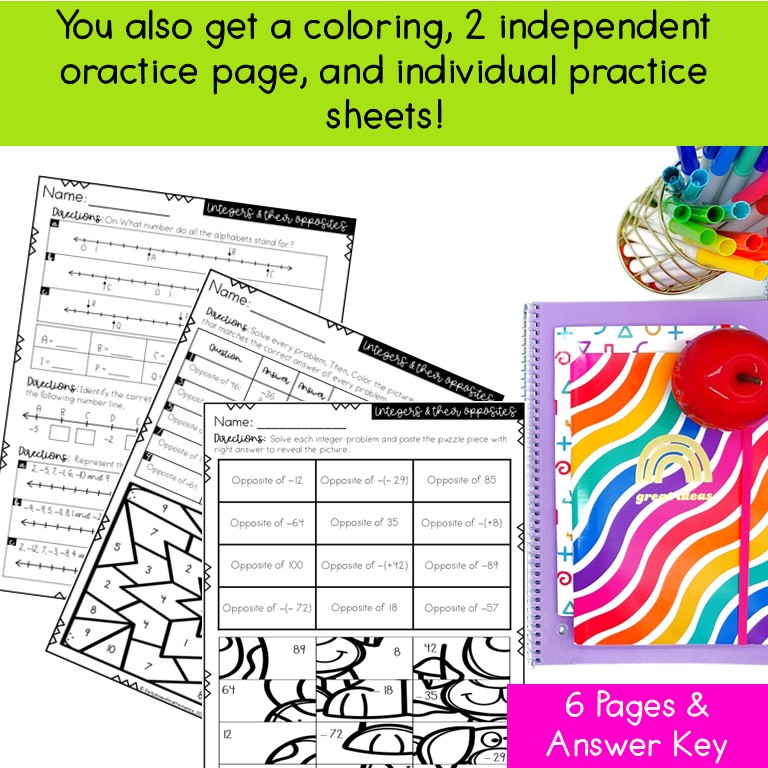
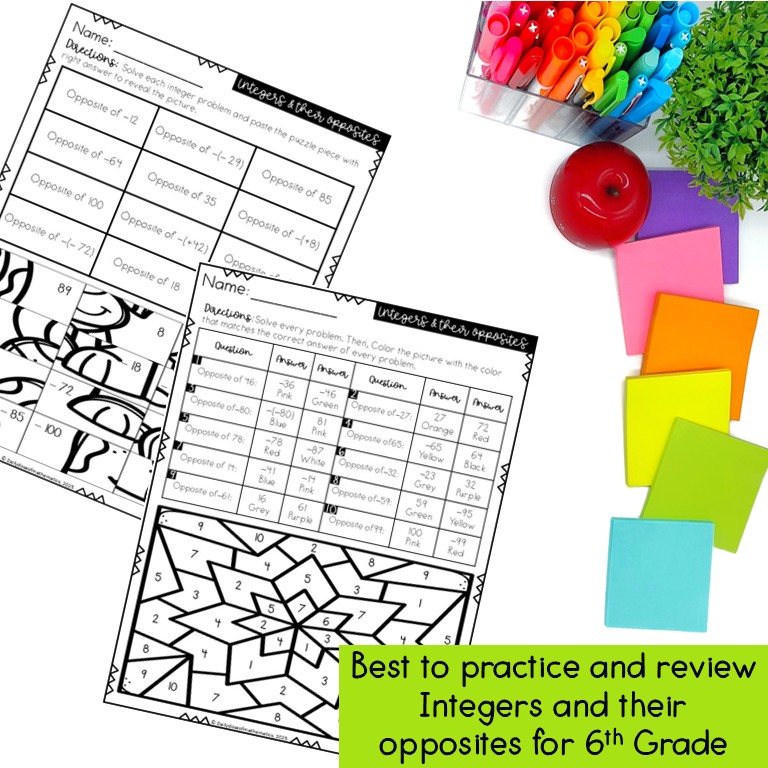
Coloring activities where each answer reveals a picture.
Matching games: pair positives with their opposites.
Scavenger hunts: hide cards around the room and let students find “integer pairs.”
Even after a lot of practice and explaining with strong visuals, some misconceptions pop up again and again: Here is a list of a few that I encounter again anad again:
Mixing up subtraction with opposites: For this, clarify that “the opposite of +4 is -4,” but “subtracting 4” is a different operation.
Thinking zero has an opposite: Reinforce that zero is its own buddy it has no opposite.
Believing negatives are always “smaller”: Explain that while -10 is less than -2, the distance from zero tells us size in terms of opposites.
Take a few minutes to address these early, and you’ll prevent bigger struggles in later concepts.
6. Wrap It Up
Teaching integers doesn’t have to be a headache for you or your students.
By combining real-life examples, number lines, and interactive activities, you’ll help students finally see opposites in a way that sticks.
And if you’d like even more freebies for your math classroom, join my email list, where I share grab-and-go resources like fraction operations for busy math teachers like you.
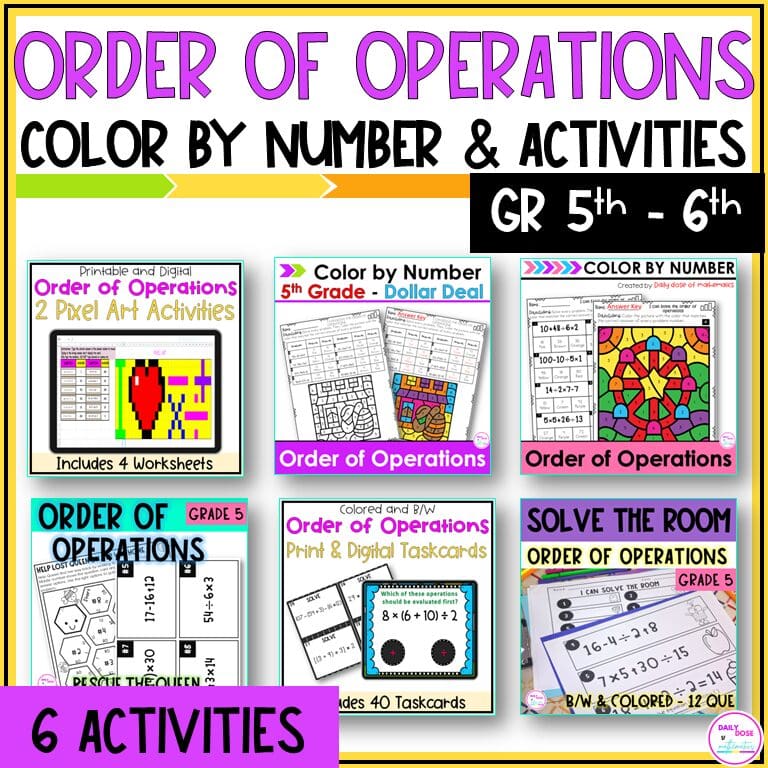
I get it, I get it, as an upper elementary math teacher, we can teach order of operation to 5th grade students for what can feel like forever. So long that you may feel like you are running low on new ideas to teach it anymore.
All these are my favorite activities. They include both printable and digital options so there is something for everyone.
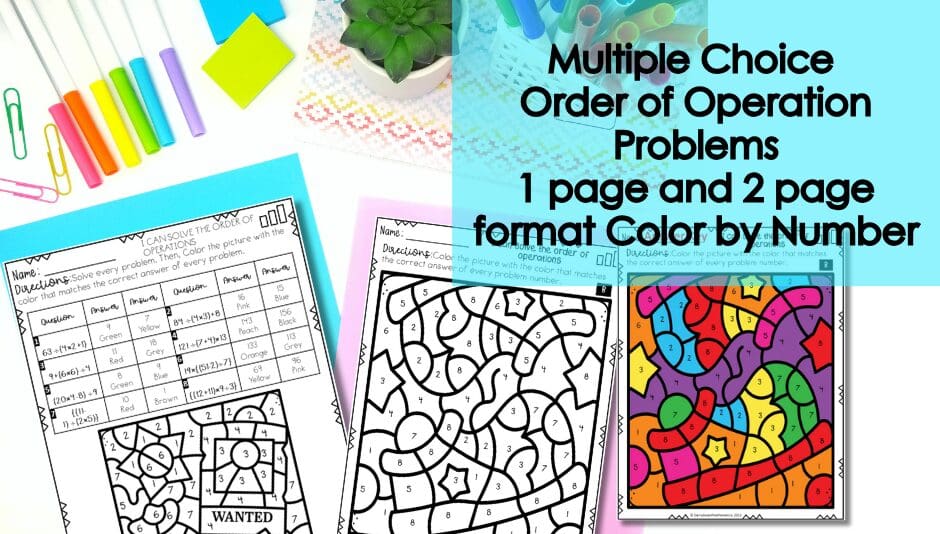
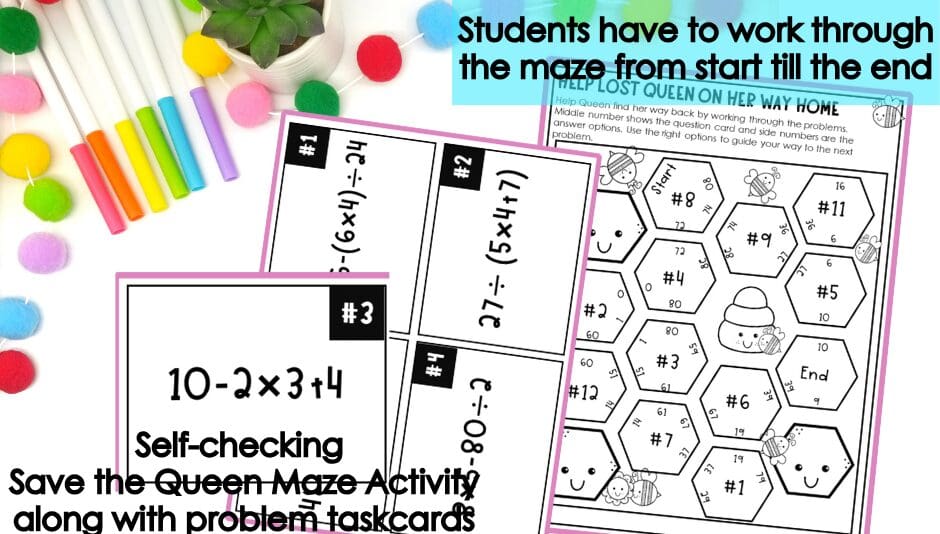
Color by Number Order of Operations Activities
Getting students excited about the order of operation topic can be a challenge but not if you are using the right activities to engage and get kids to think more about the order of operation.
Students do not just need to know how to solve order of operations problems. It is equally important that kids learn why learning about the order of operations is important.
It’s a way to make sure every one of us arrives at the same answer to a particular problem.
You can teach them various strategies like “please excuse my dear aunt sally” to make it easier for them to remember.
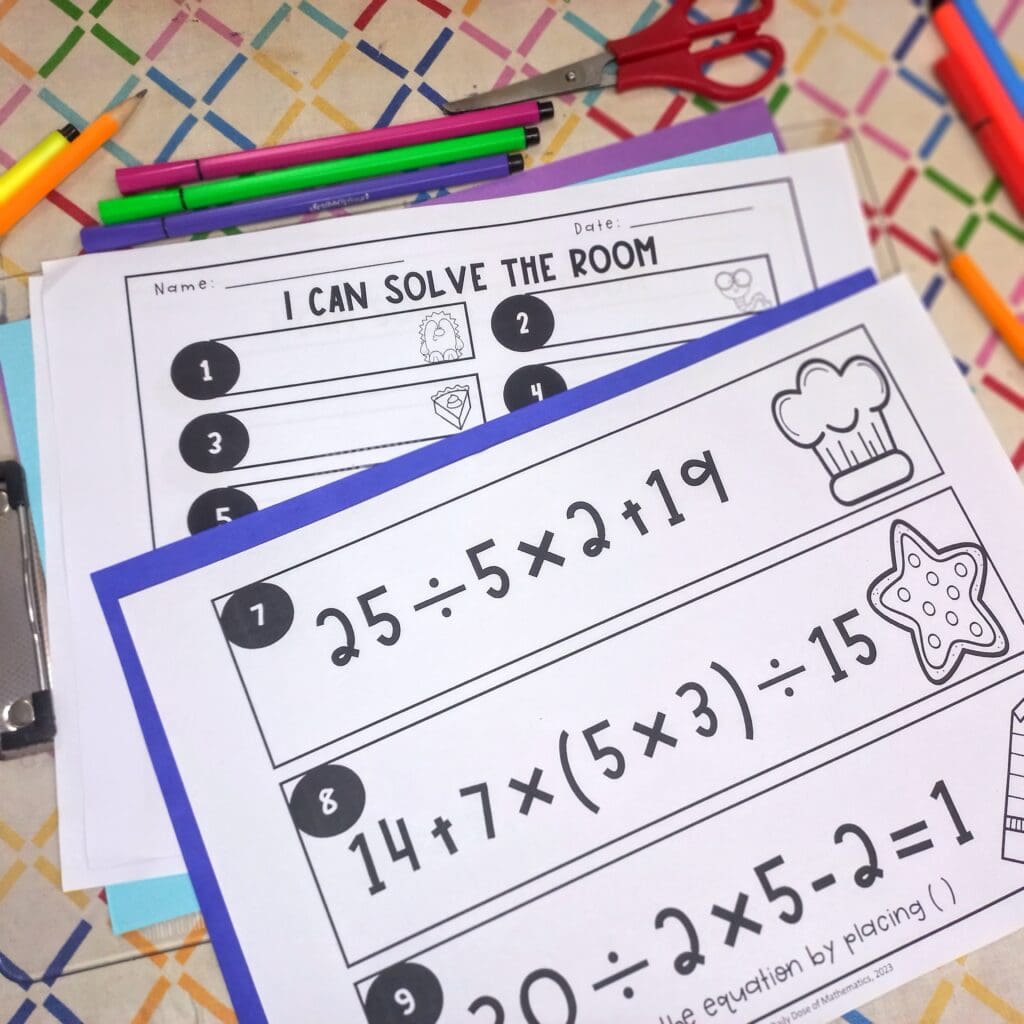
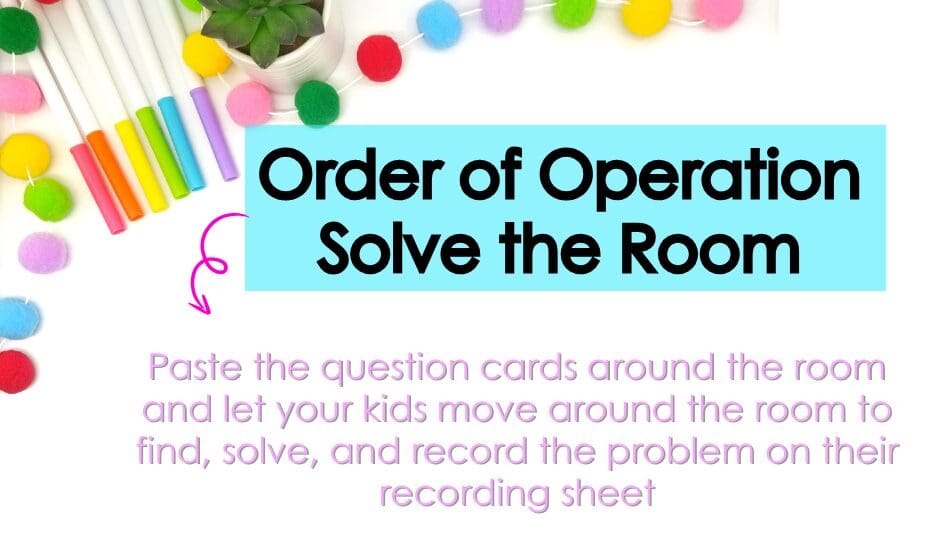
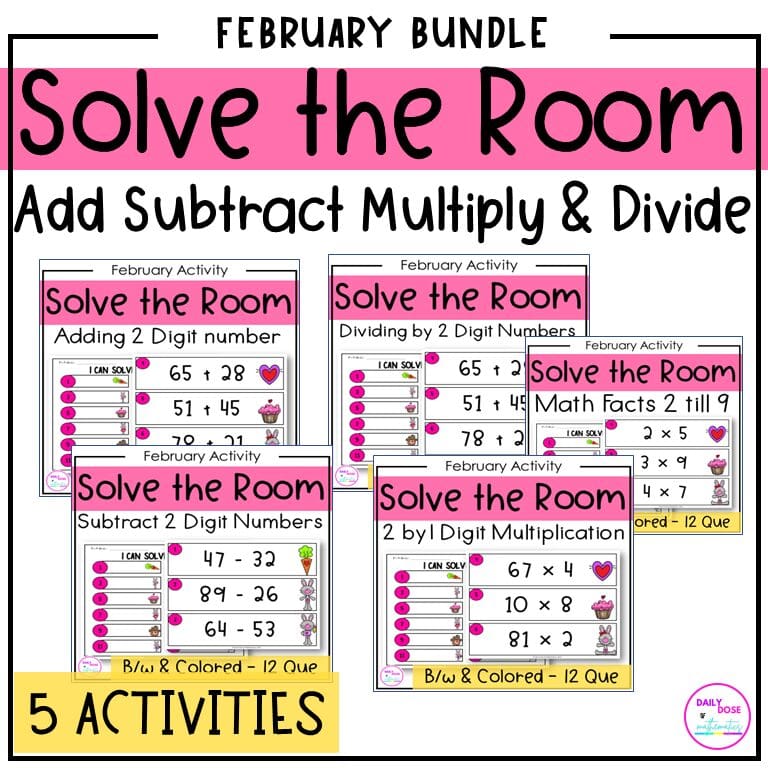
You post task cards with math problems for your students to work on at different stations or different areas of your classroom.
Then give each student a recording sheet to record their answers.
Students move around the room to find these problems, solve and record them on the given recording sheet.
Why this is the best activity to try:
Engagement: Traditional worksheets can sometimes bore students, but Solve the Room adds an element of excitement and movement, keeping students motivated and interested.
Concept Mastery: Students often struggle with the order of operations. This activity offers repeated practice in a fun and hands-on way, helping kids to solidify their understanding.
Classroom Management: By moving around the room and focusing on different problems, students are less likely to become restless or distracted, leading to better classroom management.
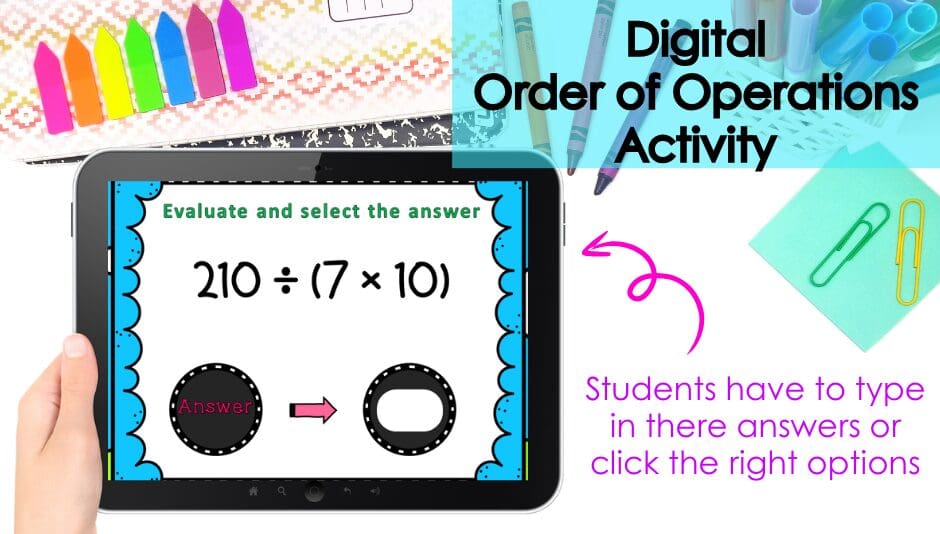
Free Order of Operations Practice Digital PowerPoint Game Activity
Couldn’t find something you were looking for?
No worries… here is a FREE fun activity to help your students master the order of operations?
This interactive game is perfect for bringing some cheer into your classroom while reinforcing this essential math skills.
What is it?
This engaging PowerPoint game challenges students to solve order of operations problems with a winter theme.
Each correct answer helps them progress through the game, while a wrong answer directs kids to try the problem again.
It helps to reinforce learning and makes sure that students understand the concepts before moving on.
The end of the school year is such a weird mix of emotions in the classroom. Your 5th graders are excited, everyone is a little sentimental, and honestly… completely checked out the second anything looks like a worksheet. Sound familiar?
It’s a struggle for most of use like EVERY SINGLE YEAR.
But here’s the thing: end-of-year math review does NOT have to feel painful (for you or them).
It can actually end up being one of the most fun parts of the year… especially if you’ve got the right activities ready to go.
Today I’m sharing three of my go-to end-of-year math activities for 5th grade. These are the ones my students actually get excited about (which is saying a lot this time of year).
And the best part? They’re still hitting all the major 5th grade math skills… so you’re keeping things fun and making sure nothing important gets missed. Total win.
Those last few weeks of school? The goal is basically to keep students engaged without it turning into chaos or busywork that nobody cares about.
These three activities make it a whole lot easier. No starting from scratch, no overthinking… just grab what you need and go. Let’s dive in.
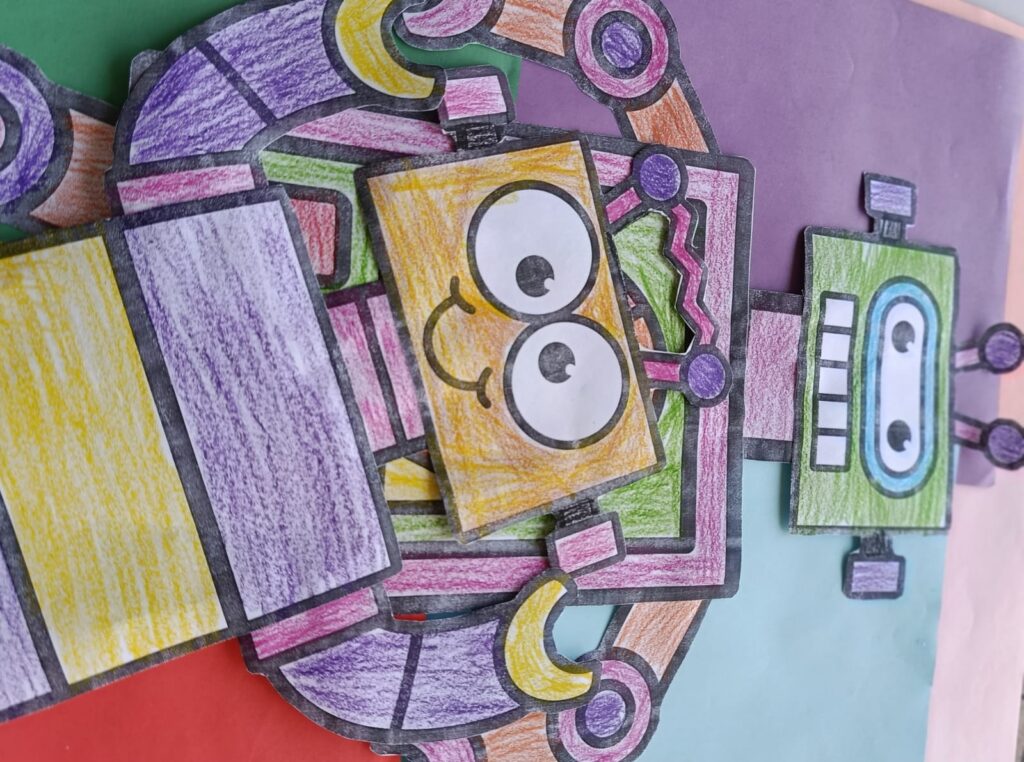
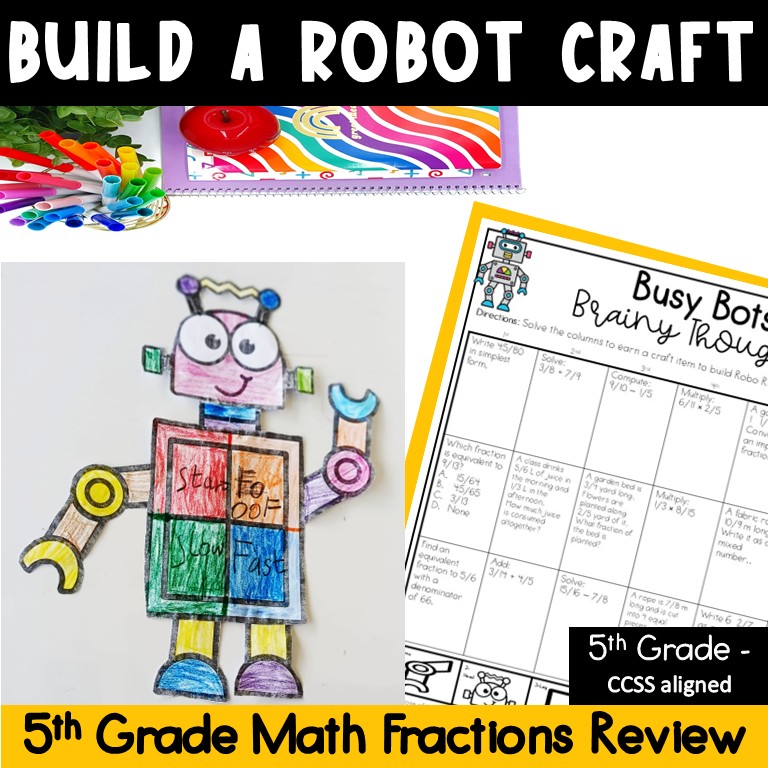
1. EOY Math Craft — Build-a-Robot Craftivity
If you really want to see your 5th graders light up, bring out a math craft. I’ve learned over the years that when you mix creativity with actual content, engagement goes way up and this Build-a-Robot activity is a perfect example of that.
Here’s how it works: students solve math problems focused on fractions, decimals, and division. Every correct answer earns them a piece of their robot to cut out and build. By the end, you’ve got a classroom full of unique robots and honestly, one of the cutest bulletin boards of the year.
What I love most about this is that it doesn’t feel like a review. Students get so into building their robot that they stop complaining about the math and just… do it. You’ll see them actually sticking with problems instead of checking out.
It’s perfect for those last couple of weeks of school, a math celebration day, or even just a Friday when everyone (you included) needs something different.
Also, super low prep. Print it, hand it out, and you’re good to go. No complicated setup, which is exactly what you need this time of year.
Word Problems (real-world application and critical thinking)
I use this in a bunch of different ways depending on what we need.
You can run it as a whole-class review, break it into stations, send it home as a summer bridge packet, or use it to help your students heading into 6th grade feel a little more confident.
It’s one of those resources you’ll keep coming back to because it just makes your life easier. Everything is laid out clearly, the pages are student-friendly, and you can either assign the whole thing or just pull the sections you need.
Task cards are one of my go-to ways to get students reviewing without them feeling stuck in their seats all day.
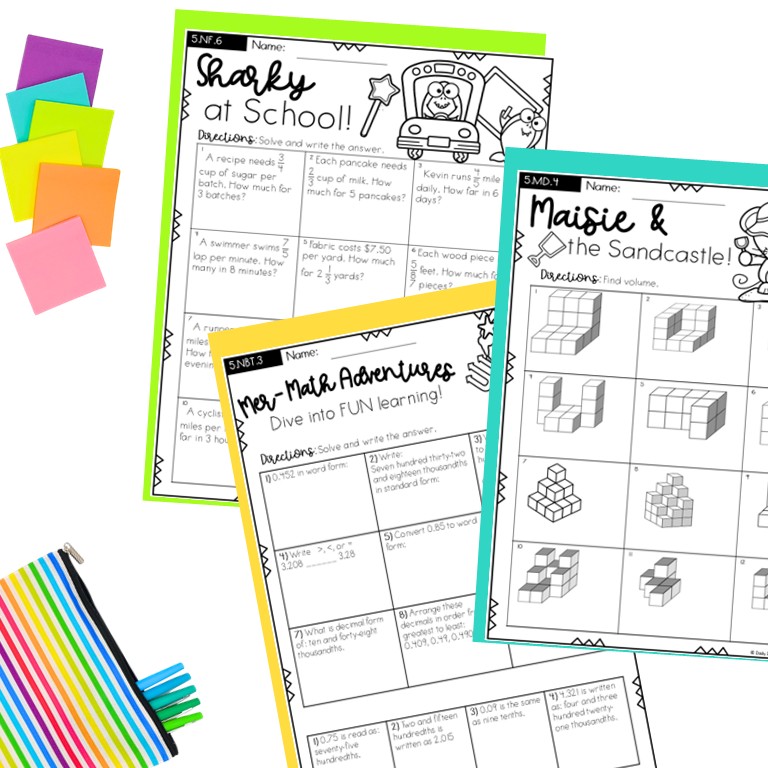
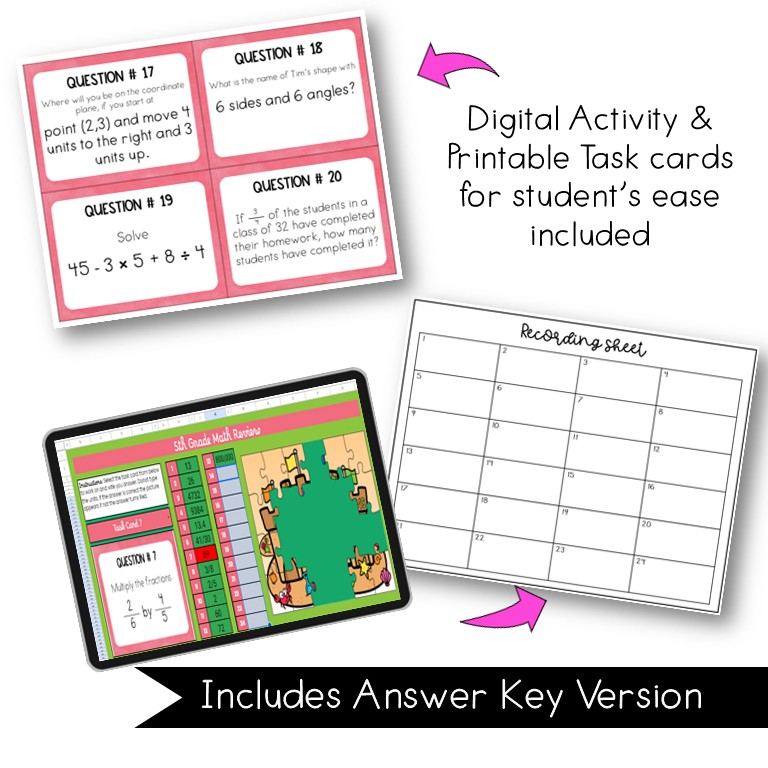
This set of 24 task cards works as a full spiral review of what your 5th graders have learned and it keeps things moving, which is key this time of year.
Students work through problems covering:
Order of Operations
Adding and Multiplying Fractions
Decimal Operations
Volume
Coordinate Plane
Geometry and Shape Classification
Real-World Word Problems
There’s also a recording sheet included, which makes it really easy to manage. Whether you’re using this as a center or just want some built-in accountability.
I personally love running this as a Scoot activity where students rotate around the room. They’re up, they’re moving, and they’re way more engaged than if they were stuck in their seats.
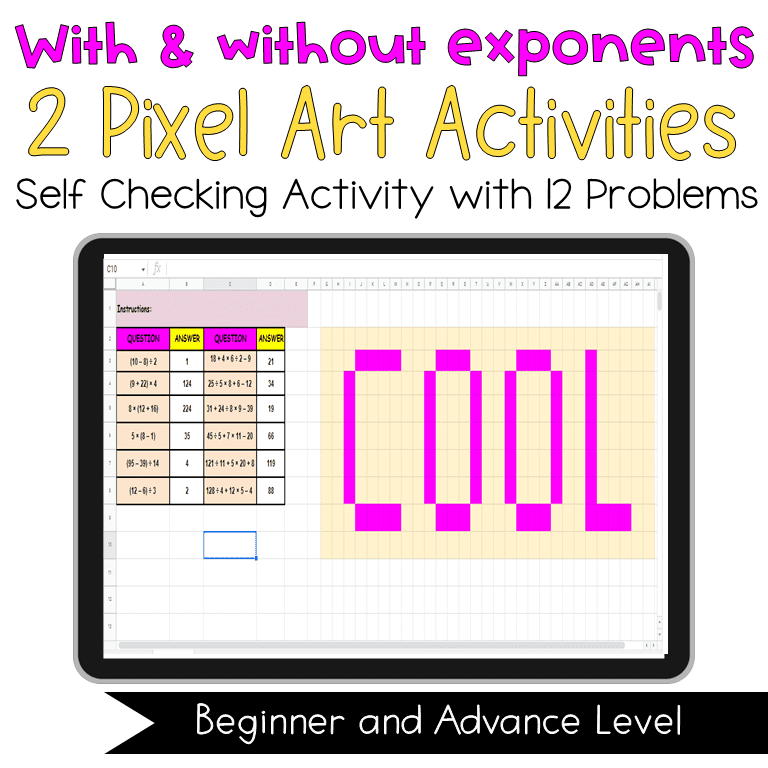
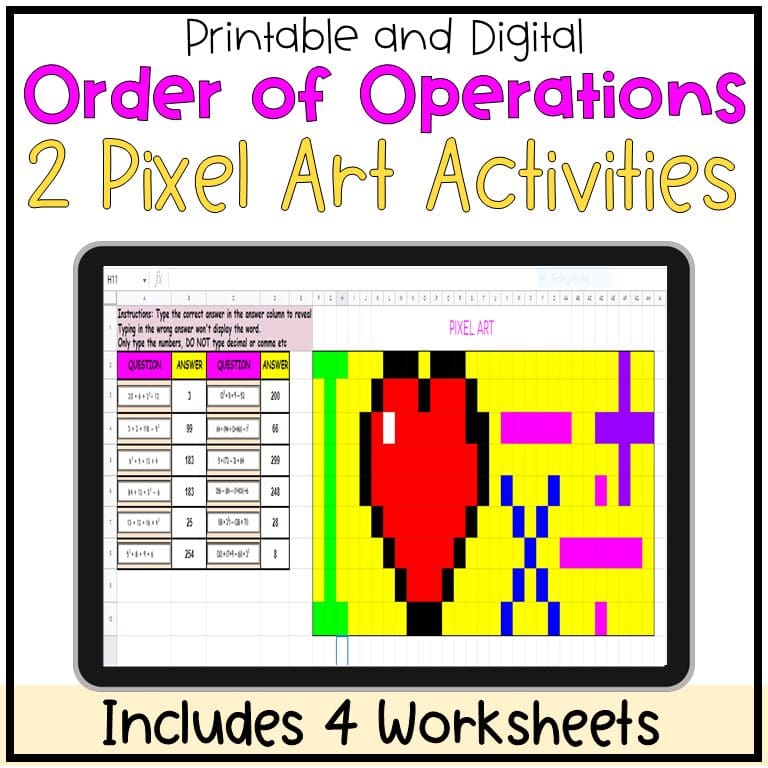
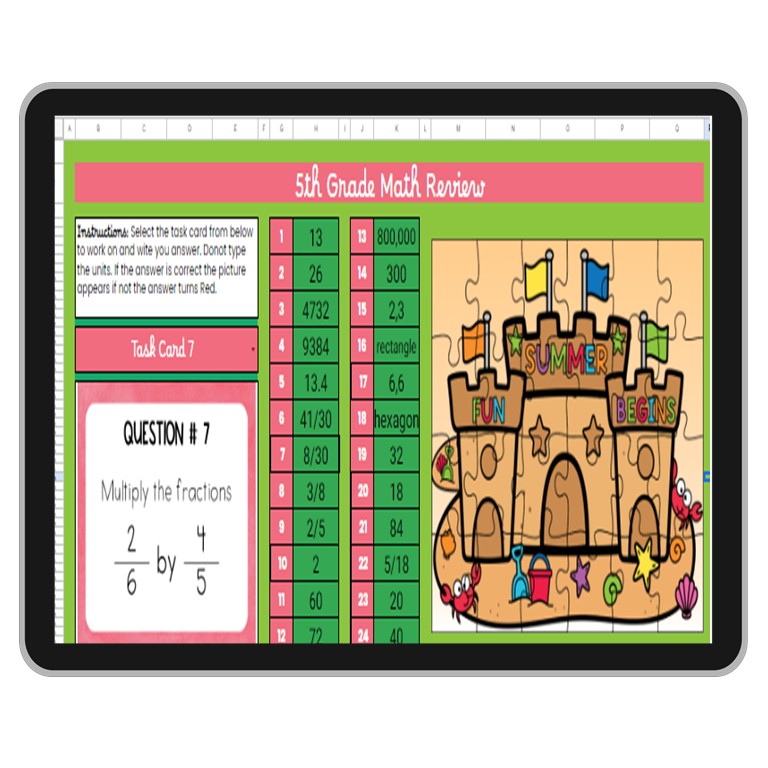
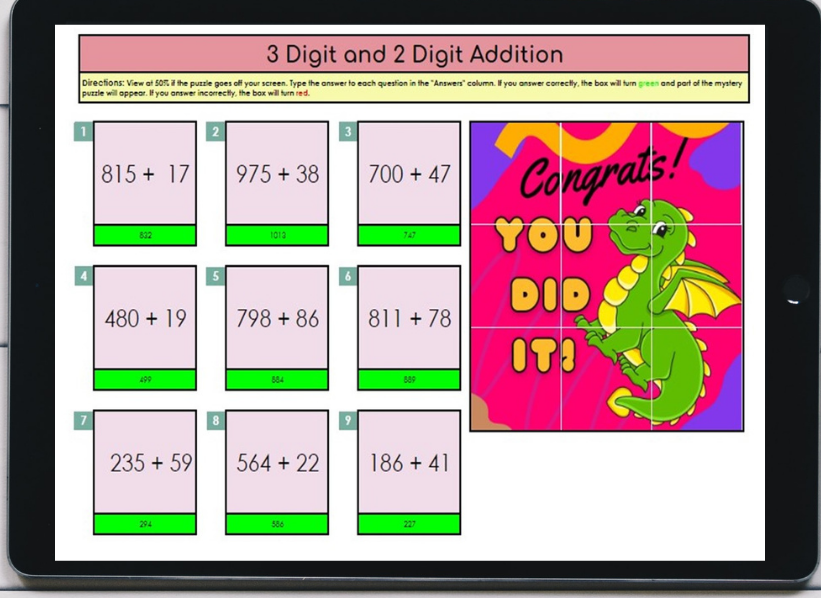
The pixel art piece is such a fun bonus especially for tech days. As students answer questions, a mystery image starts to appear little by little.
I swear, they get so into this part. It feels more like a game than a review, which is exactly what you want at the end of the year.
You can use this as a math center, early finisher option, partner activity, or even a whole-class review game it’s super flexible depending on what your day looks like.
Now that you’ve got a few solid activities ready, here’s an easy way to actually make them work during those final weeks.
Mix things up throughout the week so students don’t get bored. Maybe you do the craft one day, task cards the next, and sprinkle in the review packet when you need something more structured.
It doesn’t have to be complicated, just keep it varied.
You can also run the task cards during centers while you pull small groups to hit any last-minute gaps. This was always a lifesaver for me when I knew a few students needed extra support before moving on.
And not gonna lie, the finished robot crafts make the cutest bulletin board. My students love seeing their work up there, and it turns into a fun little end-of-year celebration without a ton of extra effort.
If you want to extend the learning, sending the review packet home as a summer bridge is a great option. It helps keep skills fresh before 6th grade but honestly, it works just as well for end-of-year review or even test prep.
At the end of the day, your students have worked really hard all year.
These last couple of weeks are a chance to keep learning going while also making things feel a little more fun and memorable.
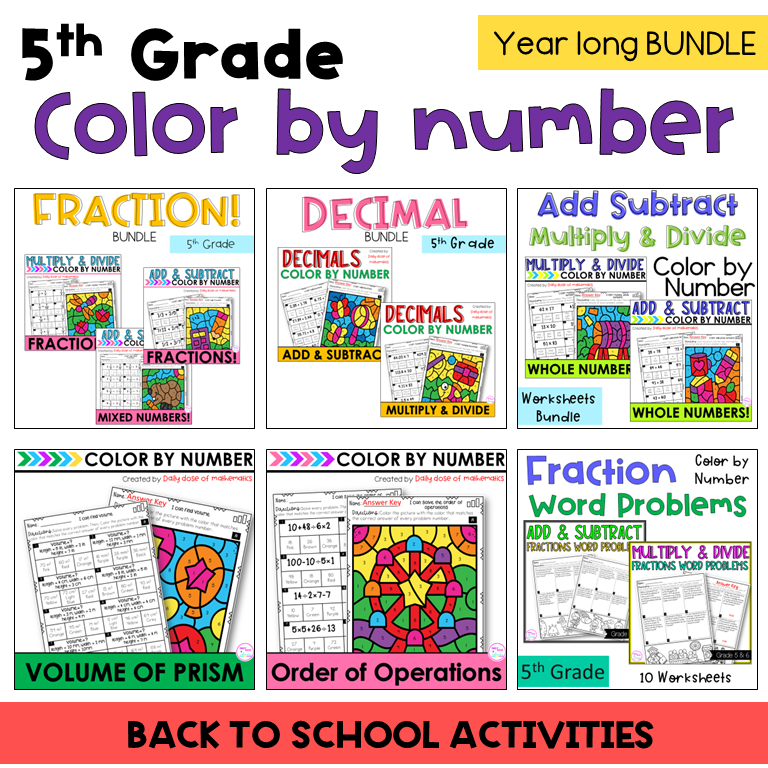
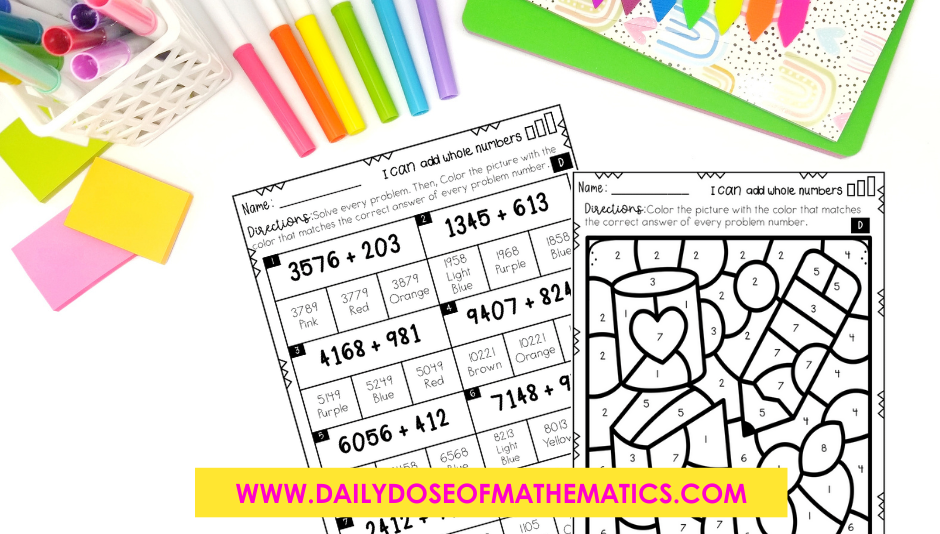
Using color by number activities in one of my favourite ways to bring excitment and fun inside classroom. I cannot tell you how much my kids look forward to using these for any topic or theme day.
Seriously its one of the best way in my opinion to keep them on the task while still interested in practicing math during math centers.
Try using the if your kids are hitting a math practicing roadblock. We even display the art result they produced in our classroom or gallery. Students feel super prod when I do that.
So today let’s discover five easy ways you can implement math color by number worksheets so you can have an engaged class that’s excited to work on them.
What is a Color by Number Worksheets:
Color by number worksheets aren’t just art and math combined today, instead they are a sure way to give your kids a more engaging and educational experience that they might miss out on during a traditional learning environment.
This way of practicing math provides a structured way to kid’s daily math practice. Today, I’m about to sow you how I use them to add engagement for any topic you want to teach be it fraction operation including word problems or order of operation along with decimal operations.
Why to use Color by number worksheets for developing understanding:
Using art in our daily learning is a fantastic way to increase our kid’s educational experience. Think of it this way: your kids solving math problems and revealing a historical place, figure, or even a themed art piece to set the mood for some festive spirit.
Coloring is also a calming activity that reduces stress and keeps them focused on the task while developing fine motor skills. This is one of the reason why I use color-by-number worksheets as a terrific way to keep them on track with their daily math progress while having fun.
Customizable Math Teaching Tool:
Every child is different, and no 2 kids can learn the same way. Customizing color by number worksheets to fit their needs and learning styles can drastically boost student’s engagement.
Here is how I achieve this. I display the finished color by number worksheets inside our classroom or hallway, which encourages students to perform better and acts as a reward for their hard work.
Develops Emotional Intelligence:
This type of activity not only gets student’s creative juices to follow but also keeps them calm and organized. This enhances their emotional intelligence and stamina to endure more demanding challenges in the learning process, which we as a teacher always strive for.
Independent and Self-Checking Practice:
If I had to pick one reason among all the above, this one would always surpass the rest. The most important thing any teacher wants is to cut down the time used for grading so we can actually do more of what we Love, aka “TEACHING“.
Color by number worksheets are a fantastic way to facilitate independent practice of topics like area of complex figures, order of operations during the math center activities or the morning bell work, or you can even leave them for a sub day and still get the teaching stuff done while you are away.
Do you want this Valentine’s Day to be the best math learning day for your kids while adapting fun and educational activities for your lesson? I got you covered so you do not have to spend a lot of your precious time thinking about what to plan for the day. In this post, I will discuss a wide variety of Valentine’s Day activities including puzzles, color-by-number games, and interactive math games, which not only captivate students’ attention but also help them learn essential math skills.
Want to know the best part? You don’t have to do anything except for taking the printouts and handing them over to your students. Good deal, right?!
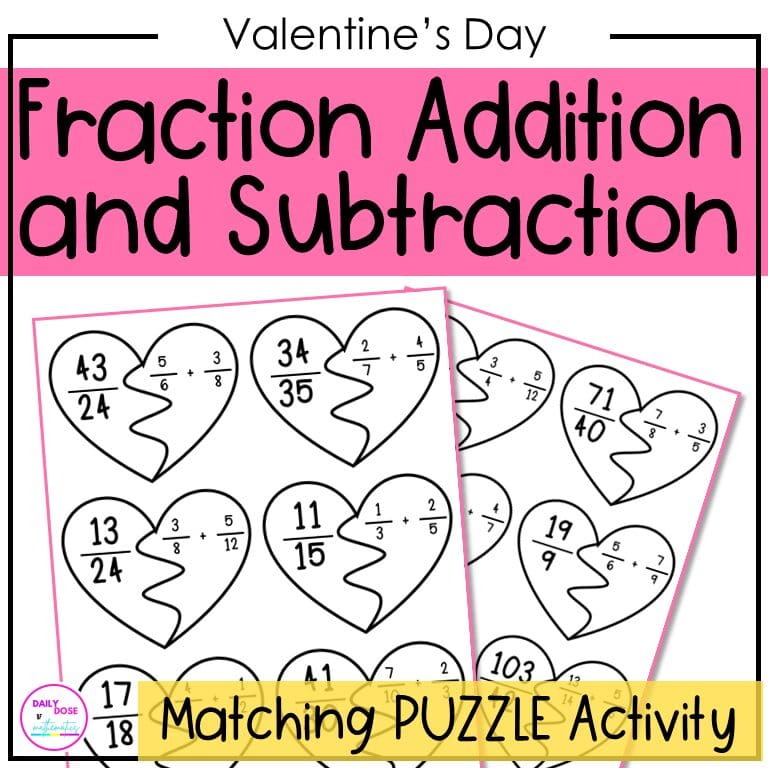
Spread Math Love using Valentine’s Day Fraction Puzzles and Reinforce the Skills!
Puzzles are a great way to incorporate hands on experience in your teaching. You can use simple sorting puzzles like these Valentine’s Day adding and subtracting fractions with unlike denominators to develop math skills while providing them with gamification to enhance their learning experience. These puzzles provide a playful approach to problem solving and encourage interactive learning. You will enjoy watching your students observe how the puzzles combine to create beautiful Valentine’s Day themed images.
These activities not only enforce the faction operations skills but also help in developing a collaborative environment where kids learn to work alongside their peers and have to develop teamwork and enhance their social skills.
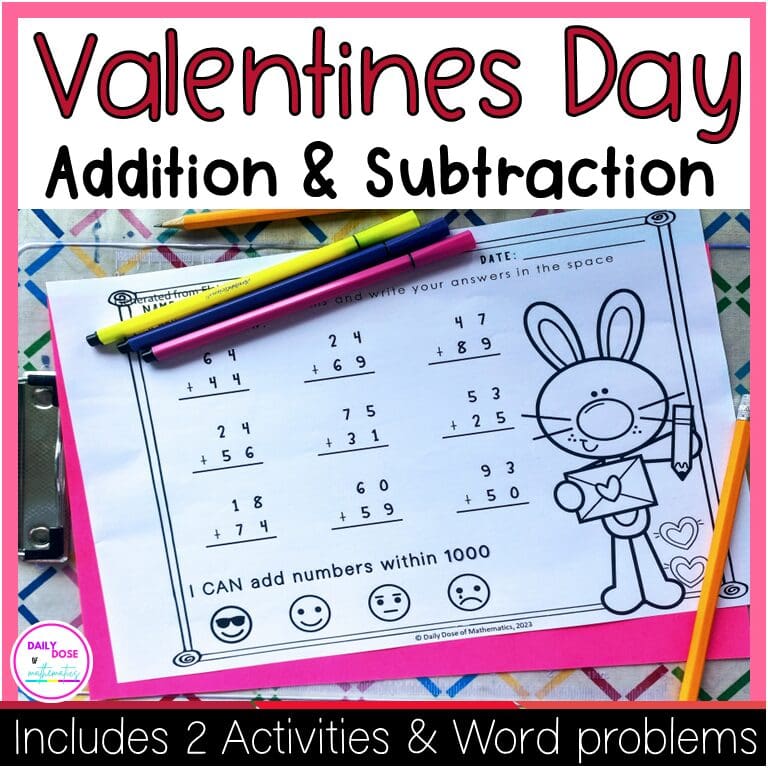
Engaging Valentine’s Day Activities with Word Problem
I get how difficult it can be to make kids understand and practice word problems on top of that pair it with plain boring worksheets and all you get is a recipe for disaster in class. So, how do you manage to keep students excited while keeping your lessons on point and still moving the needle? Try using fun and interactive worksheets with a touch of coloring to increase focus while staying on track.
Don’t have time to create one, no problem I have done all the grunt work for you and created this highly intriguing Valentine’s Day-themed activity “Addition and subtraction activities along with word problems”. It’s a perfect way to exercise your students’ 3 digit addition and subtraction problem solving skills in a love filled way! These activities have an enjoyable twist on the traditional learning word problems. Your students will enjoy this one and so will you.
Valentine’s Day Solve the Room Activities
Why worry about making students get tired or bored while practicing math? Why not use some unconventional ways to keep our math classes mesmerizing while challenging students at the same time? The “Valentine’s Day Solve the Room” activities are designed to do just that.
These Solve the Room activities cover basic math skills like 2 digit addition subtraction along with 2 digit multiplication and division. Use them and see kid’s faces lit with joy. All you have to do is put the question cards around the room and students need to find them, solve them, and record the answers in their record sheets.
The mere activity of walking and solving math turns it into an amusing and delightful physical experience! Students get so engaged and it’s captivating to watch them calculate and get excited!
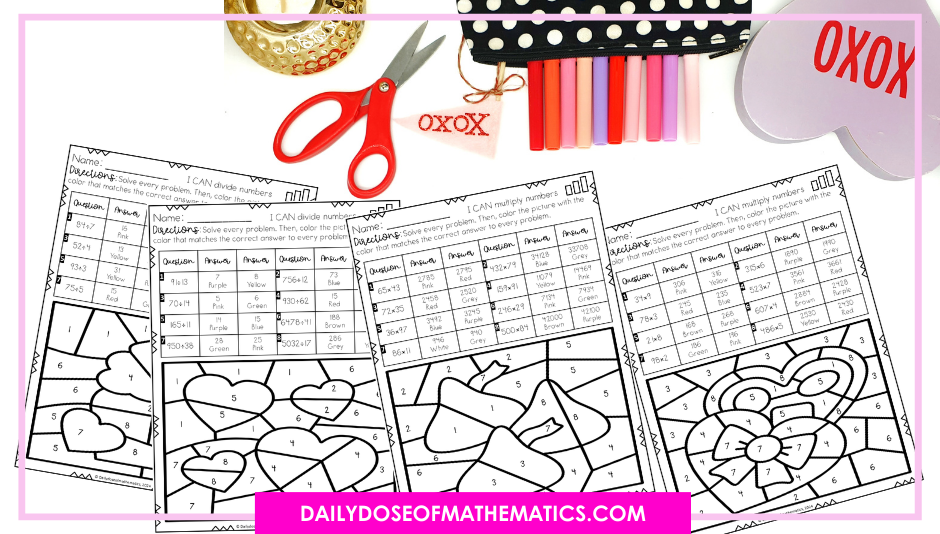
Color By Number Activities: A Great Way to Integrate Art and Math.
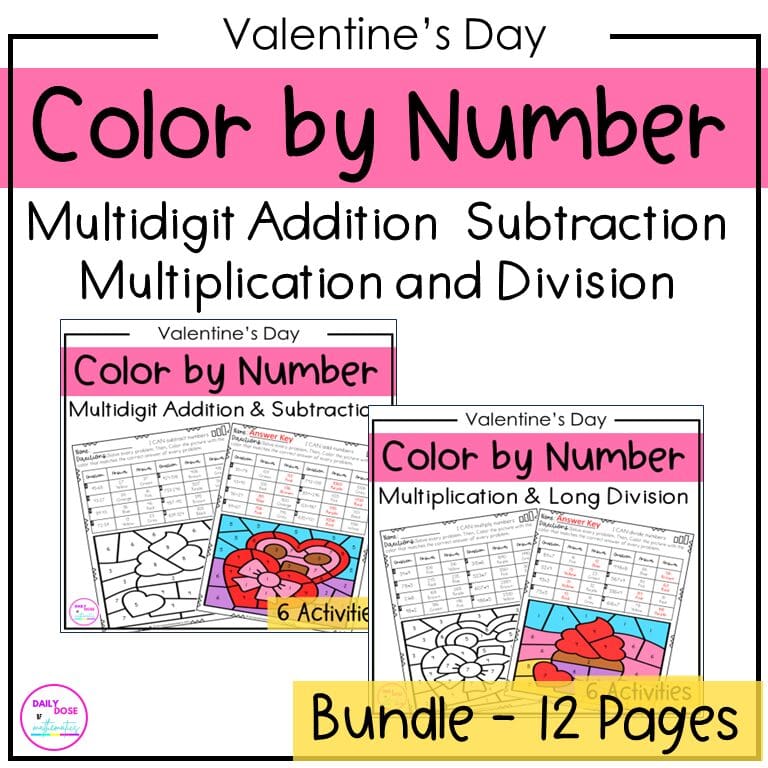
For you teachers out there, do not forget to try out Color By Number Activity during the season of Love! It’s not only perfect for kids who love coloring, but the Valentine’s Day theme makes it even more fun and relevant for February.
The activity is a perfect combination of art and math. While coloring and designing something beautiful, students can learn basic addition and subtraction skills. And, the best part! they get to create a gorgeous piece of artwork that you can then hang in the hallway as a reward! It’s a win-win for both learners and teachers.
Try out these activities as a way to make math enjoyable and intriguing for students, while also keeping the holiday spirit alive. With these activities, students will have the chance to learn these topics and practice the essential skills, while having fun.
Moreover, these are great to break up your typical lesson plans and add a fun and lively aspect to your classroom. So, take advantage of these holiday-themed math activities to keep your students engaged and motivated to learn!
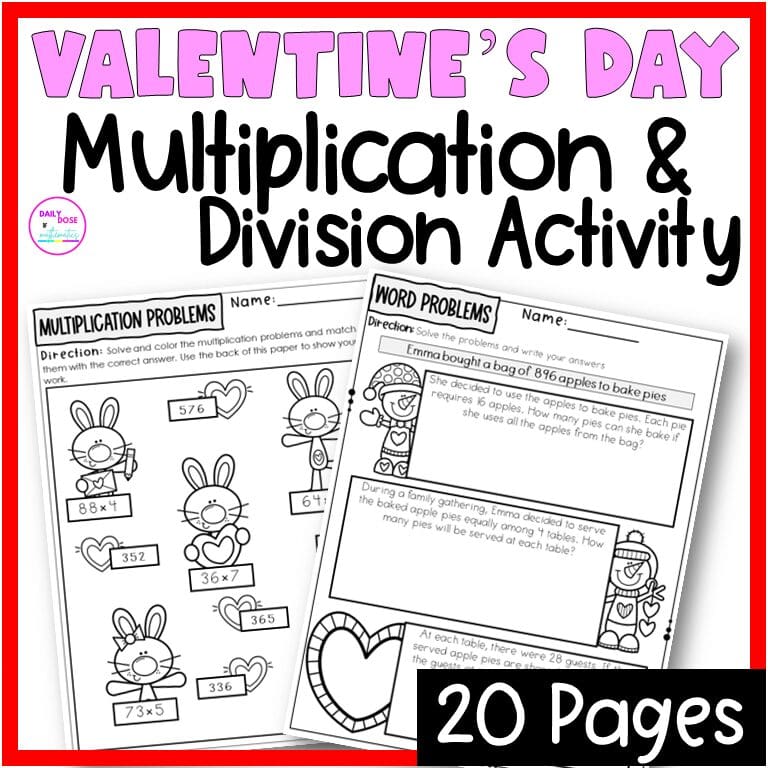
Fun Multiplication and Division Independent Activities Pack
Do your kids struggle with poor working memory while reviewing math multiplication or division facts? Do their weak mental math skills frustrate you? Try using interactive activity – it’s super fun and educational! Incorporating this packet into your teaching arsenal could revolutionize the way your students perceive math. No longer just numbers on a page, math becomes a gateway to creativity, problem-solving, and festive fun. It’s an excellent way to maintain academic rigor while also acknowledging the season, making it a win-win for teachers aiming to keep their lessons fresh and students motivated.
Want to get the insider’s Fun? Join the Club here!
All right, so we’re diving into the exciting and full of fun world of… 3 digit addition. As a math teacher myself, I know what you might be thinking! I know, I know. ‘three digit addition’ and ‘exciting’ are two phrases that you probably never expected to see in the same sentence. Yet, here we are!
But for a moment, I want you to picture this: your kids, completely absorbed, their minds buzzing away as they add numbers. No more expressionless eyes, no more “Do I have to?” Instead, they’re eager. They’re engaged. They’re learning. Sounds like a far-off dream? Well, it isn’t, and thanks to the gamified math lessons, this could be the reality of your classroom.
I remember when I was a kid, and math felt like a tedious chore. But honestly, I do not want that for my kids in the classroom, so it’s time that we as math teachers, put those days behind us.
Let’s make learning two and three digit addition and subtraction worksheets a game — literally. How? Here is a step by step month-long journey to transform 3 digit addition from ‘Ugh, not again!’ to ‘Can we do more?’ in your classroom.
Week 1: Nailing the basics of the concept of 3 digit addition
Ever tried to build a castle on sand? It’s a shaky business, right? The same goes for 3 digit addition with elementary students. If you’re shaky on the basics, teachers! Well, you’re setting your class up for a castle full of confusion. Let’s clear the air on this. Shall we?
Now, for your kids to understand 3 digit addition with and without regrouping, you first need to make them recognize the importance of place values. They should’ve got hundreds, tens, and ones down. To clarify this concept to your kiddos, you can tell them to picture hundreds, tens, and ones as three shelves in a bookcase, each with a specific spot for its ‘book’.
But the thing to remember here is that it’s essential for the numbers to go in their right place. Misplace the numbers, and you’ve got chaos!
Then comes the tricky bit: carrying over. A common hiccup, often as mystifying as a magician’s trick. But it does not have to be that. You can simplify it further for them. So, if your ‘ones’ total more than 9, you ‘carry over’ the extra to the ‘tens’ shelf. Same rule for the ‘tens’ to the ‘hundreds’. It’s like when you’re packing a suitcase, and it overflows – you need another bag!
Now, what about gamification in math? Think of it like turning broccoli into a superhero. Kids love games, right? So why not use that love to turn learning 3 digit addition and subtraction with and without regrouping into a thrilling adventure?
Gamification takes the chore out of learning, and makes it interactive, and here’s the important part: it leverages our innate love for rewards. There are several platforms and tools for gamification, with different colors suited to different needs.
Week 2: Preparing the Gamified 3 Digit Addition with and without regrouping Lessons
So you’re ready to transform your class into a gaming field. But which platform to choose? It can get overwhelming pretty quickly if you do not know exactly what you are looking for. More like being in a candy shop with infinite choices.
But what I can tell you from personal experience is that features, user feedback, and, most importantly, compatibility with your class size, age group, and tech comfort is all that matter.
Selecting a platform is just the beginning. Next, you’ve got to figure out a way to add your triple digit addition and subtraction curriculum to this platform. Initially, it might feel like you are doing a puzzle. You need to break down the curriculum into daily and weekly objectives, making sure each game fits seamlessly into the learning process.
Now the most important part here is to remember, that variety is the spice of your classroom! Mixing up games and keeping the interest alive is what you should aim for. Imagine being served the same dish every day. Boring, right? The same goes for your class. So spice it up with a variety of games.
Week 3: Rolling Out the Gamified Lessons
Now comes the big reveal. Introducing the new approach to students can be a dance as delicate as a ballet. The aim? To make sure they understand how the platform works, how it’ll be integrated into their learning, and – this is key – why it’s gonna be super fun.
As the lessons roll out, be ready to wear the hat of an eagle-eyed observer. Tracking progress, and providing feedback, it’s all part of the game. It’s like being a coach on the sidelines, guiding and cheering on the players.
Wanna know what I use to add a gamification touch to my 3 single digit addition worksheets in class,check this out on TPT!
Week 4: Evaluating Progress and Getting Ready for the Quiz
After the lesson is been done and you feel like your students get the concept it’s time for the big day! I mean Quiz day! Although students dread to go through a quiz, not in our gamified class! Here, quizzes are designed to mimic the game-based problems, making them less of a scary monster and more of a friendly challenge.
You can offer your students study aids and revision sessions to help them clarify any gaps in their learning. A little extra help won’t hurt anyone. Alongside this, you can gather progress reports for each student. Here you’re not just looking at who’s soaring and who’s stumbling but also pinpointing the areas where students commonly trip up.
And now, the finale of week four: prepping for the quiz. Make sure to review the main concepts, but more than that, ensure the students have a clear concept of the topic and what lies ahead.
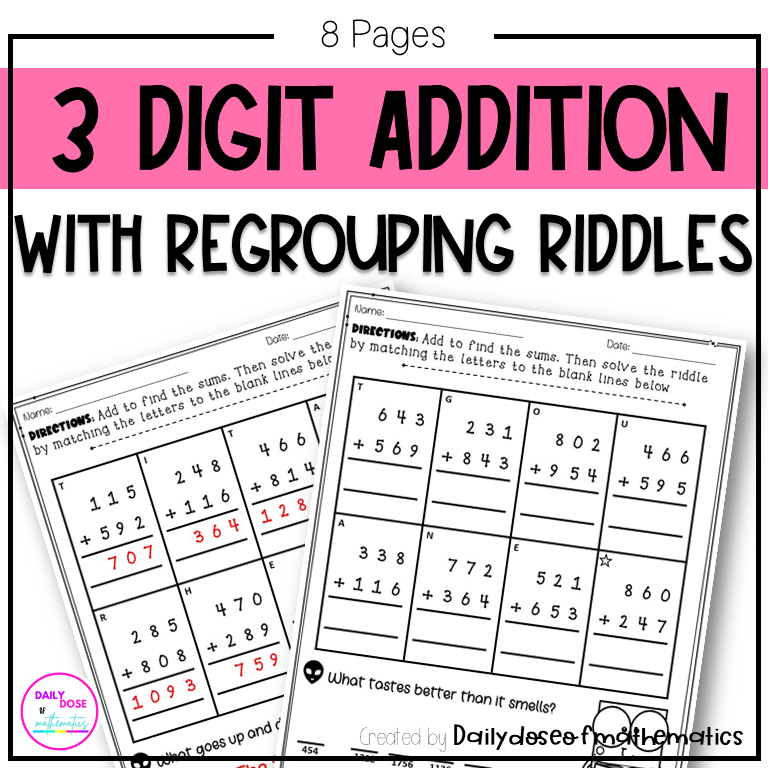
You can even use these riddle Worksheets to evaluate your student’s early progress.
Quiz Day: The Ticket to 3 digit addition with ans without regrouping worksheets Stardom
Now comes the day the students have been working towards. The quiz. It’s the chance to put all that they’ve learned to the test.
The quiz results aren’t just numbers but celebrations of success and stepping stones for further learning. Each correct answer calls for a small classroom celebration, and each misstep is an opportunity to learn and improve. Remember, every cloud has a silver lining.
So there you have it. But remember it’s not just about the numbers, but about making learning an experience. It’s about taking those dread-filled, yawn-inducing lessons and turning them into a journey of exploration, excitement, and fun.
So, if you want to break the chains of traditional teaching and think outside the box, it’s time that you implement these strategies into your classroom and play. Gamified lessons aren’t just an educational trend. They’re the key to exposing engagement, sparking curiosity, and making your students not just learn but love the process.
Especially in a world where children are often glued to screens and gadgets, gamifying math lessons can serve as a link in our classrooms that merges education with entertainment in the most effective manner. So in order to take the ‘boredom” out of traditional math lessons and transform it into an exciting experience that students can enjoy while learning new math skills at the same time it’s more like a necessity now.
As teachers, it’s our duty to make sure that every child in our class experiences the thrill of learning. With the right tools and approach, even the most seemingly mundane topics like 3 digit addition can become adventure journeys for exploration. By continuously experimenting with new techniques and, most importantly, making math fun we can make math exciting for our young generation. After all, isn’t that what education should be – an exciting journey of discovery for our students?
Remember, the journey of a thousand miles begins with a single step. You’ve got this. Just imagine, a classroom humming with excitement, picture the pride on your students’ faces when they nail a complex 3-digit addition problem, not because they had to, but because they wanted to.
Conclusion:
You have the power to turn ‘boring math Class‘ into ‘bring it on!. To replace sighs of boredom with cheers of excitement. To transform ‘I don’t get it’ into ‘I did it!’.
Since the methods of teaching in education are always evolving, it’s crucial that we continually seek methods that not only enhance the learning experience but also ignite a passion within our students.
Gamified math 3 digit addition lessons can bridge the gap between conventional teaching and the digital age. By transforming the seemingly mundane task of 3-digit addition practice into an engaging journey, we aren’t just teaching numbers – we’re nurturing a love for learning.
The unexpected joy and enthusiasm that arise from such methods prove that with the right tools and mindset, even the most traditional subjects can be refreshed and revitalized. Let’s continue to innovate and inspire, turning challenges into opportunities and learners into lifelong enthusiasts. After all, when education is fun, the sky’s the limit.
Raise your hand if you’ve ever printed a math worksheet, handed it out and watched your entire class immediately ZONE OUT.
Same. Dry, black and white worksheets suck the energy right out of math time for your students and for you.
They’re boring. They don’t work. And worst of all? They make these core basic operations reviews feel like a chore.
But here’s the thing, addition and subtraction practice doesn’t have to be dull.
When you mix in color by number printables or activities with riddles to review, your kids are engaged, your classroom is calm, and your math centers become something everyone actually looks forward to.
I’m breaking down the multi-digit addition and subtraction practice worksheets I’ll use this year, because they work and they save my sanity.
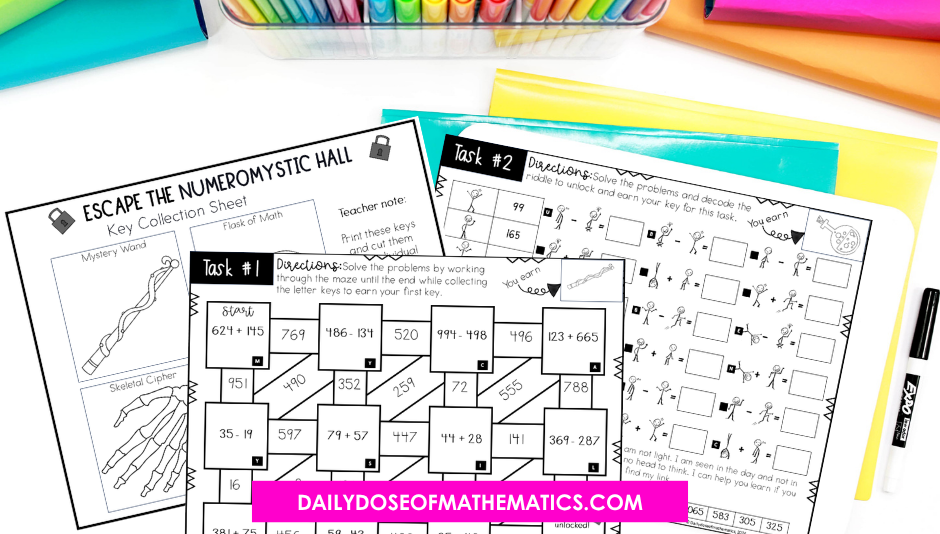
Strategy 1: Use Multi-digit Addition and Subtraction Escape Room to Make Practice Fun
What would life be like if you didn’t have to convince kids that the more they practice, the better it is for them?
What better way to practice than to disguise it as a riddle and increase their curiosity along with math skills? These are just a few of the reasons why math riddles are magic, I use during review time.
My students get self motivated to solve them, and that’s not just to get the math right but to solve the riddle. That little “aha” moment at the end makes the work feel like a game to them, not a worksheet.
The best part? Riddle worksheets are also self-checking. If the answer doesn’t make sense? It means it’s time to double-check their math without you having to hover or correct them. The reason why it’s a total win for me.
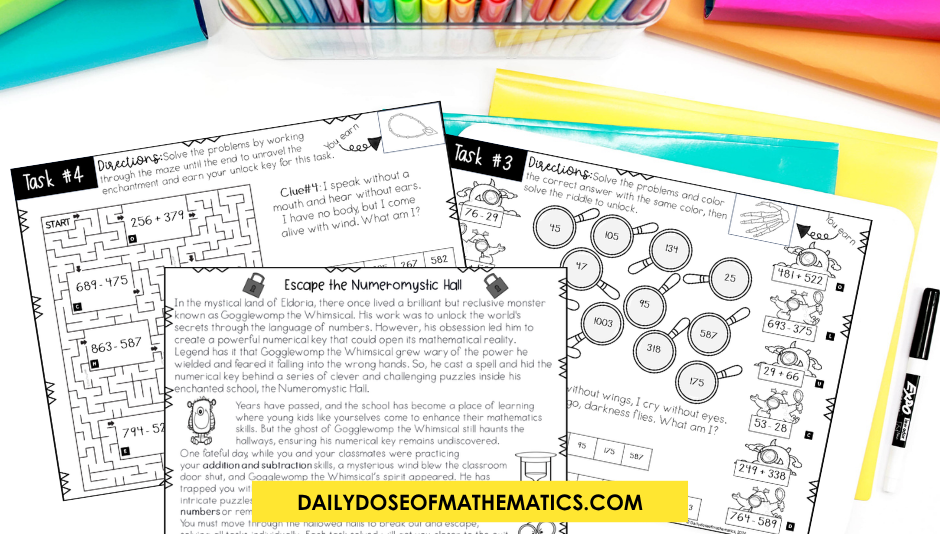
Escape Room-style riddles are also perfect for independent work, partner pairs, or small groups.
You’ll love the classroom management piece (hello, quiet engagement), and your students will love cracking the code.
Still not sure? Try what I use and see your kids filled with excitement: Multi-Digit Addition and Subtraction with Regrouping Escape Room.
You know those kids who can’t sit still for more than five minutes? Yeah, even they get into color by number math. The visuals pull them in, and the structure keeps them focused. It’s like sneaking in math fluency practice… with crayons.
To be honest color by number is a game-changer for independent work, early finishers, math centers, basically anytime you need your students to be engaged without needing your constant attention.
And unlike flashcards, these worksheets build fact fluency in a low-stress, low-prep way that students actually enjoy.
My students actually ask for these during math review. Yep. It’s that fun.
Strategy 3: Mix Seasonal + Skill-Based Review
Want to keep review fresh without re-inventing the wheel every week?
Seasonal printables are your best bet. You’re still hitting the same addition and subtraction skills, just dressed up for fall, Halloween, winter, or whatever season you’re in.
Students stay engaged because it feels new even though the practice is familiar. Teachers win because it’s low-prep and high-impact.
It’s perfect for early finishers, homework, and sub plans basically anytime you need a minute to breathe.
What would life be like if you didn’t have to reinvent the wheels?
If you want your students engaged, confident, and actually enjoying math this year, start with tools that make them smile and think. Riddles, color by number, seasonal printables, they’re more than just fun. They’re effective.
You don’t need to reinvent math review. You just need the right tools in your teacher box.