5th Grade Fraction Word Problems That Build Real Understanding
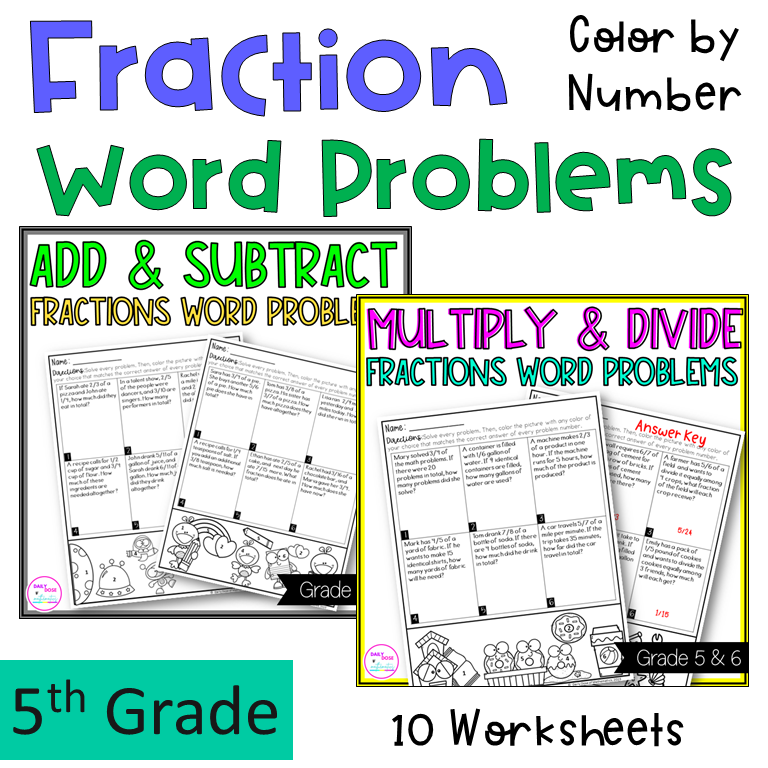
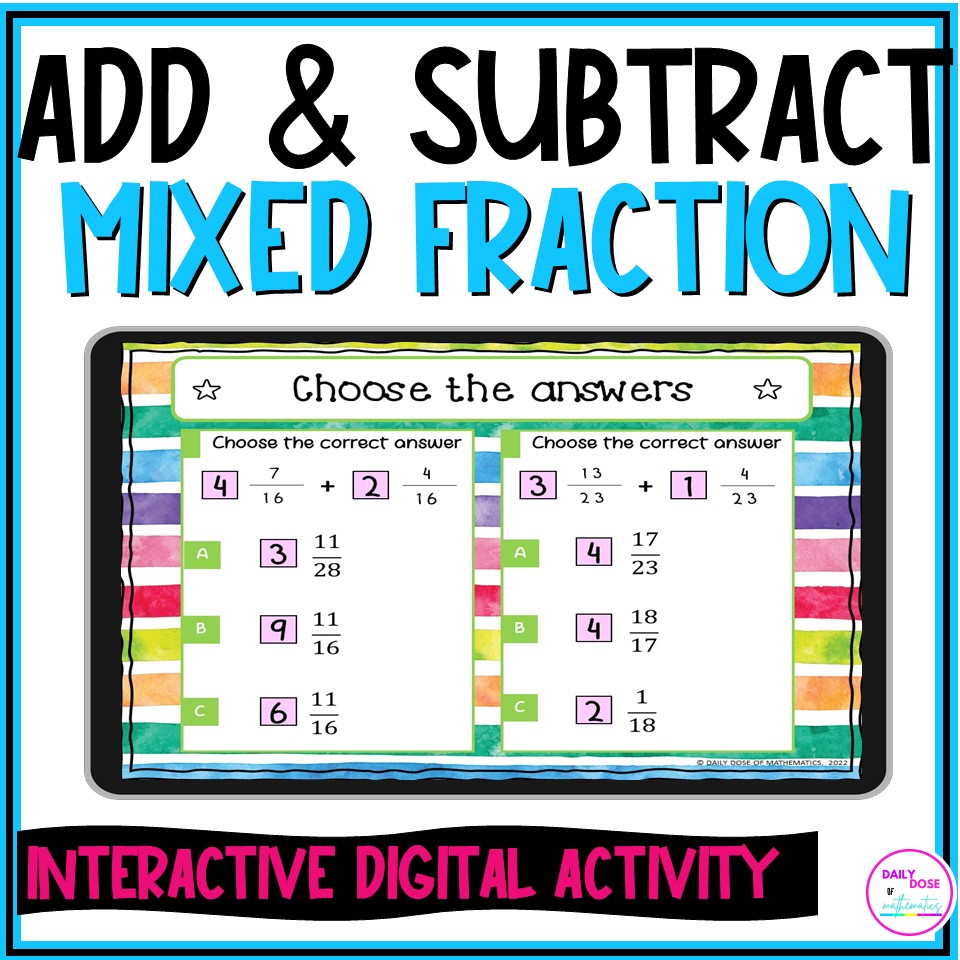
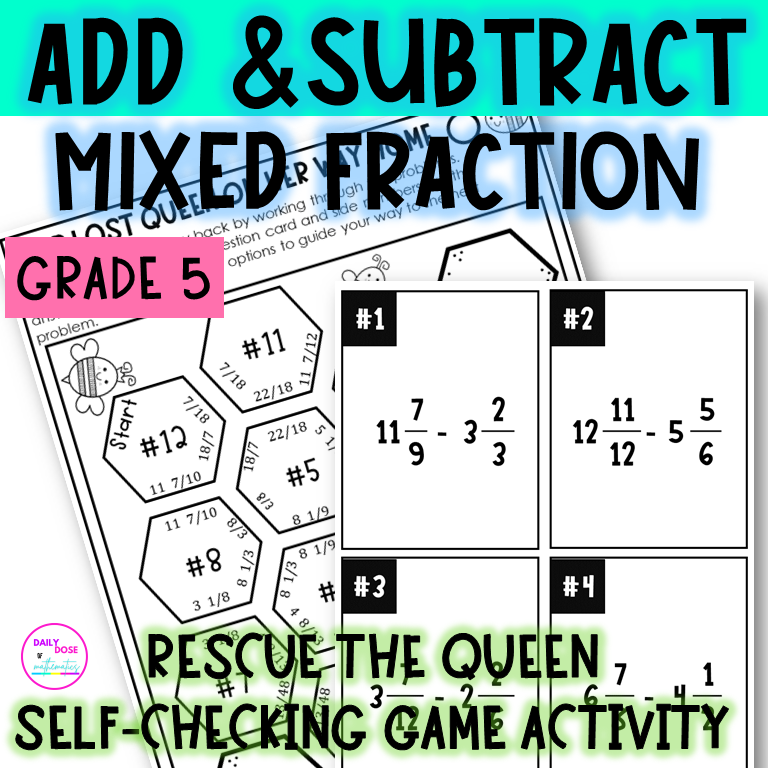
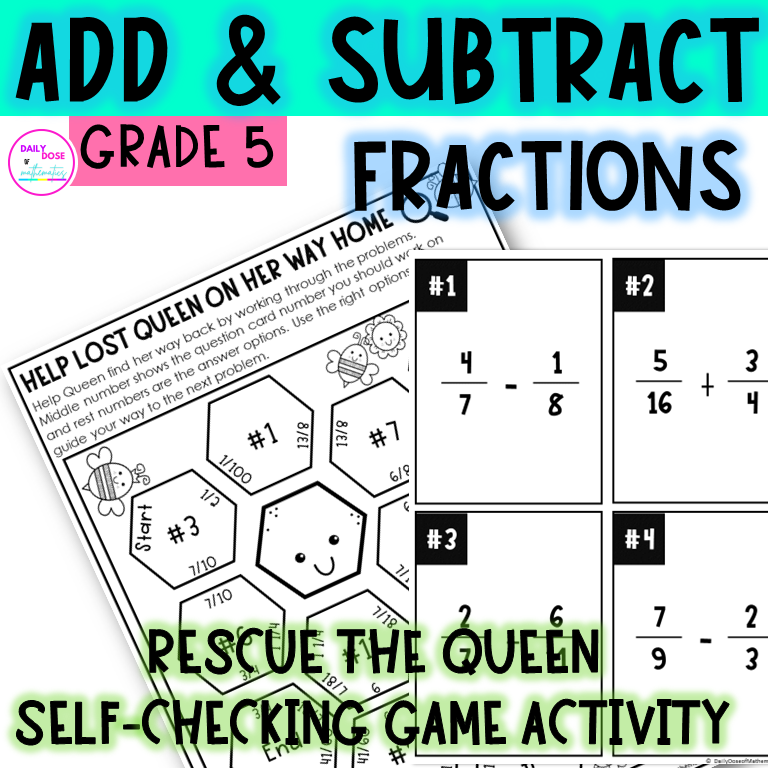
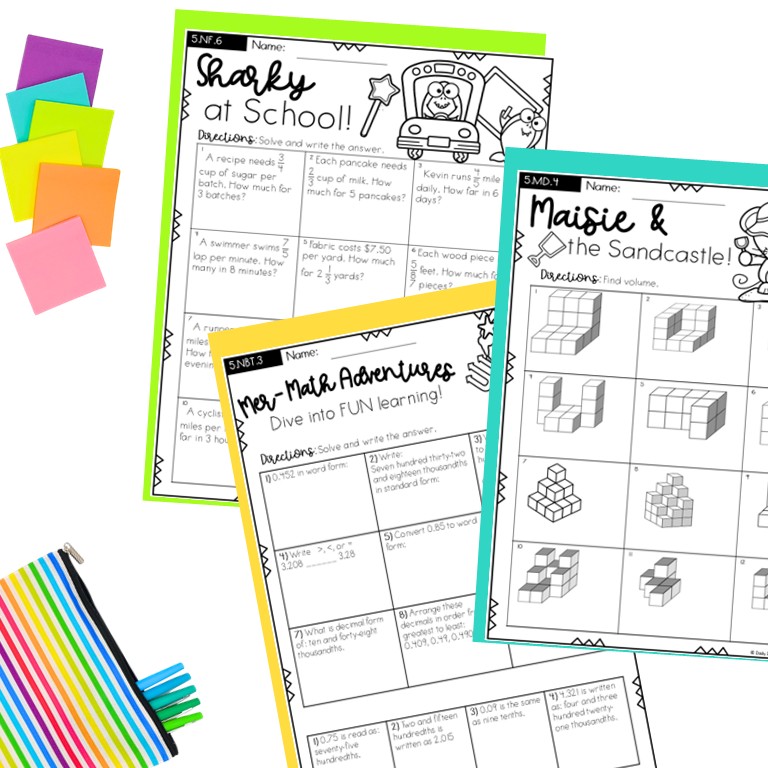
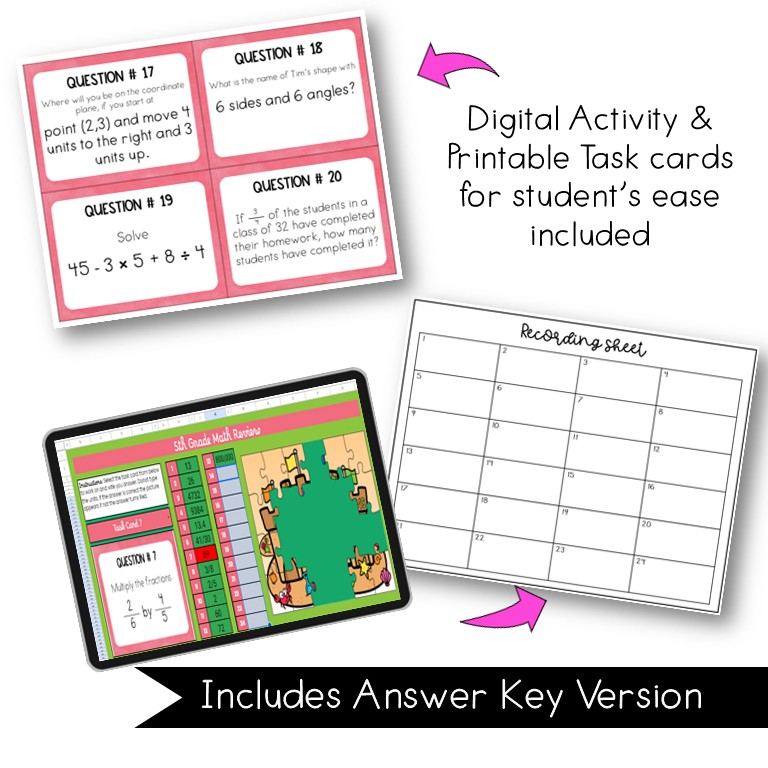
These fraction word problems worksheets give 5th graders practice applying addition, subtraction, multiplication, and division of fractions to real-world scenarios. The resource also includes an answer key for fast grading.
Get the them to practice fraction word problems, and don’t miss the free fractions freebie in my resource library for even more practice.
Teaching fraction word problems in 5th grade can feel frustrating for you and your students.
You spend time teaching the skills. Students can add, subtract, multiply… maybe even divide fractions just fine.
But the second those same skills show up in a word problem? Everyone in your class feel like what is this!
Students just freeze, start guessing, or pick the wrong operation, and suddenly it feels like you’re starting from scratch all over again.
That’s because fraction word problems require a completely different level of thinking.
It’s not just about doing the math anymore. Students have to read carefully, figure out what the problem is actually asking, choose the right operation, and solve it step by step.
And for a lot of students, especially now a days… that’s a lot to juggle at once.
The good news is that with the right strategies and a few engaging activities, students can build confidence and start approaching word problems with a lot less frustration.
In this post, you’ll find practical strategies, classroom-tested ideas, and simple activities to help your students actually understand and solve fraction word problems.
Why Students Struggle with Fraction Word Problems
Before jumping into activities, it helps to understand why this is so challenging in the first place.
Because it’s usually not just one issue it’s a combination of things happening all at once.
When students work through fraction word problems, they need to:
- understand what the problem is actually asking
- decide which operation to use
- work through multiple steps without losing track
- and connect the math to a real-world situation
That’s a lot of thinking just to solve one math problem.
One of the biggest issues is that students often try to jump straight into solving without fully understanding the question.
They see numbers and immediately start calculating without stopping to think about what those numbers represent.
Add in reading comprehension challenges and today’s focus and attention spans, and it gets even harder.
At that point, it’s not just a math problem anymore it’s reading, reasoning, and problem-solving all combined into one.
That’s why students who can handle computation just fine still struggle here.
Get you hands on a Free fractions activity to practice in your classroom today! Signup below:
Engaging Fraction Word Problem Activities
Now let’s bring this to life with activities that actually work in a real classroom. Because at the end of the day, students don’t get better at word problems just by seeing more of them they need different ways to interact with the math.
1. Recipe-Based Problems
This is one of the easiest ways to make fraction word problems feel real. Instead of abstract numbers, students are working with something they understand food.
Students might:
- double or halve ingredients
- combine fractions while cooking
- figure out how much of something is needed
And suddenly, the math has a purpose.
This is especially helpful for teaching multiplication and division of fractions, because students can actually visualize what’s happening.
2. Measurement & Real-Life Scenarios
Another effective approach is using real-world measurement contexts.
Think length and distance, weight and volume, time and rates. These types of problems help students see how fractions show up in everyday life not just on a worksheet.
And when students understand why they’re solving a problem, they’re much more likely to stay engaged.
3. Comparison & Estimation Tasks
This is an area that often gets skipped but it makes a big difference. Before solving, students should be thinking: “Does this answer even make sense?”. With these types of activities, students learn to:
- compare fractions
- estimate reasonable answers
- explain why something is larger or smaller
This is helpful to build number sense, which helps reduce careless mistakes and improves their confidence.
These can also be used during fraction centers or fraction games.
Signup to get access to 5th grade math resources for free!
Structured Fraction Word Problem Practice
If you’ve ever felt like your students are overwhelmed by word problems, it’s usually because they’re being asked to do too much at once.
One of the most effective ways to fix this is by breaking practice into clear, focused stages. Instead of mixing every skill together right away, build confidence one step at a time.
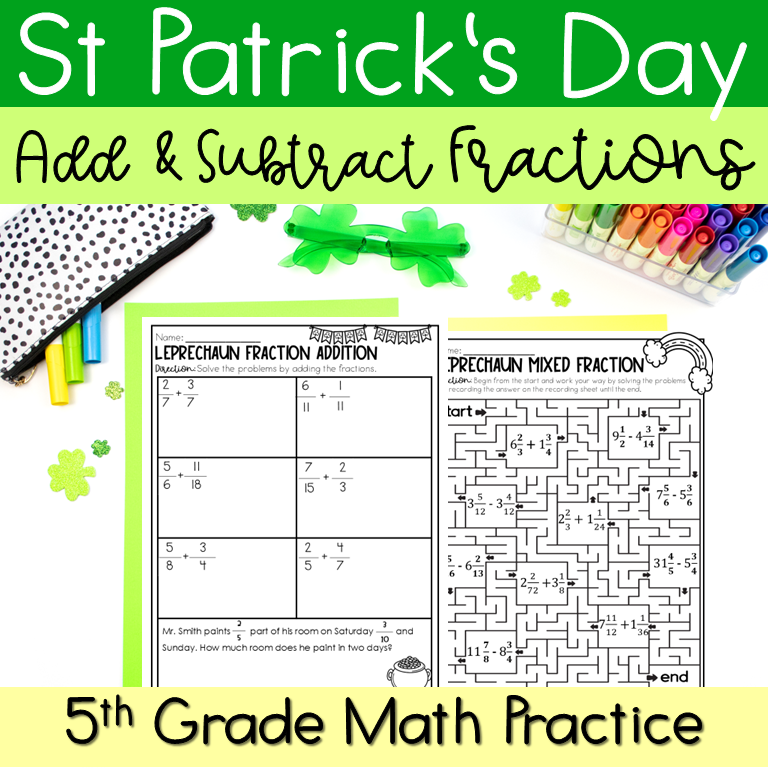
Adding & Subtracting Fraction Word Problems
This is the best place to start.
Students can focus on understanding the structure of word problems without also worrying about more complex operations.
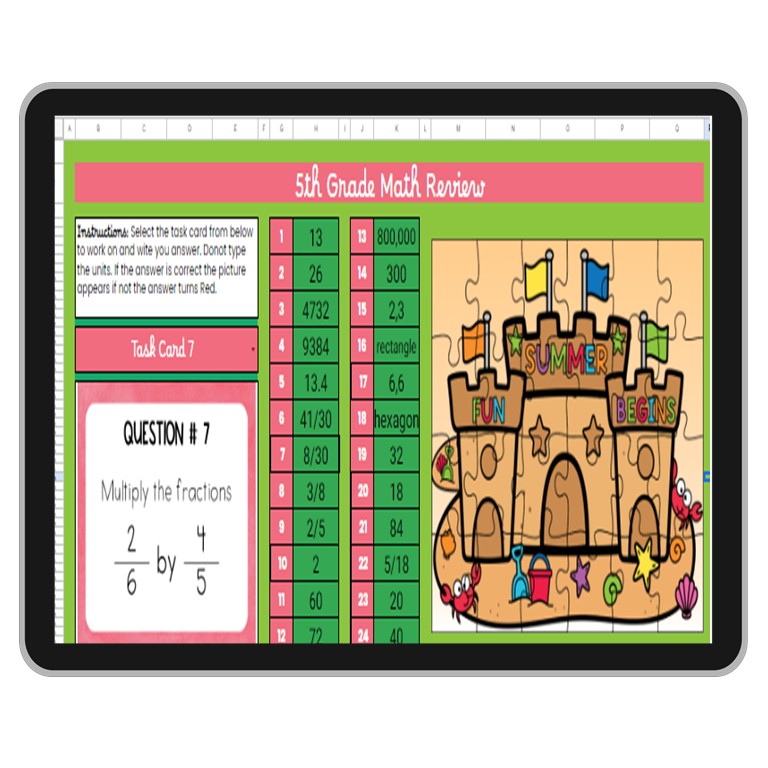
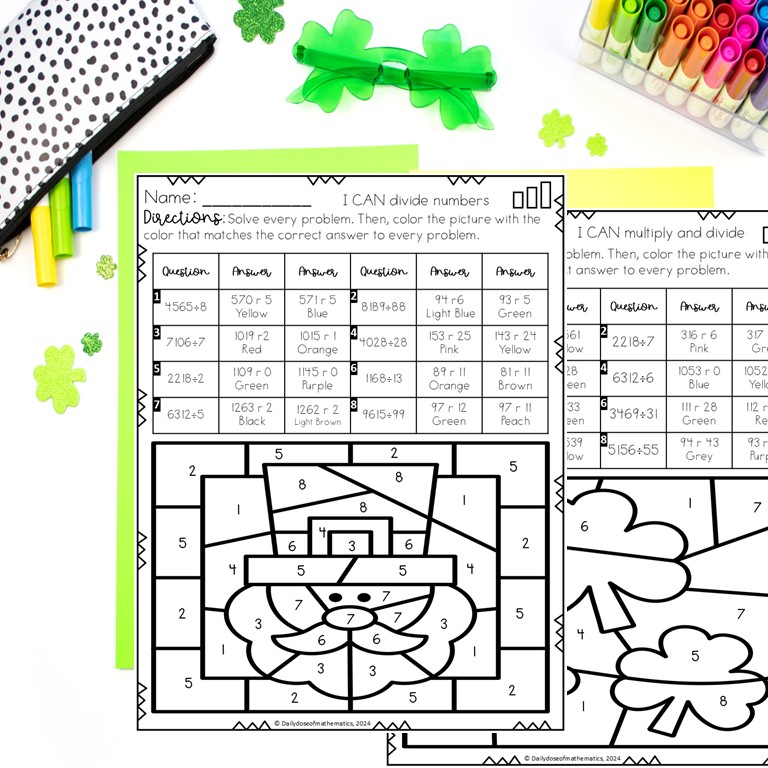
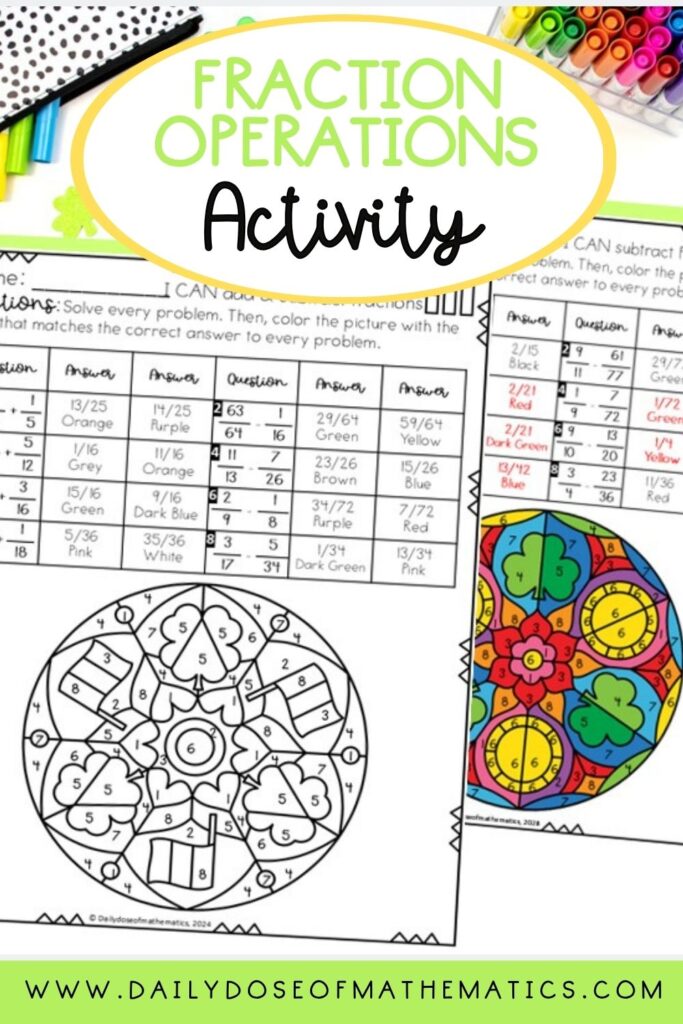
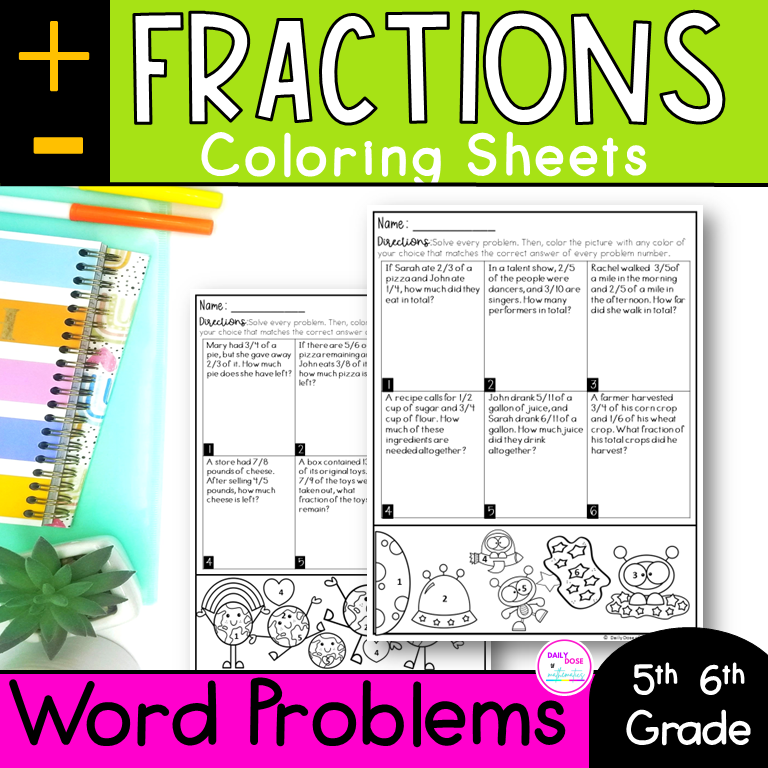
Using engaging formats like color-by-number activities can make a big difference here. Students:
- solve fraction word problems
- match answers to colors
- see a visual result as they work
This keeps them focused longer and gives them immediate feedback, which helps build confidence. This works really well for independent practice, math centers, early finishers.
Multiplying & Dividing Fraction Word Problems
Once students are more confident, you can move into more complex problems.
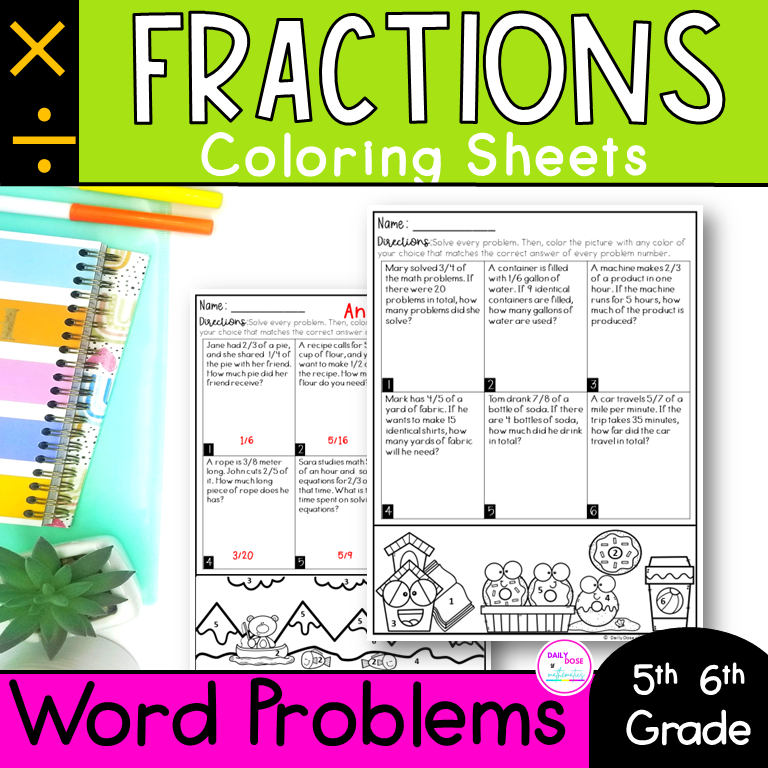
This is where things start to feel more “real-world.” Students need to:
- interpret situations carefully
- decide when to multiply or divide
- work through multi-step problems
These often include scenarios like scaling recipes, dividing quantities, or comparing amounts, which helps students apply their understanding in meaningful ways. These are great for:
- small group instruction
- guided practice
- test prep
If you want to take this a step further, you can also set up these activities as rotating stations.
Want to learn how to run fraction centers in your classroom. Check out this post on 5th grade fraction centers that actually work.
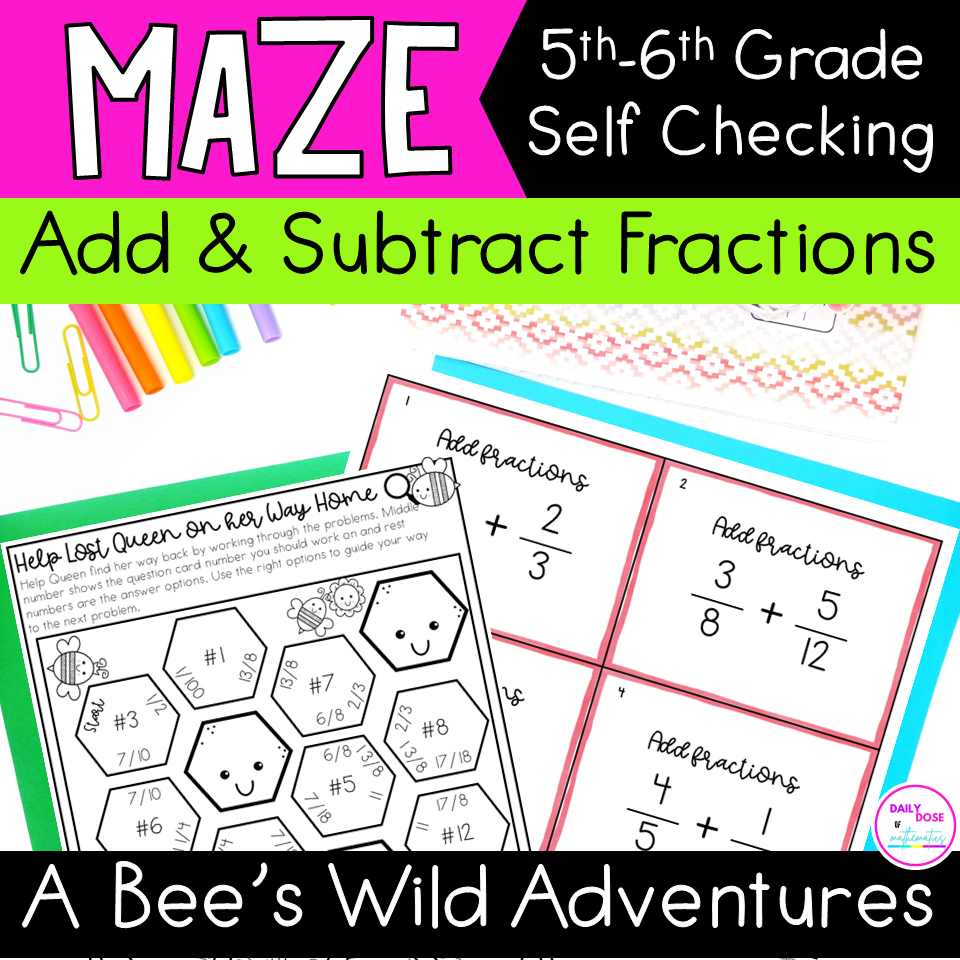
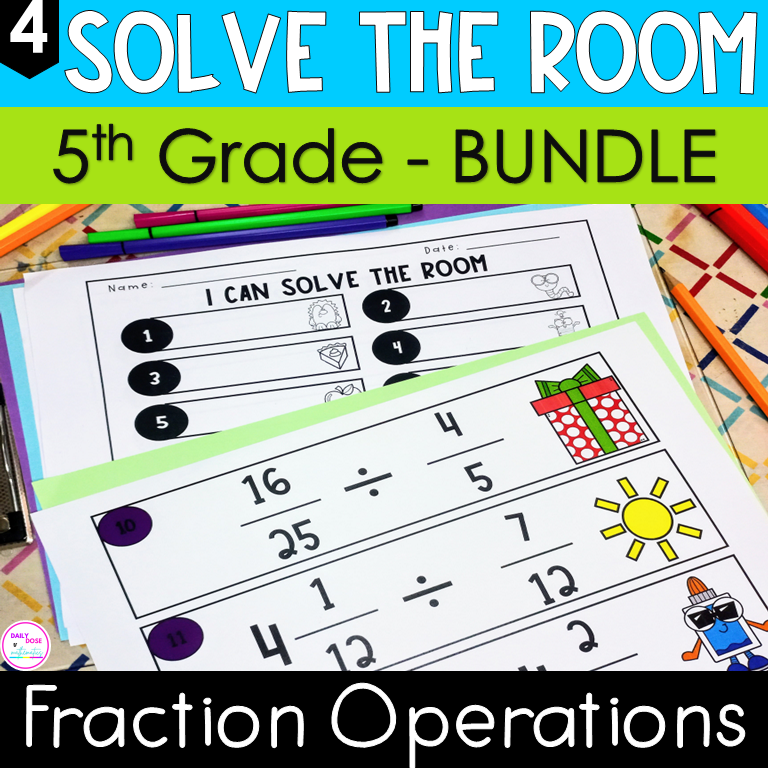
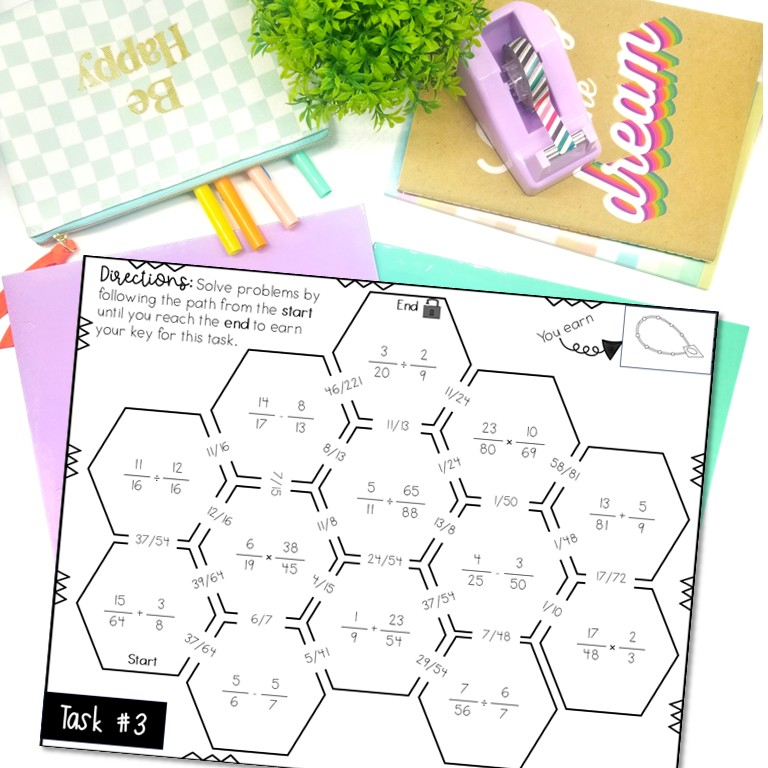
I’ve also put together a full list of activities you can use throughout your unit: 5th Grade Fraction Activities.