| | |

Fraction Operations: 3 Creative Ways to Make Kids Master Fractions

Fractions operations are hard concepts to learn for many kids. Most of my 5th grade students struggle to understand even the basis of what a fraction or a number in a/b form actually means.

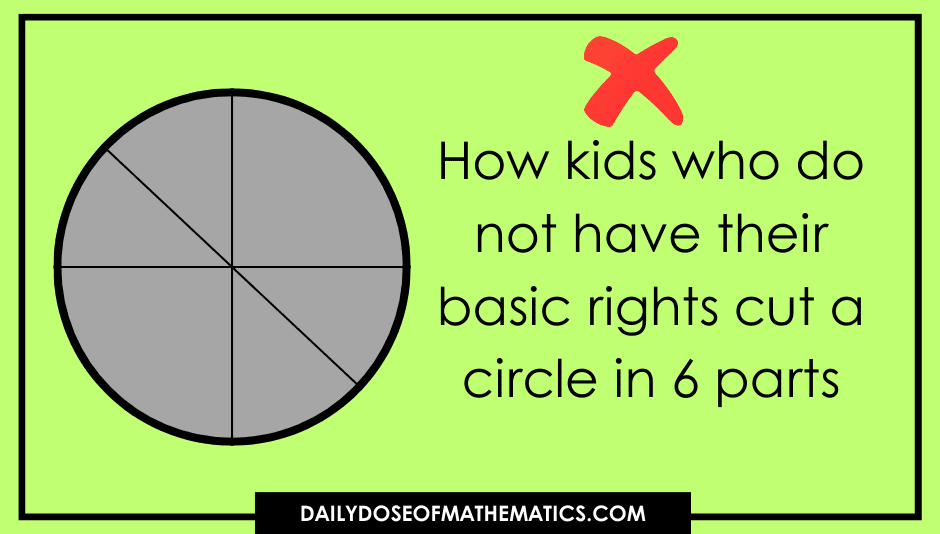
This idea is not just a problem for upper elementary students but for middle school kids too. Just ask your middle school students to cut a circle in 6 parts and see the results they produce.

It might look something like this:
fraction operation | adding and subtracting fractions

Now the problem is not that these kids do not know how to add subtract multiply or divide fractions. Because all these fraction operations can be understood and practice by simply repeating the exact same steps they need to perform to get the answer.

Instead the problem is their ability to apply and analyze conceptual parts of fractions, so instead of focusing on the simplification side of the concept what you actually need to focus more on is the conceptual side of the topic that is its application and making kids able to analyze and evaluate their learning.

To understand it better lets discuss why our students struggle to grasp this important concept and how we can help them.

Why students struggle with fraction operations

Many students struggle with the conceptual understanding and just learn to find answers using “tricks” like keep, change, flip for fraction division. These kids are the ones that when asked to solve a real life problem like this one:

Sara has 3/4 of a cake remaining , and she wants to share it equally among herself and her two friends. What fraction of the cake will each person get?

Question

are not able to make sense of it. The mere learning of short tricks can not help them master this crucial skill. What we as a teacher need to do is create a smooth and seamless integration of all the previous concepts learned with the new ideas to make it easier for kids to connect the dots.

Students need to build upon their prior knowledge of whole numbers and their operations and get comfortable with understand what the “a and “b” in a/b form actually tells them about the problem at hand.

Which means they not only need to know how much of something is being added (which is the numerator part of fraction) but also what is being added that is the denominator part of the fraction.

Making them understand fractions from bottom up is the key. What does the denominator and the numerators actually tells.

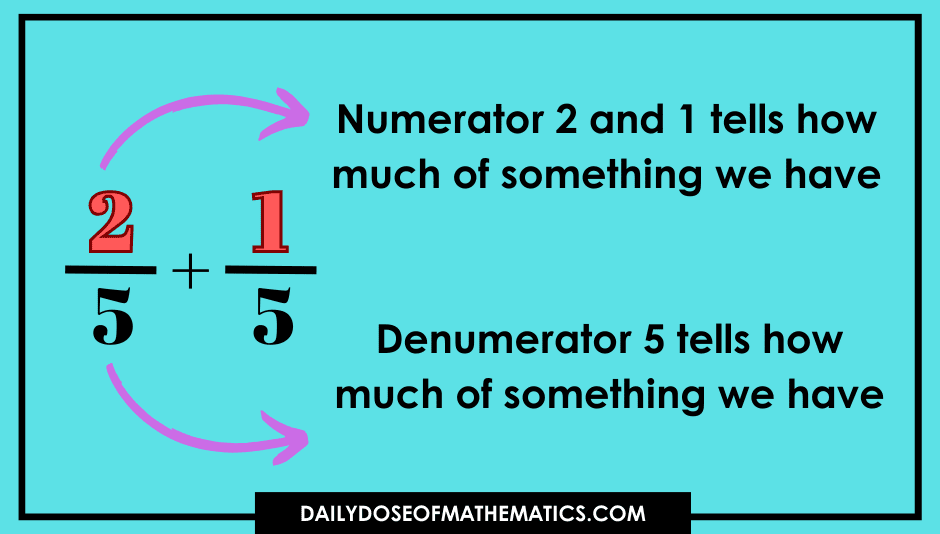
For example let’s say kids have to add 2/5 + 1/5:

Here, the ‘2’ and ‘1’ (numerators) tell us ‘how much‘ of something we have, like two pieces of pizza. The ‘5’ (denominator) tells us into ‘how many parts‘ something is divided, like cutting a pizza into 5 slices. So, when adding 2/5 and 1/5, we’re combining parts of the same whole (like adding two slices to one slice of the same pizza, making it 3/5 of the pizza).

Understanding both parts of a fraction helps kids grasp what they’re working with, making fractions less intimidating. Once kids know the basis they will be able to solve more complex problems on their own.
fraction operation | adding and subtracting fractions

Activities to make their learning addition and subtraction of fraction operations easier

Not all kids learn the same way. Some are visual learners , some like to explore and ask questions to better understand the concept and as a teacher our job is to understand what our kids understanding is of the topic is how to get hem to become better at it. The best worksheets on addition and subtraction of fractions are the ones with real world problems or activities. Let’s learn more about this:

1. Visual Learning Through Baking and Cooking

Who does not like the smell of cookies baking in the oven. It turns your kitchen into a fun place to learn. Did you know that making food is a great way to understand fractions? Whether you’re measuring sugar or cutting a pizza, cooking is a yummy way to learn about parts of a whole.

Activity to Try: Start by making a simple recipe with your child, like cookies or pizza? This gives you an opportunity and fun time to talk about how fractions are used in cooking. For example, you can ask how much is half a cup of sugar? Or how do you cut a pizza so everyone gets an equal slice? In the end, you get to enjoy a tasty snack together!

What You’ll Learn: Cooking and baking make fractions easy to understand. It’s one thing to see numbers on paper. It’s another to see fractions come to life when you’re cooking. Seeing and touching the parts that make up a whole makes fractions clear and meaningful.

I think cooking is not just about making food. It’s a chance to see math in action. Next time you’re in the kitchen with your kids, think of it as a chance to explore fractions. It makes learning math not just useful but also delicious. So, grab an apron, and let’s make learning fractions as easy as pie!

2. Interactive Games and Activities

In this modern world where technology touches almost every part of our lives, learning has changed a lot after covid. For those of us who learn best by seeing and doing, the increase in online learning platform has opened doors to new possibilities. This is especially true when it comes to understanding fractions—a topic that many find tricky.
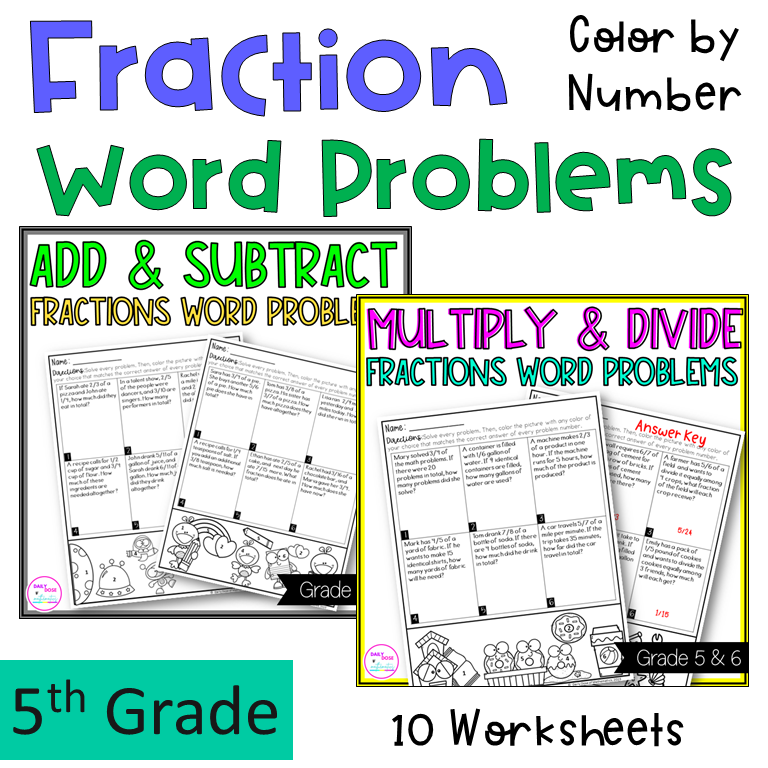
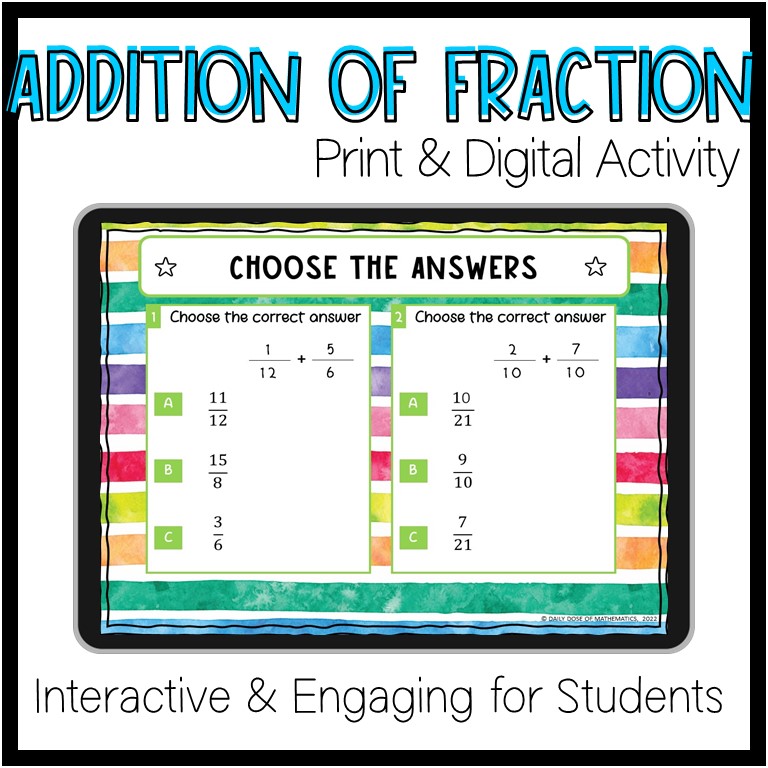
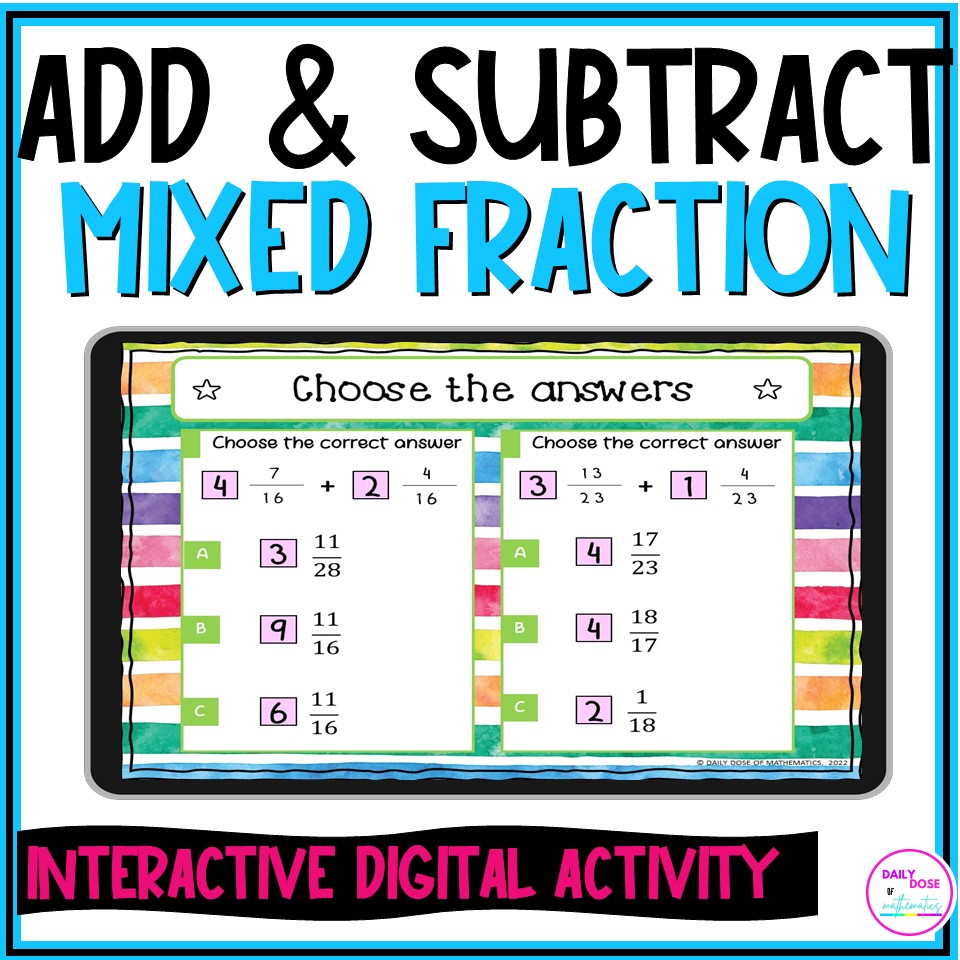
Digital Fraction addition and subtraction activity along with PDF worksheets: There are tons of digital activities out there designed to help with fractions. When choosing an activity, look for ones that are fun for your students and how they learn, give you feedback on how you’re doing, and let you keep track of your progress.

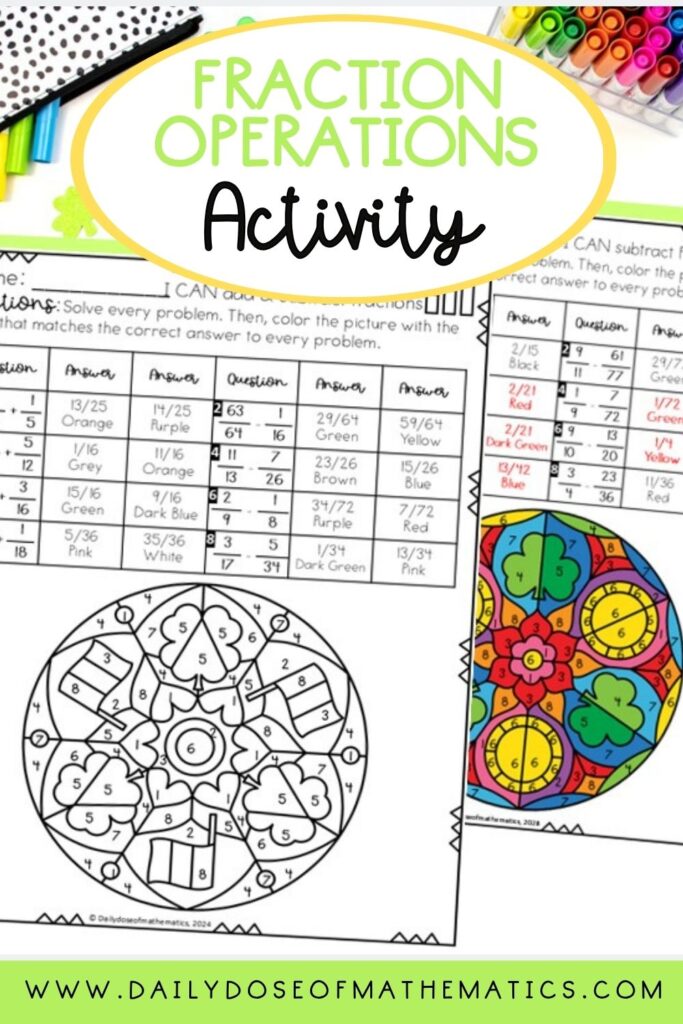
A great starter can be Addition and Subtraction of fractions with unlike denominator Color by number worksheets. These aren’t your typical math activities. Instead, they turn learning fractions into an interactive fun activity, making it something your kids will enjoy a lot.

3. Storytelling and Fraction Tales

Using storytelling to teach kids fraction and give them a taste of how math is applied in real world is what we all should be doing in our classrooms. You can introduced a story like “The tale of a bee lost in the forest” where Queen bee goes out in the wild and is lost and its the job of the kids to bring her back to her hive and the worker bees.
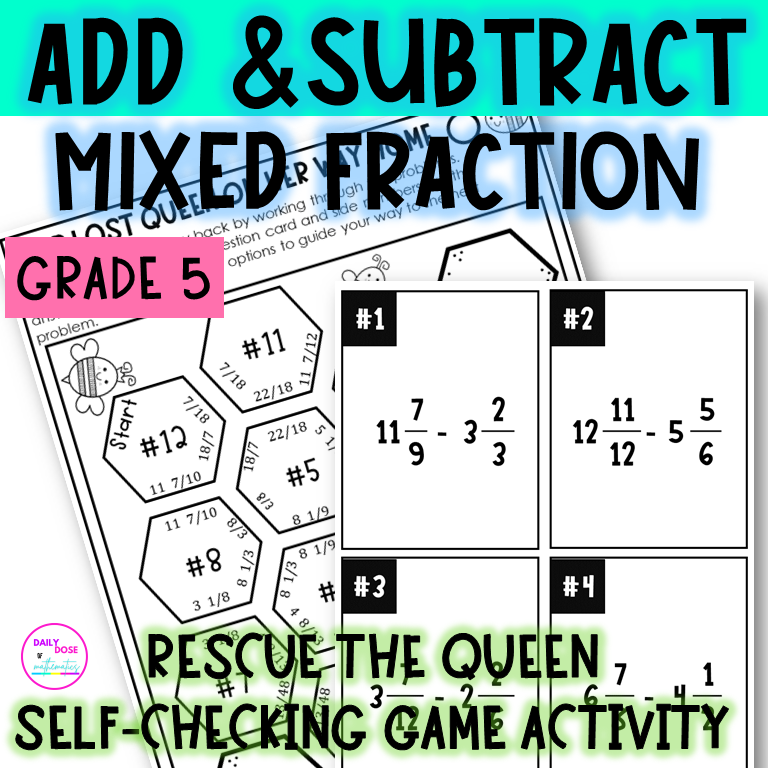
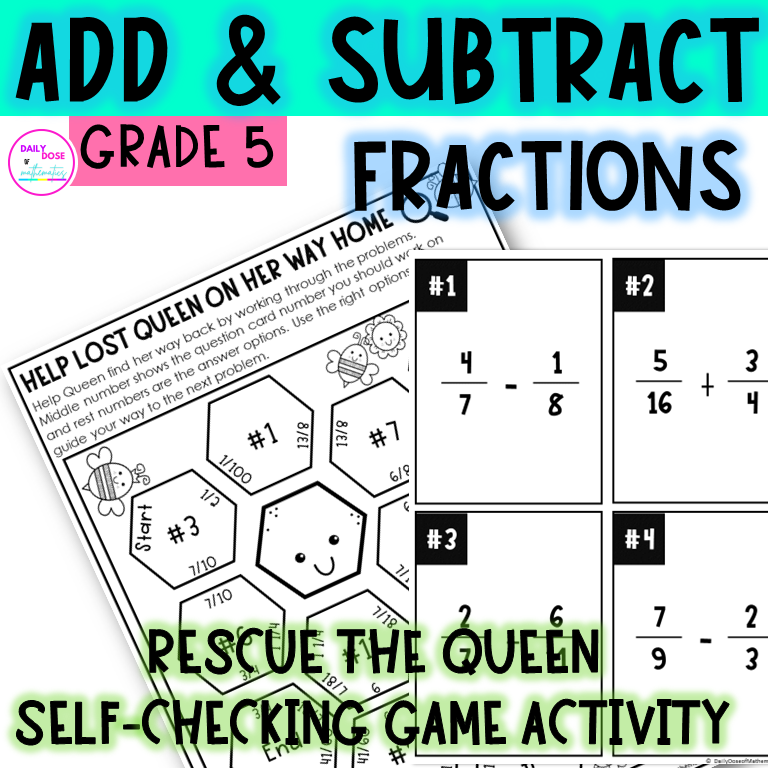
But their is a twist, your kids need to solve adding and subtraction fractions with unlike denominator problems to bring her back to her hive. This keep them engaged into meaningful learning.

Using storytelling like the above to teach kids addition subtraction multiplication and division of fractions and mixed numbers learning more memorable and meaningful. Children are able to connect with the idea on a deeper level that makes learning more enjoyable and fun

Additional Fun Resources

Looking for some ideas to review fraction operations with 5th grade students

Looking for some free adding and subtracting fractions practice coloring worksheets, Try the one below by signing up.
Similar Posts

  • How to Use a Teacher Planner PDF to Streamline Your School Routine Now

    We all know how teachers are juggling lesson plans, grading tests, meetings, and trying to manage personal time can be exhausting. That is why a teacher planner pdf should be a necessary tool in every teacher’s toolbox. 

    Honestly, a well-organized planner can be your best friend in creating a streamlined and well organized daily school routine.

    In this blog post, we’ll explore how you can effectively use a teacher planner to bring order to your busy school days.

    best teacher planner binder and calendar 2026-2027

    Why a Teacher Planner?

    That’s a very interesting question, but before we address the “how,” let’s first discuss the “why.” 

    A teacher planner isn’t just a notebook; it’s a comprehensive tool designed to help you manage your time, tasks, and priorities. 

    Not only this it also offers a common place to keep track of your lesson plans, schedules, student progress, and administrative tasks so you can have everything in one place.

    Think of it as a hub for all your day to day activities.

    This drastically reduces the stress about missing deadlines and increases productivity.

    The result: you get to have more time doing what you LOVE, aka actual “Teaching” not just paper work or admin tasks.

    Step 1: Set Up Your Teacher Planner PDF

    Choose the Right Planner: First, select a planner that fits your needs. Look for one that includes sections for daily and weekly planning, monthly overviews, and room for notes.

    Ensure it has enough space to write detailed plans and record important dates.

    best teacher planner binder and calendar 2026-2027

    Personalize It: Add tabs for quick access to different sections.

    Use color-coded stickers or highlighters to differentiate between various tasks and priorities. Personalizing your planner makes it more enjoyable to use and easier to navigate.

    Step 2: Map Out Your School Year

    Annual Overview: Start by filling out the annual overview section. Mark important dates such as holidays, professional development days, parent-teacher conferences, and end-of-term deadlines.

    This gives you a big-picture view of the school year and helps you plan ahead.

    Monthly Breakdown: For each month, break down the key events and deadlines into manageable chunks. This might include units of study, major projects, and assessment periods. Having a monthly plan helps you stay on track and makes sure you don’t miss important events.

    Step 3: Weekly Planning

    Weekly Layout: At the beginning of each week make sure to spend a few minutes planning your schedule. Outline your goals for the week, both professional and personal.

    Plan specific times when you will be doing lesson planning, grading student work, and completing admin tasks.

    best teacher planner and calendar 2026-2027

    Prioritize Tasks: List your tasks in order of priority. Focus on the most important tasks first, such as lesson planning and student assessments.

    If in doubt and not able to decide what to focus on, use the Eisenhower Matrix (urgent vs. important) to help prioritize your tasks more effectively.

    Flexible Scheduling: While planning is essential, flexibility is key.

    Teachers always remember to leave some free time in your schedule for unexpected events or tasks that arise from time to time and need to be done asap.

    This will help you adapt to changes without feeling overwhelmed in the long run.

    Step 4: Daily Routine with Teacher Planner PDF

    Morning Routine: Start each day by reviewing your planner. Check the day’s schedule and tasks, and make any necessary adjustments. A quick morning review helps set the tone for a productive day.

    Lesson Planning: Use the daily sections of your planner to jot down detailed lesson plans. Include objectives, materials needed, and key points to cover.

    This keeps your lessons organized and ensures you’re prepared for each class.

    Task Management: Throughout the day, refer to your teacher planner to stay on track with tasks. Tick off completed tasks and make notes of any new ones that arise.

    This not only keeps you organized but also gives a sense of accomplishment.

    best teacher calendar planner pdf 2025 2026

    Step 5: Reflect and Adjust

    End-of-Day Review: At the end of each day, spend a few minutes reviewing what you completed that day.

    Note any tasks that need to be carried over to the next day. This reflection helps you understand your productivity patterns and make necessary adjustments.

    Weekly Reflection: At the end of the week, review your planner to see what worked well and what didn’t.

    Use this insight to improve your planning for the following week. Reflecting on your successes and challenges helps you grow and adapt as a teacher.

    Tips for Effective Use Teacher Planner PDF

    Consistency is Key: Make using your planner a daily habit. Consistent use is crucial for reaping the benefits of an organized routine.

    Stay Flexible: While a teacher planner pdf helps you stay organized, life can be unpredictable. Be flexible and willing to adjust your plans as needed.

    Make It Enjoyable: Add a personal touch to your planner. Use colorful pens, stickers, and motivational quotes to make it a tool you enjoy using every day.

    Leverage Technology: Combine your paper planner with digital tools. Sync your teacher planner pdf with your online calendar and set reminders for important tasks and deadlines.

    Overall I would say a teacher planner is more than just a scheduling tool. It’s a powerful resource that can transform your daily routine.

    By planning your year thoughtfully and mapping out your whole school year like planning weekly, managing daily tasks, and reflecting regularly, you can streamline your workflow and increase your teaching effectiveness.

    But make sure to use it as a guide and not a strict rulebook. The key is consistency and flexibility. Happy planning!

    Need some free math fraction activities to try in your classroom, Checkout this post!

  • | |

    Fun Order of Operations Activities to Skyrocket Engagement Now

    I get it, I get it, as an upper elementary math teacher, we can teach order of operation to 5th grade students for what can feel like forever. So long that you may feel like you are running low on new ideas to teach it anymore.

    If that’s the case, then consider using these 5 fun and exciting Order of Operations activities to keep your students hooked.

    All these are my favorite activities. They include both printable and digital options so there is something for everyone.

    Color by Number Order of Operations Activities

    Getting students excited about the order of operation topic can be a challenge but not if you are using the right activities to engage and get kids to think more about the order of operation. 

    Students do not just need to know how to solve order of operations problems. It is equally important that kids learn why learning about the order of operations is important.

    It’s a way to make sure every one of us arrives at the same answer to a particular problem.

    You can teach them various strategies like “please excuse my dear aunt sally” to make it easier for them to remember.

    This activity combines the key critical concepts of order of operations (PEMDAS) with the fun of coloring

    Here is how Order of Operations Activities works:

    Students are given a worksheet with various math problems that they have to solve using the correct order of operations to find the answers. 

    Order of Operation Color by Number Activities

    Each answer corresponds to a specific color which they will then use to color sections of a picture.

    As they solve the problems correctly, a colorful image starts appearing providing students with immediate feedback and a sense of accomplishment.

    Pixel Art Order of Operation Activities

    Want something quick for digital stations? No worries, I got you covered.

    These Order of Operations digital activities are creative and engaging at the same time so your kids won’t get bored. 

    The activities involve solving the order of operations problems using Google Sheets digital activity. Each correct answer reveals a portion of the pixelated image.

    Students write the answers to the problems into the specific cells. 

    Order of Operation Pixel Art Activities
    Order of Operation Pixel Art Activities

    The digital activity involves practicing both types of problems: with and without exponents. 

    Wait, that’s not all. You will also get students handouts that go with the digital activity and keep them accountable for showing their work.

    Exciting Task Cards and Story-based Maze

    Capture your kid’s attention using story-based gamified learning similar to this Save the Queen Maze Activity

    In this order of operation maze activity, students look for ways to help Save the Queen Bee that is lost in the wild on her way back home. 

    They must correctly solve problems to help her find her way back to Hive!

    And the best part you can choose to use with or without exponents to differentiate the topic. 

    Order of Operation Maze and Task Cards Activity

    Not only this, the activity is highly engaging and self-checking so you do not have to spend time grading the papers.

    In the end, use the reward card certificates for positive reinforcement for your kids.

    What’s Included:

    • 1 Save the Queen Game Maze Activity (Order of Operations – Beginner)
    • 1 Save the Queen Game Maze Activity (Order of Operations – Advance)
    • Each Maze has 12 Task Cards with different problems (A total of 24)
    • 1 Colored Reward Card & Story Card
    • 1 Black and white Reward Card and Story Card
    • 1 Student Recording Sheet
    • Answer Keys of all

    Solve the Room Order of Operations Activities

     This one is the most fun and dynamic activity to implement in your classroom. My kids always enjoy and look forward to playing this activity.

    Their excitement is the only reason why I have to make Solve the Room activities for 5th grade Bundle, so you do not have to do the work. 

    Want to know how it works?

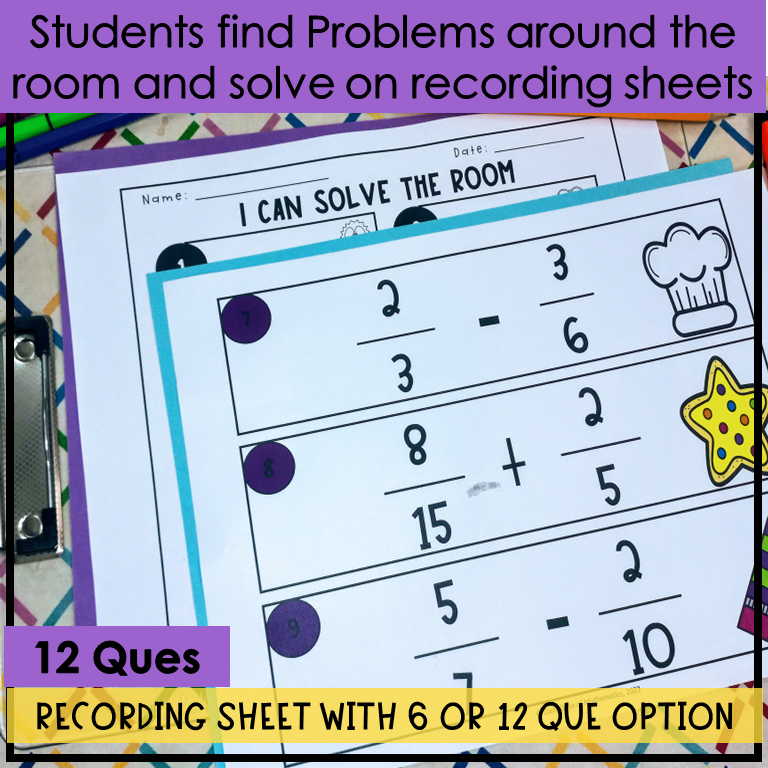
    You post task cards with math problems for your students to work on at different stations or different areas of your classroom. 

    Order of Operation Solve the Room Activities

    Then give each student a recording sheet to record their answers.

    Students move around the room to find these problems, solve and record them on the given recording sheet. 

    Why this is the best activity to try:

    • Engagement: Traditional worksheets can sometimes bore students, but Solve the Room adds an element of excitement and movement, keeping students motivated and interested.
    • Concept Mastery: Students often struggle with the order of operations. This activity offers repeated practice in a fun and hands-on way, helping kids to solidify their understanding.
    • Classroom Management: By moving around the room and focusing on different problems, students are less likely to become restless or distracted, leading to better classroom management.

    Free Order of Operations Practice Digital PowerPoint Game Activity

    Couldn’t find something you were looking for?

    No worries… here is a FREE fun activity to help your students master the order of operations

    This interactive game is perfect for bringing some cheer into your classroom while reinforcing this essential math skills.

    What is it?

    This engaging PowerPoint game challenges students to solve order of operations problems with a winter theme.

    Each correct answer helps them progress through the game, while a wrong answer directs kids to try the problem again.

    It helps to reinforce learning and makes sure that students understand the concepts before moving on.

    Check out this Free Order of Operations Practice Digital PowerPoint Game Activity

    That’s a lot of content for a single topic in 5th grade math topics.

    All of these activities and more are available in the lesson pack Bundle in my TPT shop.

    Bundle includes:

    • Digital Pixel Art Activities
    • Google Slides Activity
    • Order of Operations Task Cards Printable
    • Order of Operation Worksheets 
    • Story-based Save the Queen Game 
    • Order of Operation Color by Number 

    Click here to get now!

    Order of Operation Activities Bundle Image

    Click to learn more about 5th grade math teaching lesson and ideas.

  • |

    How to Teach GCF and LCM With NO Stress This Halloween

    Halloween week in the classroom is chaos. Between sugar highs, costume distractions, and a packed schedule, the last thing you need is a complicated GCF and LCM practice lesson.

    But October is also a great time to hit those tough concepts like Greatest Common Factor (GCF) and Least Common Multiple (LCM) practice especially, if you’ve got the right tools.

    That’s why I created these three hands-on, no-prep Halloween-themed math activities that actually get your students excited about GCF and LCM.

    These aren’t just worksheets, they’re interactive, self-checking, and fun.

    In this post, I’m breaking down how each activity works and how you can use them in your classroom this October.

    GCF and LCM Practice Halloween Coloring

    Kids in my class LOVE coloring period. The truth is, we need to use more coloring math practice in the age of AI than ever before.

    The reason is that kids these days aren’t as calm as they used to be. Coloring helps them calm down due to their hyperactive abilities.

    Halloween GCF and LCM Coloring Worksheet and Word problem Activity 5th 6th Grade

    This Halloween color-by-number activity blends math + art to keep kids engaged while practicing core skills.

    Students solve GCF and LCM problems, find the matching color, and use it to complete a spooky themed image that you can display on bulletin board.

    Why it works:

    • Self-checking format helps students correct their own work
    • Visual + hands-on = more focused engagement
    • Works great for early finishers, math centers, or calming down a hyped-up classroom

    The best part? It’s Print and go! No prep needed.

    It’s perfect for days when you want meaningful review without managing chaos.

    To try this out in your class, you can check out this Halloween GCF and LCM activity pack here.

    Want to get access to free Order of Operations activity you can use with 5th and 6th grade students? Check it out here:

    GCF and LCM Puzzle Cut, Solve, and Reveal

    Puzzles help kids with their critical thinking and problem solving skills.

    This Halloween math puzzle is like magic, your students won’t even realize how much math they’re doing.

    Here is how to implement this 2-pager activity. Problems are on one page and corresponding answer puzzles are on the other.

    Halloween GCF and LCM Puzzle Activity 5th 6th Grade

    Students solve each GCF or LCM question, find the puzzle piece with the correct answer, and paste it into the correct space to reveal a mystery Halloween image.

    Skills it reinforces:

    • GCF and LCM mastery
    • Critical thinking
    • Fine motor skills and focus

    It’s engaging, it’s visual, and it’s low-prep. Just print both pages, and your students handle the rest.

    To try this out in your class, you can check out this Halloween GCF and LCM activity pack here.

    Halloween Greatest Common Factor Riddle

    Riddles are like catnip for kids. In this Halloween themed riddle activity, students solve GCF and LCM problems and write their answers on the connected given space.

    At the end, they collect letters that solve a spooky riddle.

    Halloween GCF and LCM Riddle Worksheet and Activity 5th 6th Grade

    Here is why it’s a win in my classroom:

    • Instant buy-in from students
    • Encourages problem-solving and logic
    • Great for math stations, partner work, or even test prep review

    You can even use it during rotations, independent practice, or as an enrichment activity during Halloween week.

    To try this out in your class, you can check out this Halloween GCF and LCM activity pack here.

    Pro Tip:

    Want to survive Halloween week without losing your mind?

    Print all three activities and set them up as stations.

    Your students rotate through the color-by-number, puzzle, and riddle and they stay engaged the entire time.

    They think it’s fun.
    You know it’s standards-based review.
    Everyone wins.

    Want to try all 3 Activities?

    I bundled all three Halloween GCF & LCM activities together in one low-prep printable pack perfect for 5th and 6th grade math teachers who need a break from boring stuff.

    You don’t need to skip meaningful math instruction just because it’s Halloween week.

    With the right activities, your students can have fun while practicing critical concepts and you can keep your sanity intact.

    Whether you use them for centers, sub plans, or fast finishers, these Halloween-themed GCF and LCM worksheets are ready to go when you are.

    Pin it now. Print it later. Teach it without the stress.

    To try this out in your class, you can check out this Halloween GCF and LCM activity pack here.

    Want more ideas to teach in your next 5th or 6th grade math class? Check them here

  • | |

    Keep Students Engaged with These Thanksgiving GCF and LCM Worksheets (Includes Answers!)

    The week before Thanksgiving is pure chaos in most middle school classrooms.

    Students are hyped about the holidays, focus levels drop, and teachers (yes, you!) are juggling lesson plans, grading, and trying to keep the class calm.

    That’s where seasonal resources come in.

    Thanksgiving GCF and LCM worksheets with answers aren’t just a cute idea they’re a strategic teaching tool.

    They combine review and engagement so your students practice key math concepts without tuning out.

    In this post, we’ll walk through what GCF and LCM are (with examples), why themed math activities work so well, and where you can grab high-quality Thanksgiving worksheets that save you time. But before that let’s first try to answer:

    What Is GCF and LCM (with Example)?

    Before diving into Thanksgiving math fun for 6th grade math, let’s make sure we’re all on the same page, especially if you’re prepping sub plans or review material for your students.

    Thanksgiving GCF and LCM Worksheets and Activities Grade 6 PDF with Answers

    Thanksgiving GCF and LCM Worksheets and Activities Grade 6 PDF 1

    Thanksgiving GCF and LCM Worksheets and Activities Grade 6 PDF 1

    GCF stands for Greatest Common Factor.
    It’s the largest number that divides evenly into two or more numbers.

    LCM stands for Least Common Multiple.
    It’s the smallest multiple that two or more numbers share.

    For example:

    Let’s find the GCF and LCM of 27 and 45.

    Step 1: List the factors.

    • Factors of 27 → 1, 3, 9, 27
    • Factors of 45 → 1, 3, 5, 9, 15, 45

    and here GCF = 9, because it’s the largest number both have in common.

    Step 2: List the multiples.

    • Multiples of 27 → 27, 54, 81, 108, 135, …
    • Multiples of 45 → 45, 90, 135, …

    Therefore, LCM = 135, because it’s the smallest number both share.

    When students practice this repeatedly, they start to recognize patterns and that’s exactly what this Thanksgiving GCF and LCM worksheets with answers help reinforce.

    Why Use Themed Math Worksheets Around Thanksgiving?

    Because engagement matters.

    Thanksgiving GCF and LCM Worksheets and Activities Grade 6 PDF with Answers

    When math review looks like just another worksheet, students mentally check out.

    But throw in a Thanksgiving theme a turkey to color, a riddle to solve, or a math puzzle with a seasonal twist, and suddenly, they’re in it.

    These worksheets focus on multiple learning styles at once:

    • Visual learners connect with coloring and design-based activities.
    • Hands-on learners enjoy puzzles and cut-and-paste components.
    • Auditory learners can explain their reasoning as they check answers with peers.

    Plus, when the activities include built-in answer keys, it saves you (and your sub) valuable grading time.

    Inside the Thanksgiving GCF and LCM Worksheets

    If you’ve been searching for a no-prep, ready-to-go way to review factors and multiples, this set is exactly what you need.

    Here’s what’s inside:

    • Engaging coloring activities that make abstract concepts visual.
    • Riddles and puzzles that apply GCF and LCM to real-world-style problems.
    • Cut-and-paste practice for reinforcing math patterns.
    • Answer keys included for quick grading and student self-checking.
    Thanksgiving GCF and LCM Worksheets and Activities Grade 6 PDF with Answers

    Check out these Thanksgiving GCF and LCM worksheets with answers pdf and make your pre-break lessons actually enjoyable.

    Honestly themed math lessons don’t have to be fluff.

    Done right, they can reinforce real math skills and give you a breather during the busiest time of the semester.

    So the next time you hear, “Do we have to do math today?”, you can smile and say, “Yup but it’s Thanksgiving style!”

    Your students stay engaged, you stay sane, and everyone wins.

    Check out Thanksgiving GCF and LCM worksheets pdf with answers and make this year’s holiday math review something your class actually looks forward to.

  • | | |

    5 best Saint Patrick’s Day math activities for kids to try this year!

    One of the most exciting things about March is that we can help students build a strong fraction operations foundation using themed math activities like St. Patrick’s Day.

    If you are working on one of vital foundational skills like fractions or math facts review this post is for you.

    In this post, I’m going to share some tips and lesson activities for you to help you learn how to teach fractions and decimal operations in 5th grade in a way that will stick with your students!

    So, get ready to sprinkle some leprechaun magic into your math classroom using these 5 best Saint Patrick’s Day math activities for upper elementary students!

    Why Teach 5th-grade Math Concepts Using March-Themed Lessons?

    Themed activities should not just be fun, but can also bring meaningful practice in classroom learning.

    They are the best way to reinforce key concepts when students need extra motivation. They can help you:

    • Builds skill fluency before spring testing season
    • Reinforces key skills through engaging review
    • Helps students apply concepts in meaningful contexts
    • Supports differentiated instruction easily
    • Encourages active participation and discussion
    • Makes practice feel less repetitive

    So, if this is something you want with your kids, try out one of these activities:

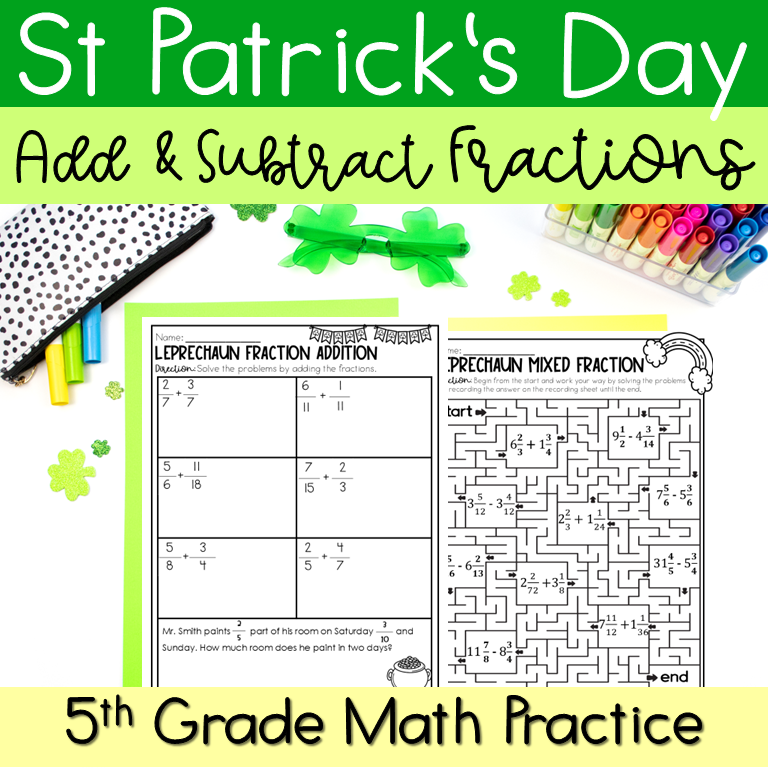
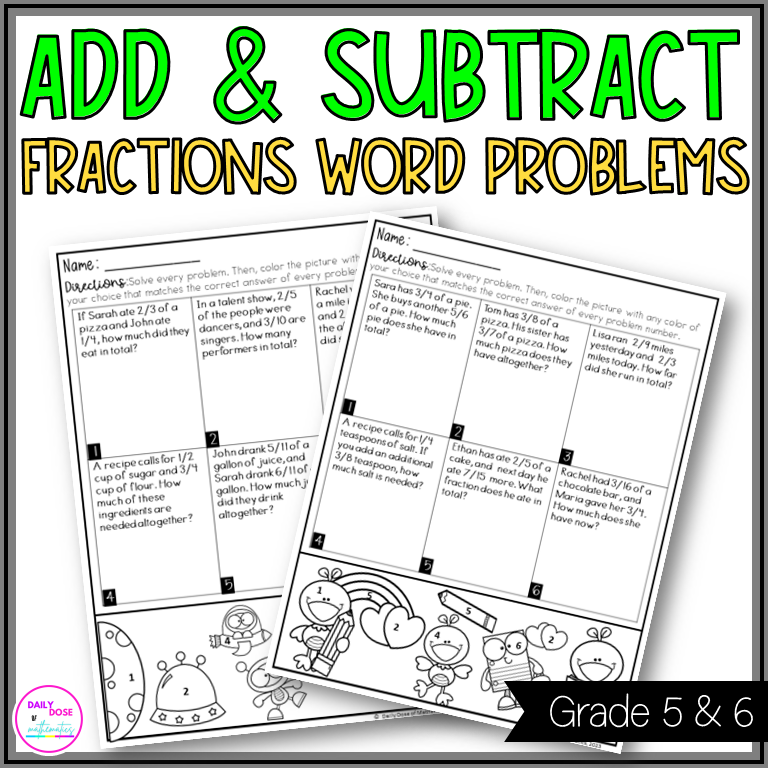
    Saint Patrick’s Day Fractions Operations Worksheets with Word Problems

    If you’re looking for a way to support your students with fraction addition and subtraction with unlike denominators without filling up your math centers with boring activities, I have the perfect solution!

    I have put together this packet of fraction review worksheets that you can use to review fraction operations that they have learnt this year.

    Saint Patrick Day Math Fractions Activities with unlike denominator for upper elementary students

    The pack not only includes fraction review worksheets, but also includes self-checking mazes and a word search you can use for the early finishers in your class.

    Do not need something to practice, but rather need something to test their knowledge?

    The packet also includes 2 pages of multiple-choice question-style worksheets you can use as an assessment to test their understanding.

    One thing I love about this packet is that it includes a whole lot of ways I can get them to practice fraction addition and subtraction.

    So, whether they’re asked to solve addition and subtraction of fractions, these worksheets will keep them engaged, challenged, and entertained throughout their math journey.

    But wait, there’s more! The pack is best equipped with so much more fun like word search and coloring fun.

    You can keep a set of these activities copied at your small group table and pull out the most appropriate one you need for each group to try. 

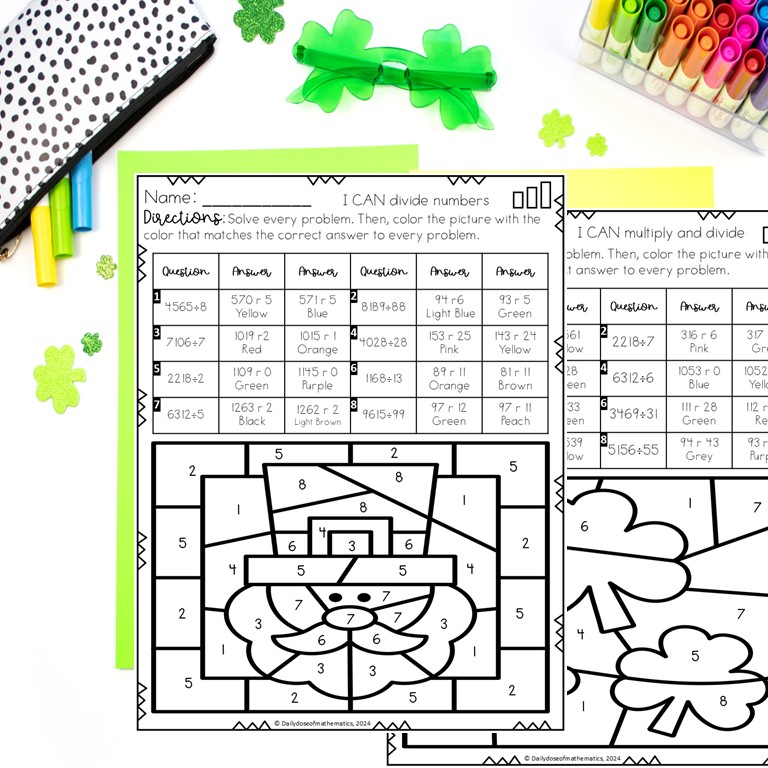
    Saint Patrick’s Day Math Coloring Worksheets

    These math coloring pages are also a great tool for increasing student independence at centers time or during morning work.

    If you are practicing math multiplication or division facts and need them to go beyond and try multidigit multiplication or division, you can do that by using these Saint Patricks activities during their centers.

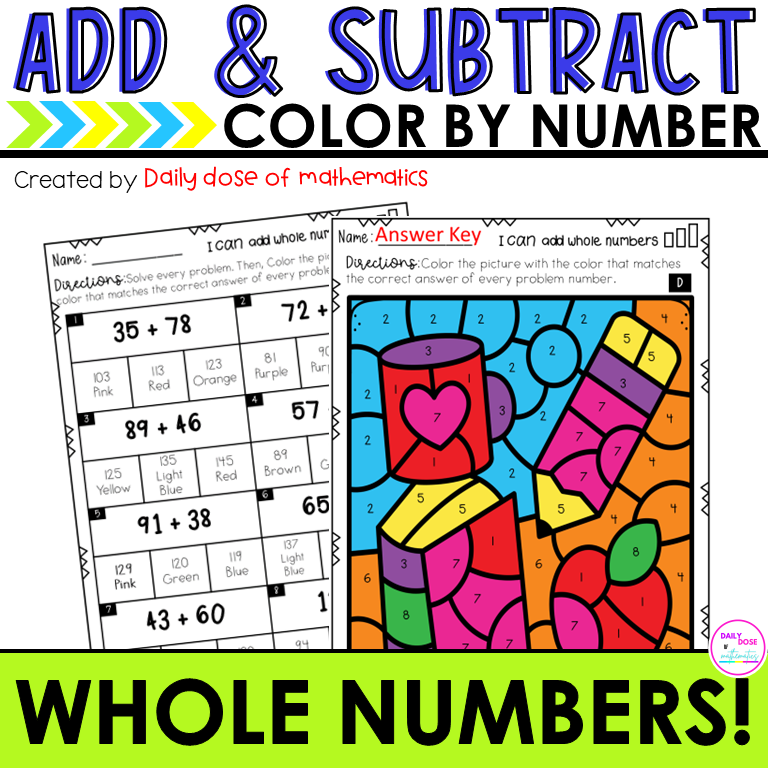
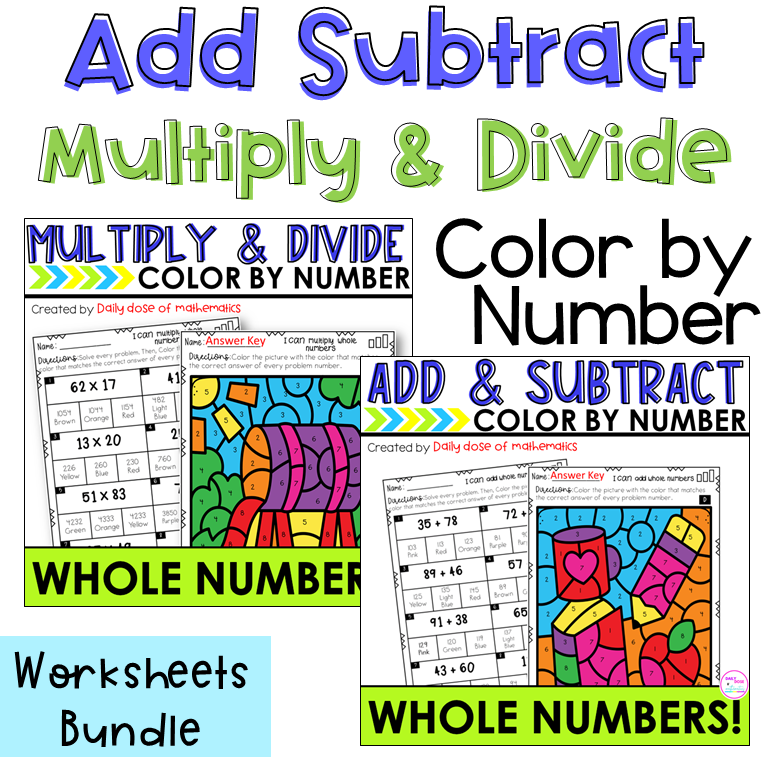
    Adding Subtracting Multiplying and Dividing Whole Numbers Coloring Color by Number Activity with Multi-digit Practice

    These provide an easy but rigorous practice to help kids be more independent in their basic whole number operations.

    So, why settle for boring math practice when you can add a splash of Saint Patrick’s Day magic to your lessons?

    Let’s make basic operations like addition and subtraction or even division fun, engaging, and unforgettable with these worksheets!

    St Patrick’s Day Decimal Operations Activity

    Are your students struggling with adding and subtracting decimals? It might not feel like a difficult skill to you but for 5th graders it’s a lot.

    The one concept I have seen students get stuck on is the idea of understanding the decimal place values. They usually align their numbers wrong, which then gives a wrong answer.

    So this March, if you want to help kids master decimal operations. Let them practice it in a way that is both meaningful and movement-based.

    5th Grade Adding Subtracting Multiplying and Dividing Decimals Math Practice Scavenger Hunt and Solve the Room Activity

    Saint Patrick’s Day Decimals Solve the Room Activity

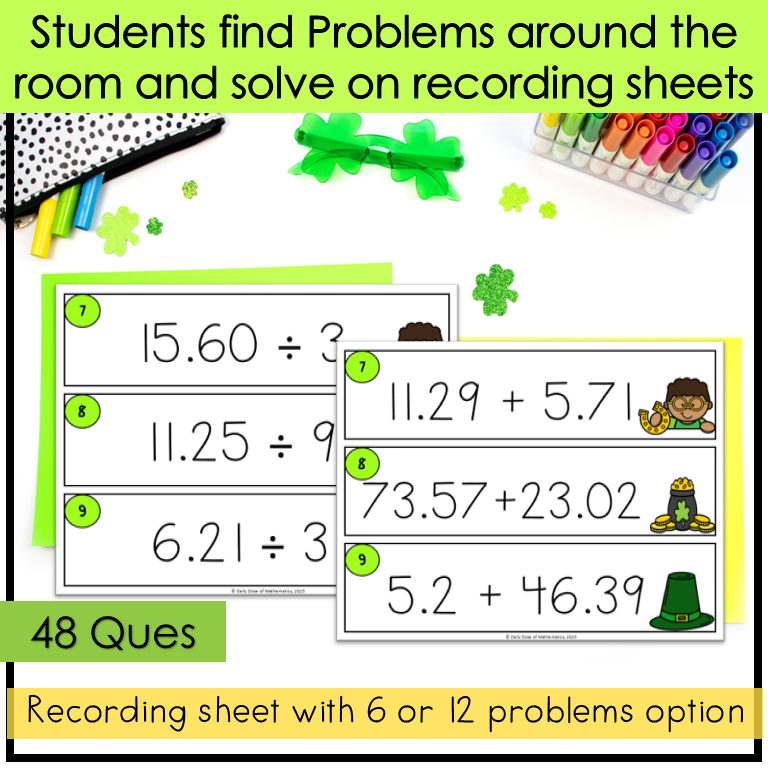
    Solve the Room activities are similar to scavenger hunts without the self checking part.

    Here is how it works:

    • Display the decimal problems inside classroom for kids to find
    • Students navigate the room and solve each problem
    • They engage in active learning, moving, and collaborating with their fellow
    • Record their answer on a recording sheet until all problems are done.
    Adding Subtracting Multiplying and Dividing Decimals Math Practice Scavenger Hunt 5th Grade Activity

    So, are you ready to turn your classroom into a math-filled treasure hunt this St. Patrick’s Day?

    Try these activities and make decimal operations an adventure to remember!

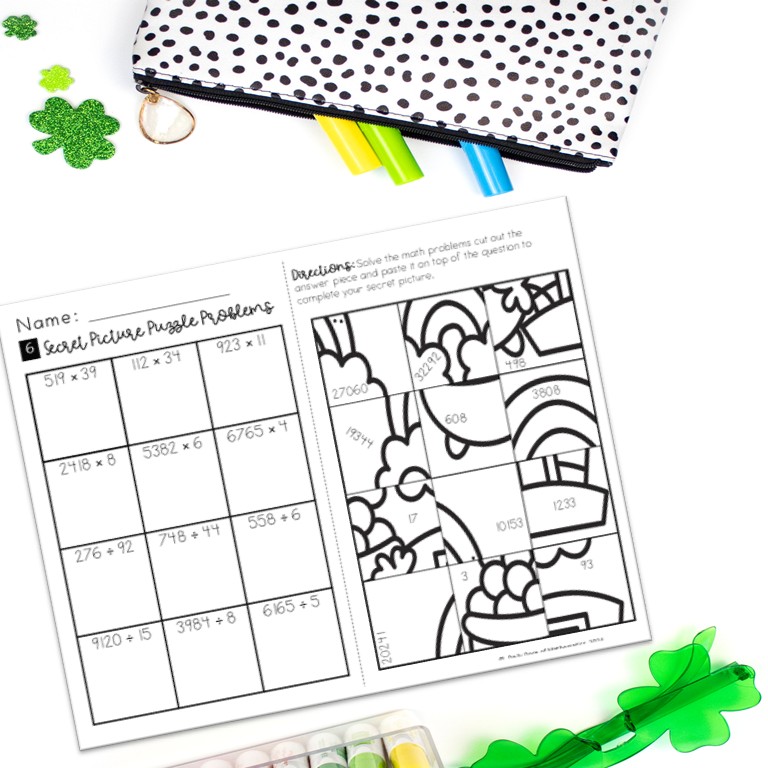
    Saint Patrick’s Day Secret Picture Puzzles

    For upper elementary students, repetition is key when it comes to learning multi digit multiplication and division.  They need plenty of practice with multiplication math fact fluency before they can master these skills. 

    In order to keep students engaged in multiplication and division, you need plenty of activities in our teacher toolboxes! 

    That’s why I wanted to share some hands-on March themed activities that your students will love!

    If you’re looking for a hands-on way to help students practice multiplication or division, check out this mystery picture activity!

    St Patrick's Day Math Picture Puzzles Activity for 4th 5th Grade kids Multiplication and division practice

    All you need to do for this low-prep activity is print off the worksheet and cut out the puzzle pieces! You can cut them out yourself, or let your students cut them.  

    These secret picture puzzles can be used in many different ways, which is helpful for differentiation and engagement. 

    You can use these printable activities for math centers, morning work, small group practice, or even for fast finishers! 

    No matter how you decide to use these activities, your students will benefit from the extra practice with multiplication and division!

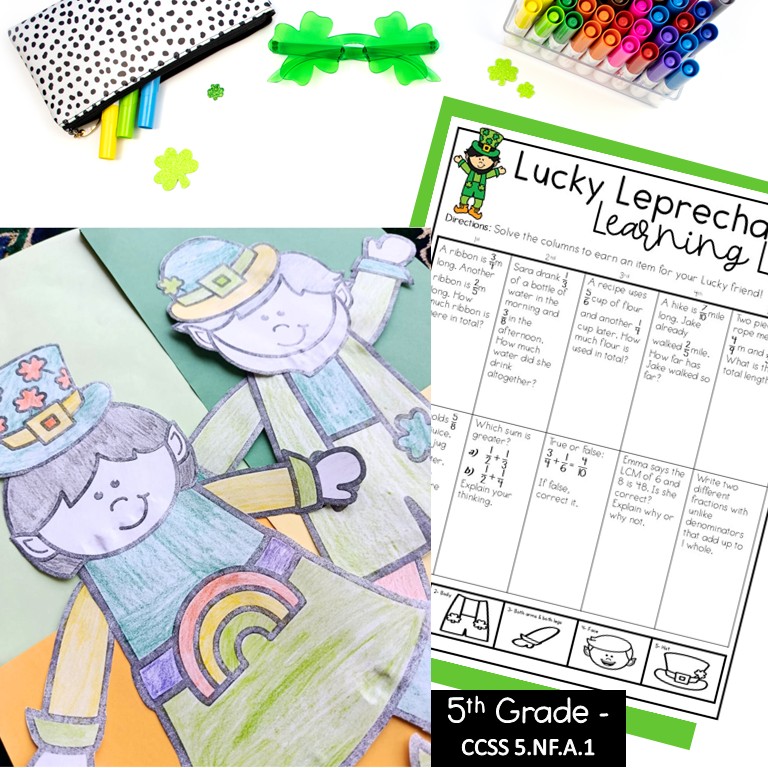
    St. Patrick’s Day Themed 5th Grade Math Craft

    Lastly, there are math crafts that are not just fun but also include common core-aligned practice so your students move forward in their math progress.

    This fraction math craft activity is perfect for centers because it is self-correcting and rewarding! 

    Students solve 3 math problems and come back to you to collect their craft item.

    Best St Patricks Day Math Adding and Subtracting Fractions Unlike Denominator Craft 5th and 6th Grade

    After checking their answers, the teacher hands them a craft piece that they have earned and will use to build their lucky leprechaun friend.

    It’s like a perfect reward-based activity kids need during this time of the year.

    Want something fun and free to use in your class check this Free Saint Patty’s day activities!

    Want to be set for the whole year of upper elementary math centers without paying your whole teaching salary. Check out this Mega Math Centers bundle currently at 75% off!

    St Patrick's Fraction Color by Number Math coloring activity
  • | |

    The Best End-of-Year Math Activities for 5th Grade (That Kids Actually Love)

    The end of the school year is such a weird mix of emotions in the classroom. Your 5th graders are excited, everyone is a little sentimental, and honestly… completely checked out the second anything looks like a worksheet. Sound familiar?

    It’s a struggle for most of use like EVERY SINGLE YEAR.

    But here’s the thing: end-of-year math review does NOT have to feel painful (for you or them).

    It can actually end up being one of the most fun parts of the year… especially if you’ve got the right activities ready to go.

    Today I’m sharing three of my go-to end-of-year math activities for 5th grade. These are the ones my students actually get excited about (which is saying a lot this time of year).

    And the best part? They’re still hitting all the major 5th grade math skills… so you’re keeping things fun and making sure nothing important gets missed. Total win.

    Those last few weeks of school? The goal is basically to keep students engaged without it turning into chaos or busywork that nobody cares about.

    These three activities make it a whole lot easier. No starting from scratch, no overthinking… just grab what you need and go. Let’s dive in.

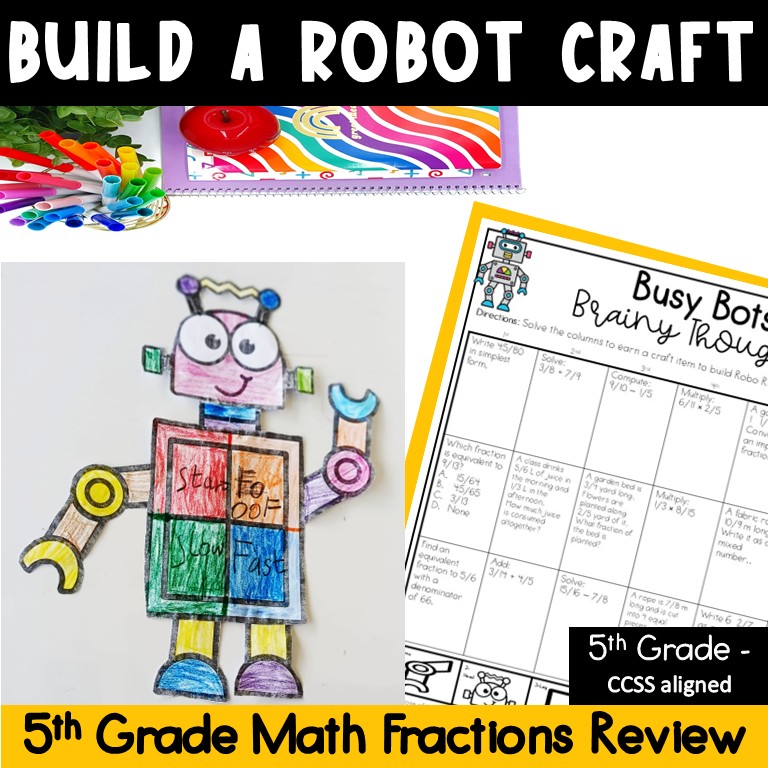
    1. EOY Math Craft — Build-a-Robot Craftivity

    If you really want to see your 5th graders light up, bring out a math craft. I’ve learned over the years that when you mix creativity with actual content, engagement goes way up and this Build-a-Robot activity is a perfect example of that.

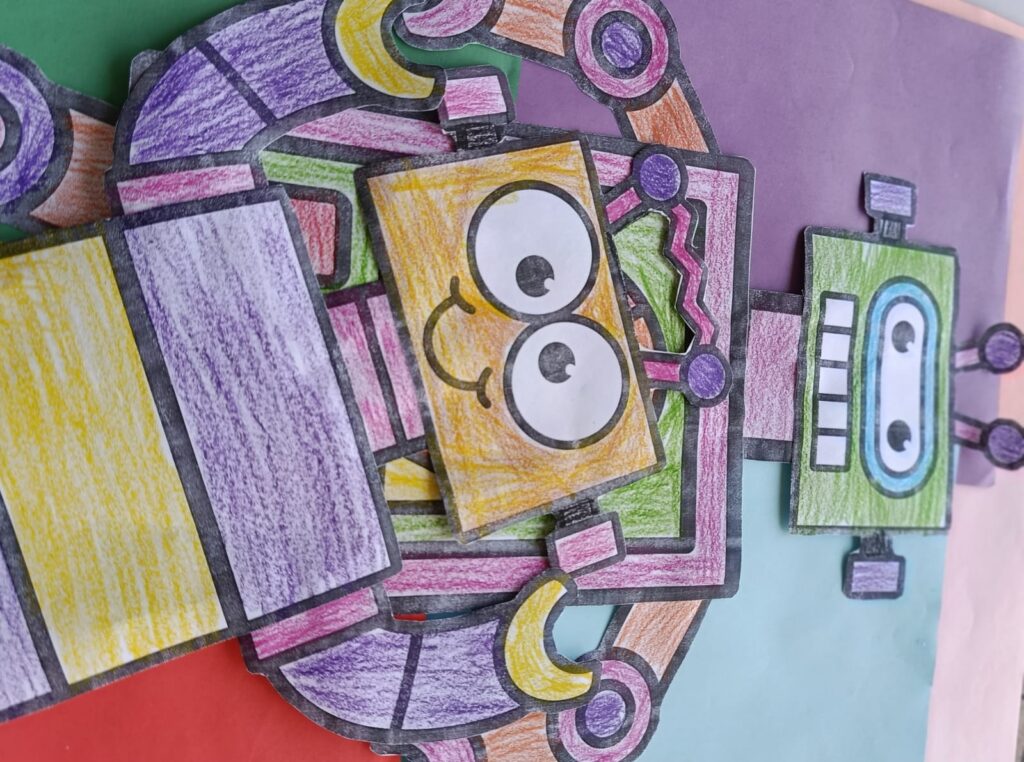
    Here’s how it works: students solve math problems focused on fractions, decimals, and division. Every correct answer earns them a piece of their robot to cut out and build. By the end, you’ve got a classroom full of unique robots and honestly, one of the cutest bulletin boards of the year.

    What I love most about this is that it doesn’t feel like a review. Students get so into building their robot that they stop complaining about the math and just… do it. You’ll see them actually sticking with problems instead of checking out.

    It’s perfect for those last couple of weeks of school, a math celebration day, or even just a Friday when everyone (you included) needs something different.

    5th grade unlike fractions math crafts hands-on practice

    Also, super low prep. Print it, hand it out, and you’re good to go. No complicated setup, which is exactly what you need this time of year.

    You can grab the EOY Math Robot Craftivity here!

    2. EOY Math Packet 5th Grade Spiral Review

    Let’s be real, sometimes you just need something that covers everything without you having to piece it all together yourself.

    That’s exactly what this 26-page end-of-year math review packet is for. And when I say it covers everything, I mean it.

    Here’s a quick look at what’s inside:

    • Operations with Whole Numbers (addition, subtraction, multiplication, and division)
    • Fractions (adding, subtracting, multiplying, and dividing—including mixed numbers)
    • Decimals (all the way to the hundredths place)
    • Measurement and Data (line plots, volume, conversions)
    • Geometry (2D figures and the coordinate plane)
    • Algebraic Thinking (patterns, expressions, equations)
    • Word Problems (real-world application and critical thinking)

    I use this in a bunch of different ways depending on what we need.

    End of year summer 5th grade work pack for summer math practice

    You can run it as a whole-class review, break it into stations, send it home as a summer bridge packet, or use it to help your students heading into 6th grade feel a little more confident.

    It’s one of those resources you’ll keep coming back to because it just makes your life easier. Everything is laid out clearly, the pages are student-friendly, and you can either assign the whole thing or just pull the sections you need.

    You can grab the End-of-Year Math Review Packet here!

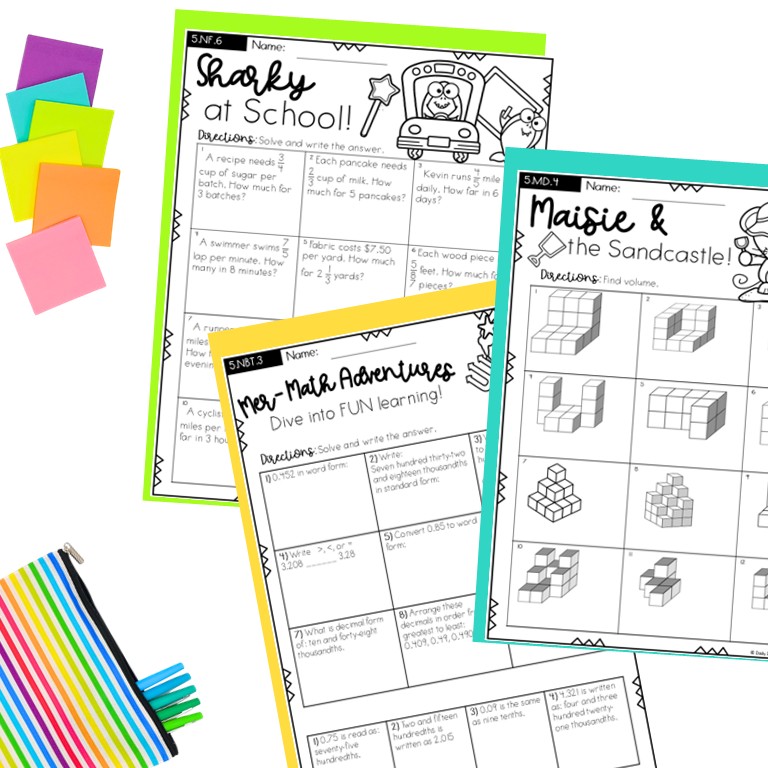
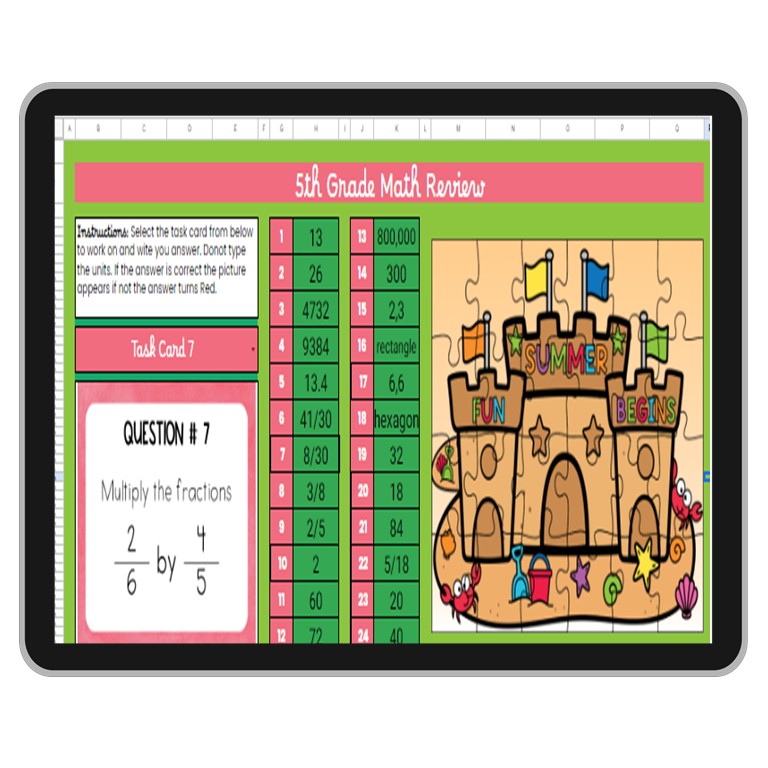
    3. EOY Math Task Cards + Pixel Art Activity

    Task cards are one of my go-to ways to get students reviewing without them feeling stuck in their seats all day.

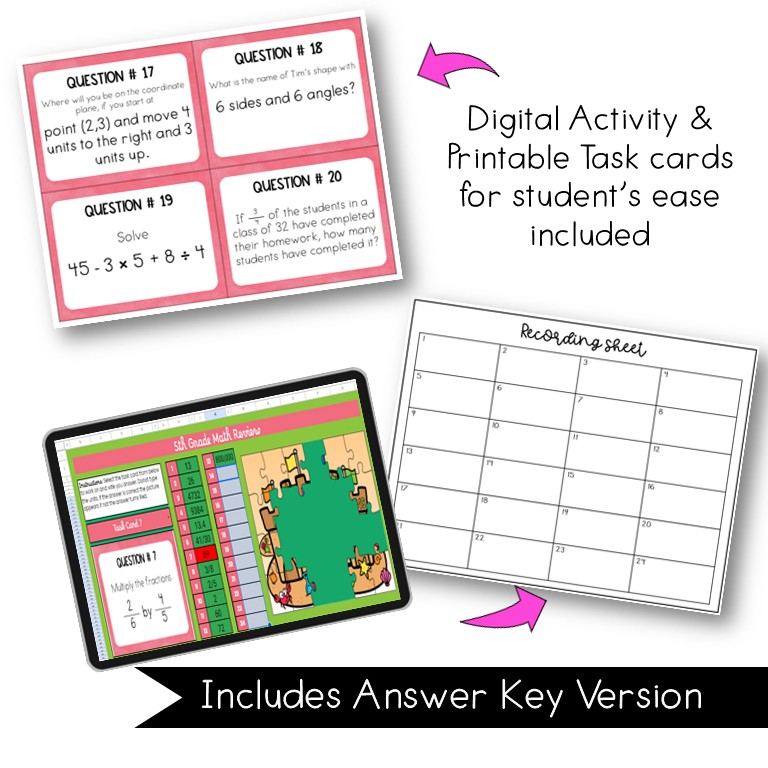
    This set of 24 task cards works as a full spiral review of what your 5th graders have learned and it keeps things moving, which is key this time of year.

    Students work through problems covering:

    • Order of Operations
    • Adding and Multiplying Fractions
    • Decimal Operations
    • Volume
    • Coordinate Plane
    • Geometry and Shape Classification
    • Real-World Word Problems

    There’s also a recording sheet included, which makes it really easy to manage. Whether you’re using this as a center or just want some built-in accountability.

    EOY review 5th grade Digital Activity for small group or centers practice

    I personally love running this as a Scoot activity where students rotate around the room. They’re up, they’re moving, and they’re way more engaged than if they were stuck in their seats.

    The pixel art piece is such a fun bonus especially for tech days. As students answer questions, a mystery image starts to appear little by little.

    I swear, they get so into this part. It feels more like a game than a review, which is exactly what you want at the end of the year.

    EOY math review 5th 6th grade digital activity for upper elementary centers practice

    You can use this as a math center, early finisher option, partner activity, or even a whole-class review game it’s super flexible depending on what your day looks like.

    You can grab the End-of-Year Task Cards + Pixel Art Activity here!

    Tips for Planning Your Last Two Weeks of Math

    Now that you’ve got a few solid activities ready, here’s an easy way to actually make them work during those final weeks.

    Mix things up throughout the week so students don’t get bored. Maybe you do the craft one day, task cards the next, and sprinkle in the review packet when you need something more structured.

    It doesn’t have to be complicated, just keep it varied.

    You can also run the task cards during centers while you pull small groups to hit any last-minute gaps. This was always a lifesaver for me when I knew a few students needed extra support before moving on.

    And not gonna lie, the finished robot crafts make the cutest bulletin board. My students love seeing their work up there, and it turns into a fun little end-of-year celebration without a ton of extra effort.

    If you want to extend the learning, sending the review packet home as a summer bridge is a great option. It helps keep skills fresh before 6th grade but honestly, it works just as well for end-of-year review or even test prep.

    At the end of the day, your students have worked really hard all year.

    These last couple of weeks are a chance to keep learning going while also making things feel a little more fun and memorable.

    Want to be set for the whole year of upper elementary math centers without paying your whole teaching salary. Check out this Mega Math Centers bundle currently at 75% off! Or click here to get access to the free math resource library!