| |

The Best End-of-Year Math Activities for 5th Grade (That Kids Actually Love)

The end of the school year is such a weird mix of emotions in the classroom. Your 5th graders are excited, everyone is a little sentimental, and honestly… completely checked out the second anything looks like a worksheet. Sound familiar?

It’s a struggle for most of use like EVERY SINGLE YEAR.

But here’s the thing: end-of-year math review does NOT have to feel painful (for you or them).

It can actually end up being one of the most fun parts of the year… especially if you’ve got the right activities ready to go.

Today I’m sharing three of my go-to end-of-year math activities for 5th grade. These are the ones my students actually get excited about (which is saying a lot this time of year).

And the best part? They’re still hitting all the major 5th grade math skills… so you’re keeping things fun and making sure nothing important gets missed. Total win.

Those last few weeks of school? The goal is basically to keep students engaged without it turning into chaos or busywork that nobody cares about.

These three activities make it a whole lot easier. No starting from scratch, no overthinking… just grab what you need and go. Let’s dive in.

1. EOY Math Craft — Build-a-Robot Craftivity

If you really want to see your 5th graders light up, bring out a math craft. I’ve learned over the years that when you mix creativity with actual content, engagement goes way up and this Build-a-Robot activity is a perfect example of that.

Here’s how it works: students solve math problems focused on fractions, decimals, and division. Every correct answer earns them a piece of their robot to cut out and build. By the end, you’ve got a classroom full of unique robots and honestly, one of the cutest bulletin boards of the year.
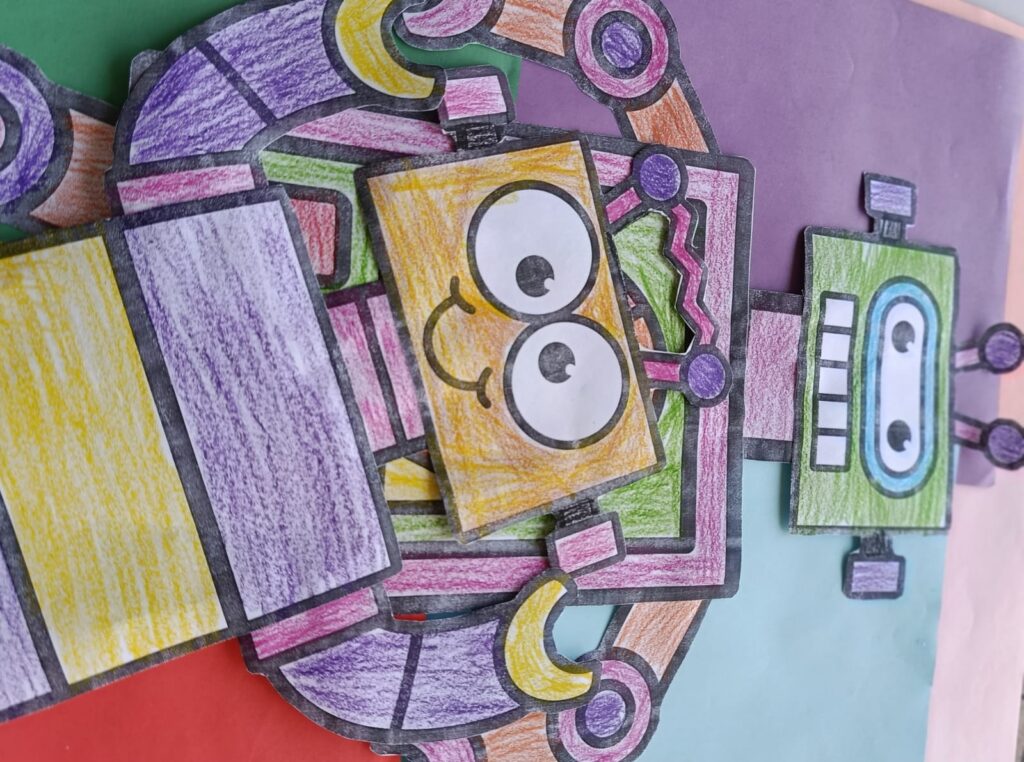
What I love most about this is that it doesn’t feel like a review. Students get so into building their robot that they stop complaining about the math and just… do it. You’ll see them actually sticking with problems instead of checking out.

It’s perfect for those last couple of weeks of school, a math celebration day, or even just a Friday when everyone (you included) needs something different.
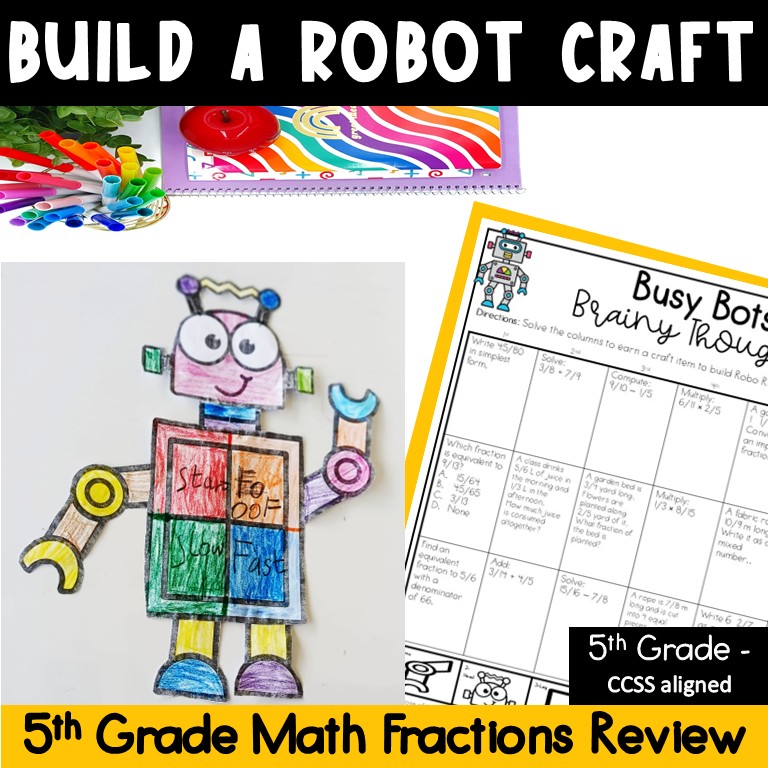
Also, super low prep. Print it, hand it out, and you’re good to go. No complicated setup, which is exactly what you need this time of year.

You can grab the EOY Math Robot Craftivity here! (link)

2. EOY Math Packet 5th Grade Spiral Review

Let’s be real, sometimes you just need something that covers everything without you having to piece it all together yourself.

That’s exactly what this 26-page end-of-year math review packet is for. And when I say it covers everything, I mean it.

Here’s a quick look at what’s inside:

  • Operations with Whole Numbers (addition, subtraction, multiplication, and division)
  • Fractions (adding, subtracting, multiplying, and dividing—including mixed numbers)
  • Decimals (all the way to the hundredths place)
  • Measurement and Data (line plots, volume, conversions)
  • Geometry (2D figures and the coordinate plane)
  • Algebraic Thinking (patterns, expressions, equations)
  • Word Problems (real-world application and critical thinking)

I use this in a bunch of different ways depending on what we need.
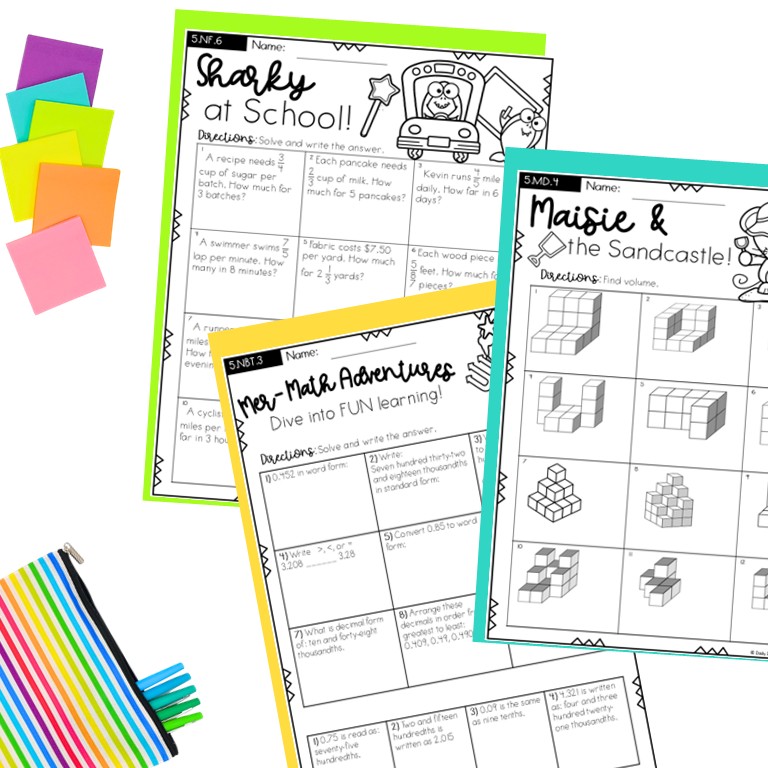
You can run it as a whole-class review, break it into stations, send it home as a summer bridge packet, or use it to help your students heading into 6th grade feel a little more confident.

It’s one of those resources you’ll keep coming back to because it just makes your life easier. Everything is laid out clearly, the pages are student-friendly, and you can either assign the whole thing or just pull the sections you need.

You can grab the End-of-Year Math Review Packet here! (link)

3. EOY Math Task Cards + Pixel Art Activity

Task cards are one of my go-to ways to get students reviewing without them feeling stuck in their seats all day.

This set of 24 task cards works as a full spiral review of what your 5th graders have learned and it keeps things moving, which is key this time of year.

Students work through problems covering:

  • Order of Operations
  • Adding and Multiplying Fractions
  • Decimal Operations
  • Volume
  • Coordinate Plane
  • Geometry and Shape Classification
  • Real-World Word Problems

There’s also a recording sheet included, which makes it really easy to manage. Whether you’re using this as a center or just want some built-in accountability.
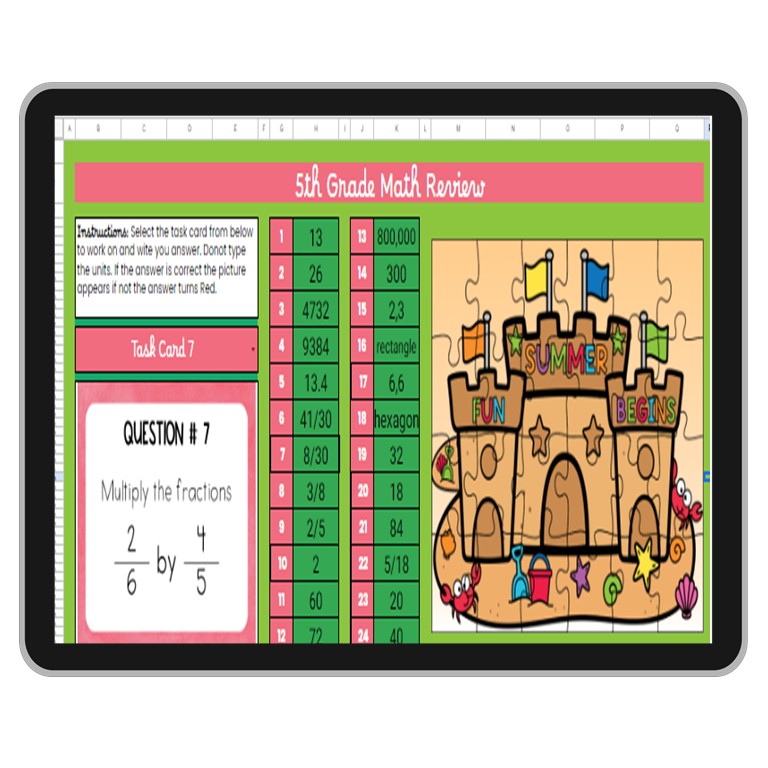
I personally love running this as a Scoot activity where students rotate around the room. They’re up, they’re moving, and they’re way more engaged than if they were stuck in their seats.

The pixel art piece is such a fun bonus especially for tech days. As students answer questions, a mystery image starts to appear little by little.

I swear, they get so into this part. It feels more like a game than a review, which is exactly what you want at the end of the year.
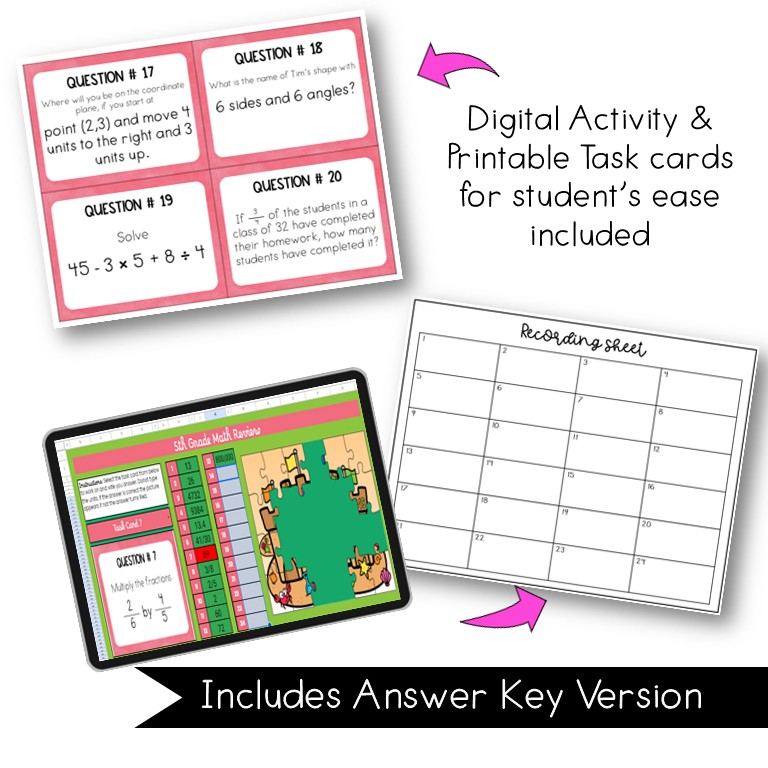
You can use this as a math center, early finisher option, partner activity, or even a whole-class review game it’s super flexible depending on what your day looks like.

You can grab the End-of-Year Task Cards + Pixel Art Activity here!

Tips for Planning Your Last Two Weeks of Math

Now that you’ve got a few solid activities ready, here’s an easy way to actually make them work during those final weeks.

Mix things up throughout the week so students don’t get bored. Maybe you do the craft one day, task cards the next, and sprinkle in the review packet when you need something more structured.

It doesn’t have to be complicated, just keep it varied.

You can also run the task cards during centers while you pull small groups to hit any last-minute gaps. This was always a lifesaver for me when I knew a few students needed extra support before moving on.

And not gonna lie, the finished robot crafts make the cutest bulletin board. My students love seeing their work up there, and it turns into a fun little end-of-year celebration without a ton of extra effort.

If you want to extend the learning, sending the review packet home as a summer bridge is a great option. It helps keep skills fresh before 6th grade but honestly, it works just as well for end-of-year review or even test prep.

At the end of the day, your students have worked really hard all year. These last couple of weeks are a chance to keep learning going while also making things feel a little more fun and memorable.

If you’re looking for more 5th grade math resources, you can check out my TPT store for activities on fractions, decimals, geometry, and more.

Similar Posts

  • | | |

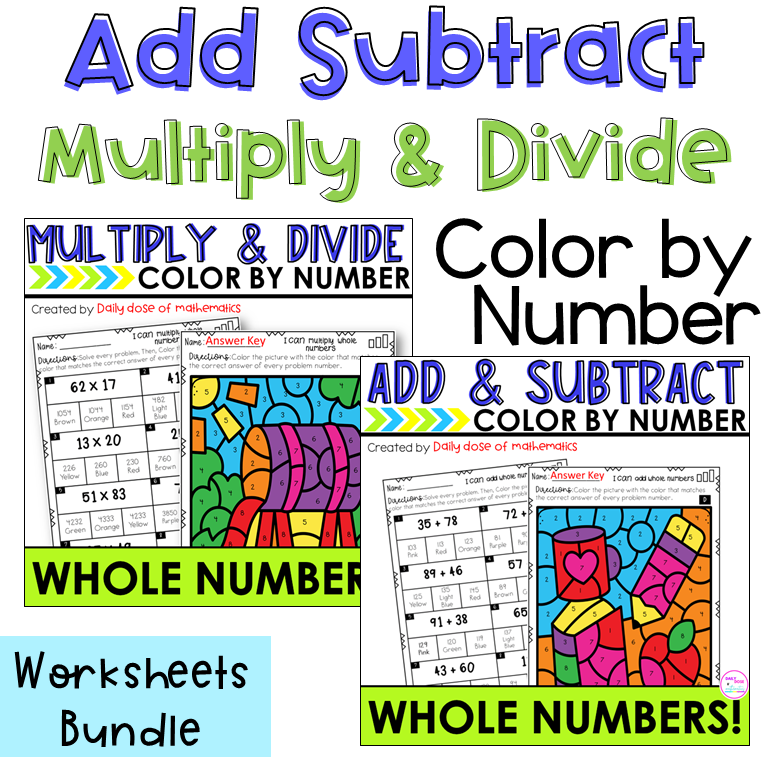
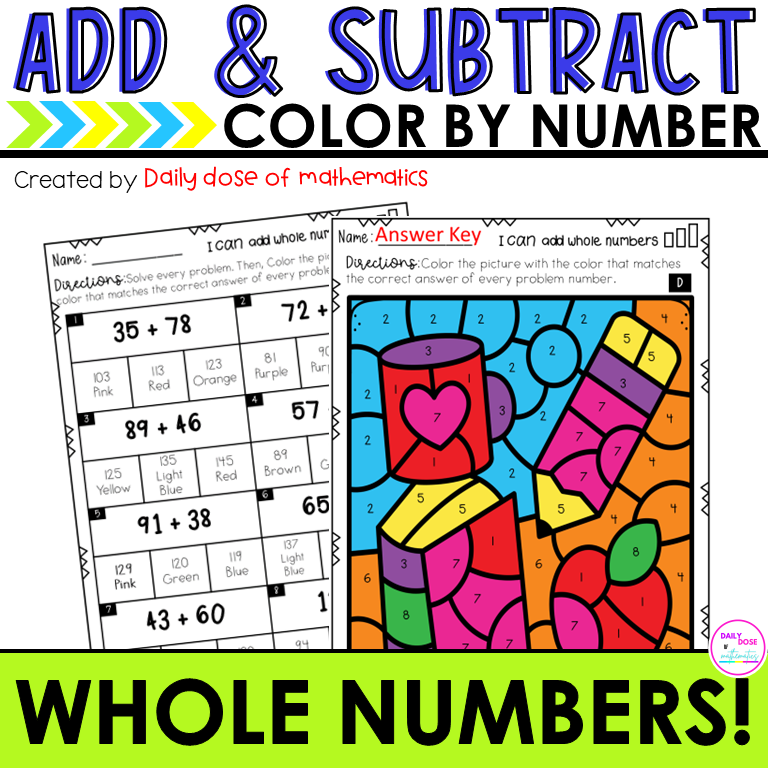
    5 Unique but Epic Ways To Use Color By Number Worksheets For High Student Engagement This Year

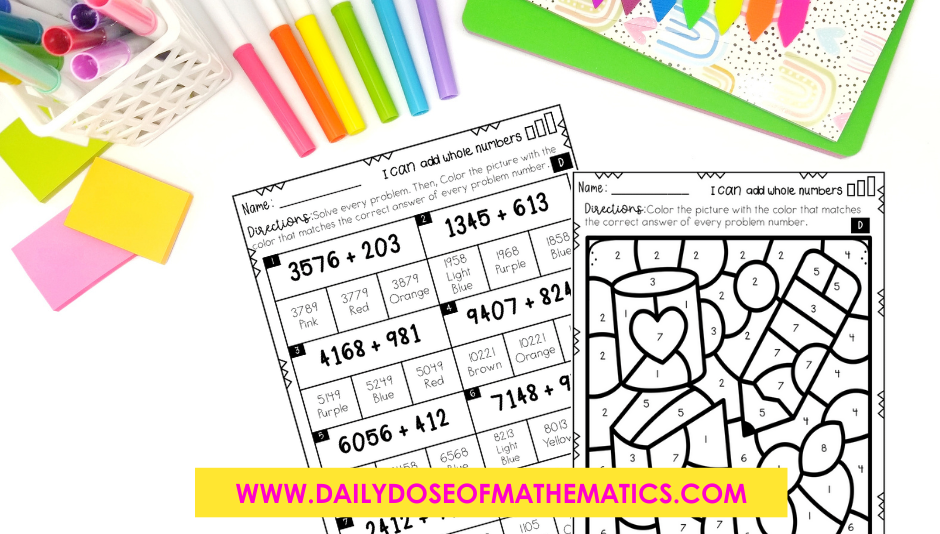
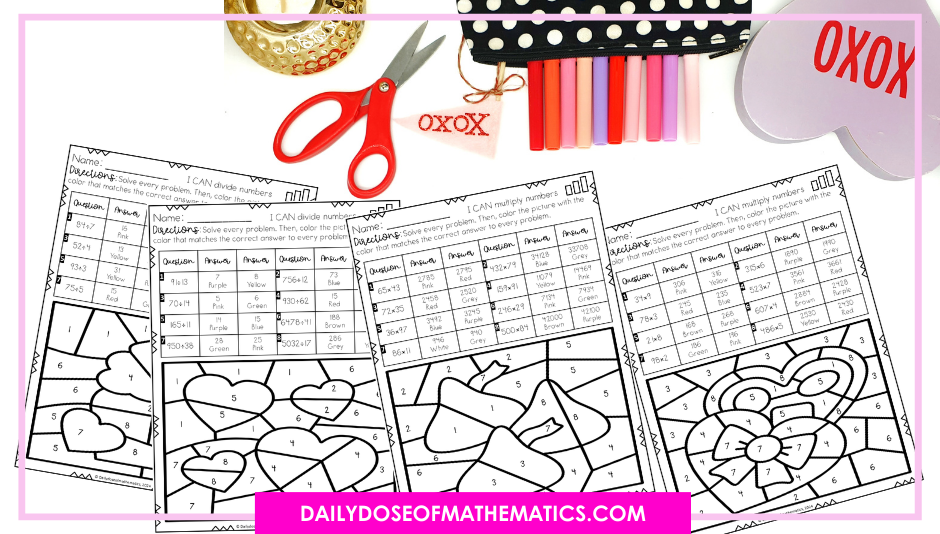
    Using color by number activities in one of my favourite ways to bring excitment and fun inside classroom. I cannot tell you how much my kids look forward to using these for any topic or theme day.

    Seriously its one of the best way in my opinion to keep them on the task while still interested in practicing math during math centers.

    Try using the if your kids are hitting a math practicing roadblock. We even display the art result they produced in our classroom or gallery. Students feel super prod when I do that.

    So today let’s discover five easy ways you can implement math color by number worksheets so you can have an engaged class that’s excited to work on them.

    What is a Color by Number Worksheets:

    Color by number worksheets aren’t just art and math combined today, instead they are a sure way to give your kids a more engaging and educational experience that they might miss out on during a traditional learning environment.

    This way of practicing math provides a structured way to kid’s daily math practice. Today, I’m about to sow you how I use them to add engagement for any topic you want to teach be it fraction operation including word problems or order of operation along with decimal operations.

    Why to use Color by number worksheets for developing understanding:

    Using art in our daily learning is a fantastic way to increase our kid’s educational experience. Think of it this way: your kids solving math problems and revealing a historical place, figure, or even a themed art piece to set the mood for some festive spirit.

    Coloring is also a calming activity that reduces stress and keeps them focused on the task while developing fine motor skills. This is one of the reason why I use color-by-number worksheets as a terrific way to keep them on track with their daily math progress while having fun

    Customizable Math Teaching Tool:

    Every child is different, and no 2 kids can learn the same way. Customizing color by number worksheets to fit their needs and learning styles can drastically boost student’s engagement.

    For visual learners or students who cannot focus on a single task, these worksheets can be a handy tool for any math teacher. 

    Creative Reward and Recognition:

    You can use the completed math coloring worksheets as a positive reinforcement activity for your students.

    Here is how I achieve this. I display the finished color by number worksheets inside our classroom or hallway, which encourages students to perform better and acts as a reward for their hard work.

    Develops Emotional Intelligence:

    This type of activity not only gets student’s creative juices to follow but also keeps them calm and organized. This enhances their emotional intelligence and stamina to endure more demanding challenges in the learning process, which we as a teacher always strive for. 

    Independent and Self-Checking Practice:

    If I had to pick one reason among all the above, this one would always surpass the rest. The most important thing any teacher wants is to cut down the time used for grading so we can actually do more of what we Love, aka “TEACHING“.

    Color by number worksheets are a fantastic way to facilitate independent practice of topics like area of complex figures, order of operations during the math center activities or the morning bell work, or you can even leave them for a sub day and still get the teaching stuff done while you are away. 

    Want to include some color-by-number activities in your class?

    Here are a few free ones for you to use.

    Get access to Free addition and subtraction color-by-number worksheets and Multiplication Color by number worksheets

    If you would like to see more color by code activities, just click on the cover below.

    Math color by number worksheets and activites for elementary students, decimals and fractions color by number worksheets
  • |

    How to teach the area of composite/complex figures in an EPIC way!

    Struggling to teach the area of composite figures in a way your students actually get?

    Ever wondered that every time you feel like thinking about how to get started or how even to think about introducing the topic to your kids, frustration kicks in!

    Believe it or not, we all have been there during our first few years of teaching.

    And you’re not alone… If your kids are zoning out the second you say “area” keep reading, this post breaks it down with easy, engaging ideas that make sense (and work for all levels).

    Teach kids how to find Area of Complex or Composite Shapes  figures | middle school math lessons and activities

    Explore the Area of complex figures in an exciting way

    Let’s be real right now teaching math isn’t what it used to be. Today’s kids are growing up with TikTok-level attention spans and infinite entertainment options at their fingertips.

    That means if your area of complex shapes lessons are not engaging and exciting enough, you’ve already lost half the battle.

    Here’s the good news, you don’t need flashy tech or hours of prep work just to make the area of composite figures click for your students. You just need the right strategy.

    So how do you teach this topic in a way that’s fun, clear, and actually sticks?

    find Area of Complex or Composite Shapes lesson math middle school

    The answer: make it visual, hands-on, and connected to real life, yup, that’s right this way your students aren’t just memorizing formulas, they’re solving problems like mini math detectives on a mission hunt.

    Now the question is where do you begin?

    Start with the Basics:

    Like I said, it all starts with basics.

    And to be honest, there is no other answer to this problem other than nailing the basics!

    Here is the hard truth… if kids find the lesson interesting, they are more likely to be engaged and motivated to learn about the problem, think about it, practice it, and ultimately feel a sense of confidence in their skills.

    This is why using gamified methods of teaching math inside your classroom can be a handy tool for teaching any concept!

    Teach kids how to find Area of Complex or Composite Shapes  figures | middle school math lessons and activities

    Seeing Math Everywhere:

    Here are the steps to help kids see math everywhere in their life.

    Step 1: Help Students See Math Everywhere (Real-Life Hook)

    One of the most effective ways to introduce composite figures is by showing students where these shapes exist in their world.

    What it means is to check for there: Activate prior knowledge. Ask your students:

    • What basic shapes do you already know?
    • Can you think of any objects that are made up of more than one shape?

    Then guide them to see that a playground, a building (maybe school) floor plan, or even a weird-shaped pizza is made of multiple simple shapes.

    🟩 + 🟥 + 🟦 = Composite figure.

    Your goal here is to help them realize that composite shapes are just familiar shapes combined, nothing fancy.

    Teach kids how to find Area of Complex or Composite Shapes  figures | middle school math lessons and activities

    Step 2: Revisit the Basics with Hands-On Practice

    Before diving into composite figures, make sure your students are rock solid on calculating the area of:

    • Squares
    • Rectangles
    • Triangles

    Here is a Pro Tip: Use graph paper and have them COUNT squares to confirm what the formulas actually do. This helps your visual and tactile learners “see” the math in action.

    Step 3: Decompose a Composite Figure (using engaging activities)

    Once the basics are solid, it’s time for the real fun, breaking down a complex shape into smaller, manageable parts.

    Here is an activity you can try in your class:

    1. Show them a real-life layout — like a house blueprint or the shape of a playground.
    2. Ask them to identify the basic shapes they see.
    3. Have them outline or color-code each individual shape inside the figure.
    4. Guide them through finding the area of each part — and then adding it all together.

    Want a fun way to reinforce this practice? Try out this this area and perimeter Color by Number activity!

    Finding the Area of Composite Figures or Complex Figures (Color by Number)

    Since kids have already mastered how to calculate the area of regular shapes, it’s time to introduce them to composite figures.

    You can use any composite shape, like a park or a house layout, and ask what they see.

    Tell them to imagine the shape as a whole building made by several small ones and treat every small shape like a rectangle, square, or triangle as a room inside the building.

    Let them think about this concept for a while, and then decompose the shape into its parts and find the area of the individual basic shape.

    Finding Area of Complex Figures Piece by Piece

    Next, it’s time to decompose composite figures like literally breaking the big shape into smaller, familiar parts.

    For better understanding, it’s good to introduce a composite figure with 2 or 3 squares or rectangles and then move on to the more complex figures.

    The next step is to ask your kids how many squares or rectangles they see inside their big figures.

    Have them trace or outline each individual shape in a different color and then calculate the area of each smaller part one shape at a time.

    Pro Tip: Write the area inside each shape as they go to help them see their progress. Next step is to calculate the areas of these individual shapes.

    Since your students by now already know how to calculate the area of regular figures, it would not be a daunting task. Lastly, ask them to add all of them together to get the total area.

    Want some resources to practice the area of squares, rectangles, and triangles in an exciting way? Check out this area and perimeter Color by Number activity below.

    Area of complex figures review practice and perimeter of regular and composite figure, area and perimeter of regular shapes

    Finding the Area of Complex Figures (Trending and Most Popular)

    Now comes the fun part: tell your kids that we are calculating the area of the whole building, not just the single rooms inside.

    They also know how to calculate it by adding the areas of each smaller shape. Basically, by summing up, kids will be able to tell what the area of the complex figure is. 

    Want some fun digital and printable activities to help you with this lesson?

    Check out this exciting whole class activity: Digital game for area of composite figure that also includes printaba le worksheet for student accountability.

    Area of composite figure digital game and activity for 6th grade

    Want to access free math resources worth $29. Click here to learn more!

    Click here to learn more about 5th Grade math activities that keep your students excited while learning math year long.

    Join in to get special FREEBIES and Insider’s FUN!

  • | |

    Boost Math Engagement with Fun Fall Themed Interactive Games

    Have you ever found yourself scanning through the room during math class, looking at a mix of bored faces, frustrated sighs, and the occasional doodler?

    I know I have, and we’ve all been there. But the real challenge is making math both fun and educational for kids at the same time.

    This might seem challenging during some teaching days, but what if I told you there’s a way to sprinkle a bit of autumn magic into your math lessons and get those hands eagerly shooting up with answers?

    And yes, that’s possible! The best way to make kids fully involved and ready to solve some problems no matter how hard they are is by using interactive games. 🍂✨

    Enagging Fall addition subtraction multiplication division math powerpoint game activities for 3rd 4th and 5th grade kids

    Use these interactive Fall-themed games in your classroom for small groups during centers or as a whole class activity and see the class engagement soar.

    Here’s Why This Bundle is a Game-Changer:

    • Engagement Overload: With a delightful “Pick a Fall Cookie” Game, learning basic operations like addition, subtraction, multiplication, and division isn’t just another math lesson. It’s an experience. One where students eagerly click through questions, challenging themselves and having a blast while at it.
    • Comprehensive Coverage: This bundle isn’t just about practicing a single concept like division. Oh no! Your students will dive deep into 3 digit addition and subtraction with regrouping, tackle 3 by 1 and 2 digit division, and master 2 by 2 digit multiplication. It’s a math smorgasbord!
    • Perfectly Structured: Each game comes with 12 questions, allowing for a full, immersive session without dragging it out. Plus, navigation is a breeze with interactive features like clickable numbers and a handy home button.
    • Versatility: Whether you’re looking to jazz up your math centers, provide engaging activities for early finishers, or differentiate your instruction, this bundle has got you covered.

    What you get:

    Once you get this fall interactive games bundle, you’ll find a series of PowerPoint games designed to keep kids engaged in learning addition, subtraction, multiplication, and division, along with 6 digit number place value practice. The goal? To make math engaging, interactive, and the highlight of your students’ day.

    The main slides have interactive numbers with fun and exciting fall images that students can click on and go to that specific slide to solve. 

    Enagging Fall addition subtraction multiplication division math powerpoint game activities for 3rd 4th and 5th grade kids

    Conclusion:

    So, if you’re ready to transform those groans into grins and make math the highlight of your kid’s day, try these fall addition, subtraction, multiplication, division and place value bundle and see your kid’s engagement and confidence soar.🍁📖🍪

    Try these math fraction activities if you want more fun and excitement in your classroom.

    Want to get free stuff sent straight to your inbox?

    Sign up below to get access to Free Resource Center!

  • | |

    Fun Order of Operations Activities to Skyrocket Engagement Now

    I get it, I get it, as an upper elementary math teacher, we can teach order of operation to 5th grade students for what can feel like forever. So long that you may feel like you are running low on new ideas to teach it anymore.

    If that’s the case, then consider using these 5 fun and exciting Order of Operations activities to keep your students hooked.

    All these are my favorite activities. They include both printable and digital options so there is something for everyone.

    Color by Number Order of Operations Activities

    Getting students excited about the order of operation topic can be a challenge but not if you are using the right activities to engage and get kids to think more about the order of operation. 

    Students do not just need to know how to solve order of operations problems. It is equally important that kids learn why learning about the order of operations is important.

    It’s a way to make sure every one of us arrives at the same answer to a particular problem.

    You can teach them various strategies like “please excuse my dear aunt sally” to make it easier for them to remember.

    This activity combines the key critical concepts of order of operations (PEMDAS) with the fun of coloring

    Here is how Order of Operations Activities works:

    Students are given a worksheet with various math problems that they have to solve using the correct order of operations to find the answers. 

    Order of Operation Color by Number Activities

    Each answer corresponds to a specific color which they will then use to color sections of a picture.

    As they solve the problems correctly, a colorful image starts appearing providing students with immediate feedback and a sense of accomplishment.

    Pixel Art Order of Operation Activities

    Want something quick for digital stations? No worries, I got you covered.

    These Order of Operations digital activities are creative and engaging at the same time so your kids won’t get bored. 

    The activities involve solving the order of operations problems using Google Sheets digital activity. Each correct answer reveals a portion of the pixelated image.

    Students write the answers to the problems into the specific cells. 

    Order of Operation Pixel Art Activities
    Order of Operation Pixel Art Activities

    The digital activity involves practicing both types of problems: with and without exponents. 

    Wait, that’s not all. You will also get students handouts that go with the digital activity and keep them accountable for showing their work.

    Exciting Task Cards and Story-based Maze

    Capture your kid’s attention using story-based gamified learning similar to this Save the Queen Maze Activity

    In this order of operation maze activity, students look for ways to help Save the Queen Bee that is lost in the wild on her way back home. 

    They must correctly solve problems to help her find her way back to Hive!

    And the best part you can choose to use with or without exponents to differentiate the topic. 

    Order of Operation Maze and Task Cards Activity

    Not only this, the activity is highly engaging and self-checking so you do not have to spend time grading the papers.

    In the end, use the reward card certificates for positive reinforcement for your kids.

    What’s Included:

    • 1 Save the Queen Game Maze Activity (Order of Operations – Beginner)
    • 1 Save the Queen Game Maze Activity (Order of Operations – Advance)
    • Each Maze has 12 Task Cards with different problems (A total of 24)
    • 1 Colored Reward Card & Story Card
    • 1 Black and white Reward Card and Story Card
    • 1 Student Recording Sheet
    • Answer Keys of all

    Solve the Room Order of Operations Activities

     This one is the most fun and dynamic activity to implement in your classroom. My kids always enjoy and look forward to playing this activity.

    Their excitement is the only reason why I have to make Solve the Room activities for 5th grade Bundle, so you do not have to do the work. 

    Want to know how it works?

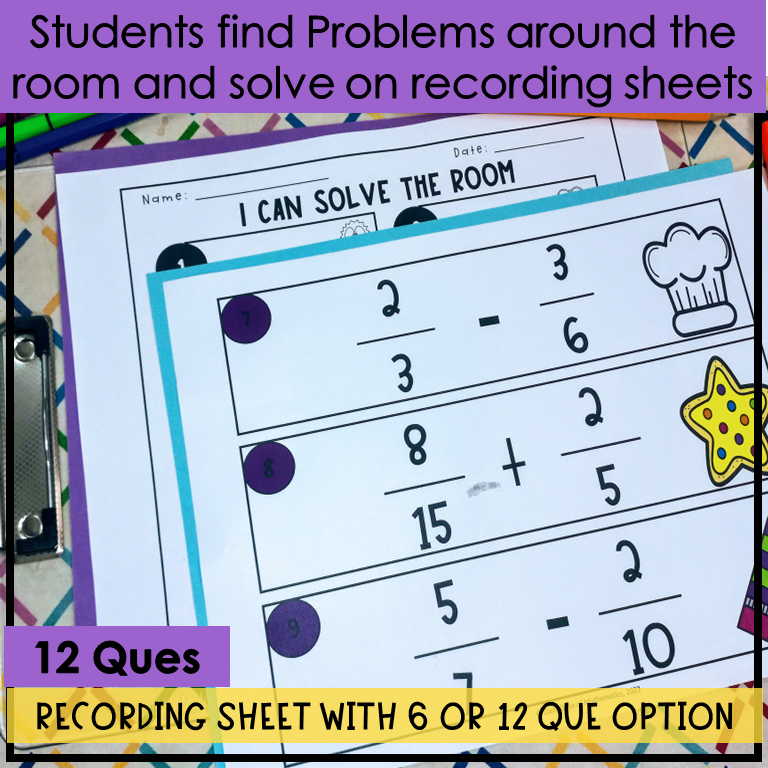
    You post task cards with math problems for your students to work on at different stations or different areas of your classroom. 

    Order of Operation Solve the Room Activities

    Then give each student a recording sheet to record their answers.

    Students move around the room to find these problems, solve and record them on the given recording sheet. 

    Why this is the best activity to try:

    • Engagement: Traditional worksheets can sometimes bore students, but Solve the Room adds an element of excitement and movement, keeping students motivated and interested.
    • Concept Mastery: Students often struggle with the order of operations. This activity offers repeated practice in a fun and hands-on way, helping kids to solidify their understanding.
    • Classroom Management: By moving around the room and focusing on different problems, students are less likely to become restless or distracted, leading to better classroom management.

    Free Order of Operations Practice Digital PowerPoint Game Activity

    Couldn’t find something you were looking for?

    No worries… here is a FREE fun activity to help your students master the order of operations

    This interactive game is perfect for bringing some cheer into your classroom while reinforcing this essential math skills.

    What is it?

    This engaging PowerPoint game challenges students to solve order of operations problems with a winter theme.

    Each correct answer helps them progress through the game, while a wrong answer directs kids to try the problem again.

    It helps to reinforce learning and makes sure that students understand the concepts before moving on.

    Check out this Free Order of Operations Practice Digital PowerPoint Game Activity

    That’s a lot of content for a single topic in 5th grade math topics.

    All of these activities and more are available in the lesson pack Bundle in my TPT shop.

    Bundle includes:

    • Digital Pixel Art Activities
    • Google Slides Activity
    • Order of Operations Task Cards Printable
    • Order of Operation Worksheets 
    • Story-based Save the Queen Game 
    • Order of Operation Color by Number 

    Click here to get now!

    Order of Operation Activities Bundle Image

    Click to learn more about 5th grade math teaching lesson and ideas.

  • | |

    11 Cool Ways to Make Boring Worksheets Fun and Interesting

    Are you ready to learn how to make Boring Worksheets Fun in your next math class and make math the coolest part of your kids day . Try out these fun ideas and say goodbye to boring old traditional worksheets.

    In this post I’ve got 11 super fun ideas to make math feel like a game. Imagine your students racing to finish math problems, playing bingo with math questions, or even turning your classroom into a mini escape room.

    Let’s make sure learning math is not just about numbers but also about having a great time. And yes you can have fun in you math class even using your old math worksheets that maybe your district in mandating you to use.

    1. Math Races:

    I am all about healthy competition and honestly my kids even love it. All you have to do is give your students a competitive atmosphere by timing them as they complete their assigned math activities or worksheets. This will motivate them to finish quickly and accurately and turn the routine task into an exciting race against the clock.

    2. Worksheet Bingo:

    Another idea that you can implement is turn your normal daily worksheet problems into a bingo game. Which basically means with each correct answer you made your students to mark off a task or problem completed and check off a square. What can even motivate them more is to give them a small prize or award recognition for their effort or to the one that get a line first.

    3. Math Puzzles:

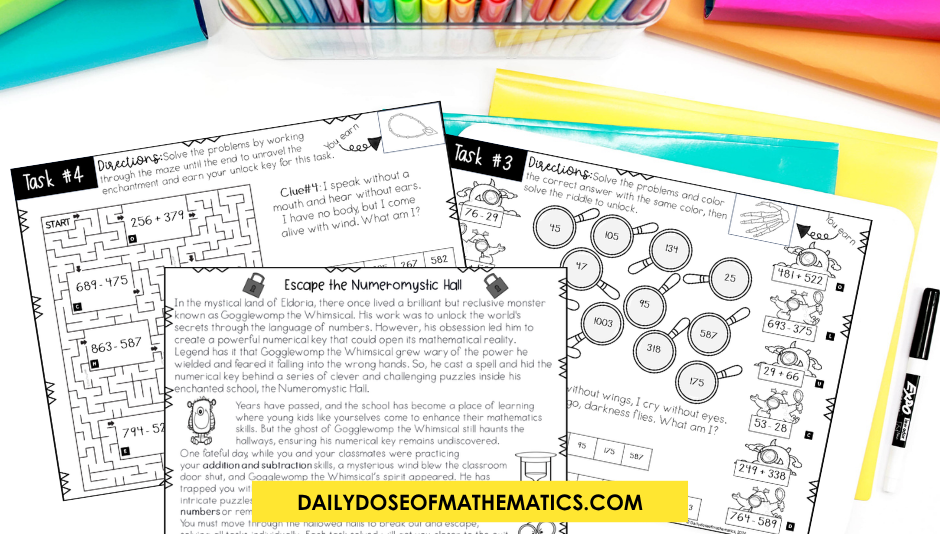
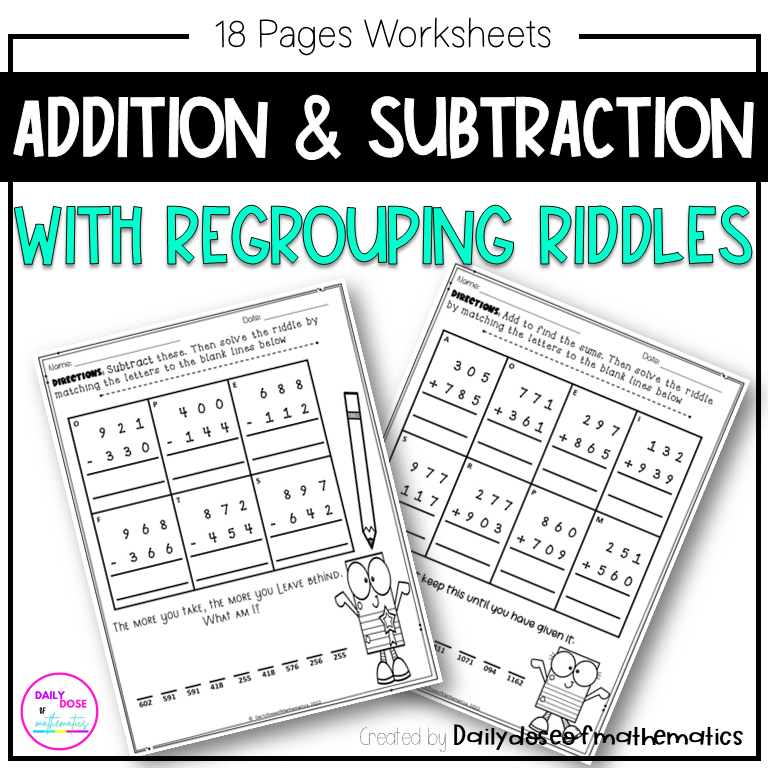
    Using puzzles as worksheets where with every problem that they solve gives them some clue for the next problem they need to solve. It can be a riddle, a hidden message, or a mystery that gets solved with each correct answer. I used on of these mystery puzzles worksheets for reviewing addition and subtraction inside my classroom and my kids just loved it.

    4. Interactive Worksheets:

    Using technology to turn your already made worksheets into interactive digital activities. This way you do not have o do the work again and still keep your kids engaged in fun way. Best way I do it is by turning the task cards in to images and then adding those task cards as background images inside Google Slides(TM) and add a text box on top of it for my kids to put their answers.

    Second thing that you can do is insert the same task cards as images in Google forms(TM) and use the multiple choice option to create a multiple choice self Checking activity like this for your class, either way your kids are gonna love the special twist of learning experience you put on turning boring worksheet fun.

    5. Group Challenges:

    Team work in important for every classroom whether its ELA, math, arts or even music. No matter what you are teaching encouraging teamwork by having students work in small groups to complete the the assigned math task. This way they can develop their social and leadership skill along side learning which is a win win. Students can discuss strategies and help each other out which fosters a collaborative learning necessary for their future growth.

    Creating activities like math mazes, puzzles or mystery activities gives them the opportunity they need to develop their collaborative skills and turn boring worksheets into fun learning experiences.

    6. Real-World Application:

    Connect math problems to real-life scenarios. This not only makes the worksheet more interesting but also helps students understand the practical application of what they’re learning.

    7. Math Stations:

    Set up different stations around the room, each with a math task or worksheet to complete. Students rotate through the stations that breaks the monotony of boring routine and adds movement and excitement to the class.

    8. Creative Rewards:

    Positive reinforcement is essential for kids to learn and get motivated to do better next time. You can give them their favorite snack as an award, a Home work pass or a chance to play their favorite game.

    9. Incorporate Art:

    Have them illustrate their mathematical thinking into art. This gives them the ability to develop further their problem solving skills and critical thinking skills.

    10. Math Journals:

    Math journals like goal journals and others can be useful. Instead of boring worksheets, have students keep math journals where they not only solve math problems but also write about their thought process, making the activity more reflective and personalized. This helps students organize their thought and develop creative thinking.

    11. Escape Rooms:

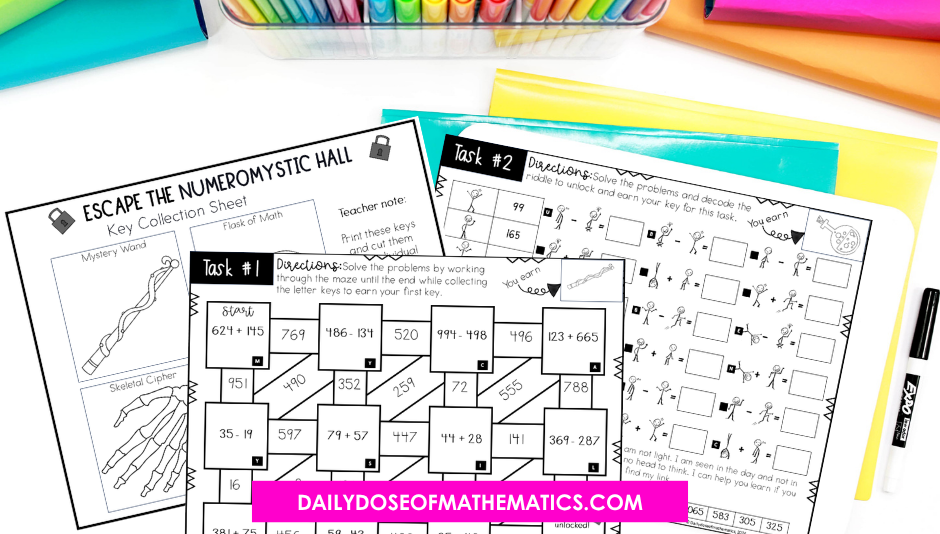
    Design worksheets that mimic an escape room challenge. Each correct answer helps “unlock” the next section until they “escape” by completing the entire sheet. This adds an element of adventure to the task.

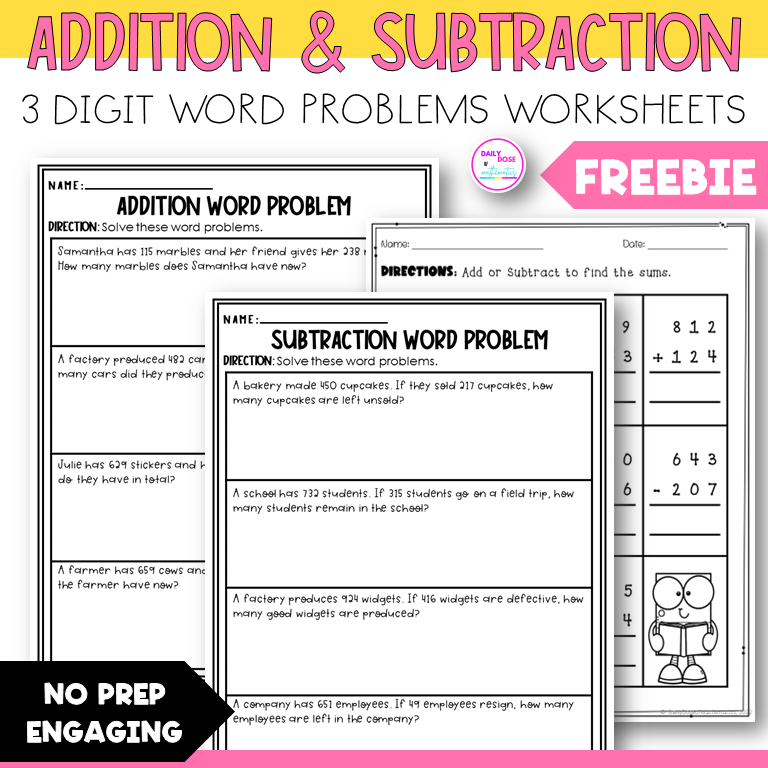
    Remember, the goal is to make learning math not just educational but incredibly fun too. So, try to use these strategies and ideas to your advantage, and turn boring worksheets fun and use them to your advantage. Here is one such example of an multi digit addition and subtraction escape room I did in my that my kids totally loved.

    Use this and see your students discover the joy in numbers, and most importantly, develop a lasting love for learning. Implementing all these ideas might require a bit more effort on your part but I assure you it will be 100% worth it.

    Find the tips useful, share with other teacher friends!

  • How to Explain Integers and Their Opposites to Students (Without the Confusion)

    If integers make your students’ eyes roll, you’re not alone. Integers and their opposites, especially negative numbers, can feel abstract and confusing.

    This is where students start mixing up subtraction with “opposites” or struggle to see how positive and negative numbers relate. 

    The good news? With the right visuals and activities, integers don’t have to be this overwhelming. 

    In fact, you can make them click for students in a way that actually sticks.

    1. Start with Real-Life Examples

    The fastest way to make integers feel less intimidating in grade 6 is to ground them in everyday life. A few examples that always land with my students are:

    • Temperature: Show how 10° above zero and 10° below zero represent opposites.
    • Elevation: Compare a mountain peak to a cave below sea level.
    • Money: Talk about having $20 in your bank account versus owing $20.

    The goal here is to make the concept more relatable using the example, so the students can connect faster. 

    You can even ask them to share their own examples, maybe like sports scores or video game points going into the negative.

    Integers and Their Opposites activities and pdf worksheets with number line practice

    2. Use a Number Line for Integers and their Opposites

    A number line is the foundation for understanding integers. You should first focus on making sure students understand integers using a number line. 

    When students see numbers laid out visually, they notice the symmetry: every positive number has a negative counterpart that is at the same distance from zero.

    • Highlight how +5 and -5 “mirror” each other.
    • Reinforce the idea that zero is the center, it’s neutral ground, so its negative is also 0.
    • Use visuals (a giant number line taped on the floor works wonders).

    This method makes integers less of an abstract idea and more of a pattern they can see and interact with. 

    3. Introduce Integer Opposites as “Math Twins”

    Kids love simple, fun language. Try describing opposites as math twins:

    • +3 and -3 are twinssame distance, different sides of zero.
    • Use hand motions: one hand moves right, the other moves left.
    • Have students physically “be the numbers” by standing on either side of a taped zero line in the classroom.

    This builds a physical connection, visualizes the concept and gets them out of their seats (which is always a win).

    4. Make it Interactive (Coloring + Games)

    Here is the thing: students learn best when they do. Practicing is the key to success in math. Bring integers to life with:

    • Coloring activities where each answer reveals a picture.
    • Matching games: pair positives with their opposites.
    • Scavenger hunts: hide cards around the room and let students find “integer pairs.”
    Integers and Their Opposites activities and pdf worksheets with number line practice

    So if you want a ready to use resource that saves you prep time, I created a set of integer activities and coloring worksheets designed exactly for this concept. 

    They turn practice into a fun activity while reinforcing integer opposites in an interactive way.

    Integers and Their Opposites activities and pdf worksheets with number line practice

    5. Common Mistakes Students Make

    Even after a lot of practice and explaining with strong visuals, some misconceptions pop up again and again: Here is a list of a few that I encounter again anad again:

    • Mixing up subtraction with opposites: For this, clarify that “the opposite of +4 is -4,” but “subtracting 4” is a different operation.
    • Thinking zero has an opposite: Reinforce that zero is its own buddy it has no opposite.
    • Believing negatives are always “smaller”: Explain that while -10 is less than -2, the distance from zero tells us size in terms of opposites.

    Take a few minutes to address these early, and you’ll prevent bigger struggles in later concepts.

    6. Wrap It Up 

    Teaching integers doesn’t have to be a headache for you or your students. 

    By combining real-life examples, number lines, and interactive activities, you’ll help students finally see opposites in a way that sticks.

    Want to save yourself even more prep time? 

    Grab my Integers and Their Opposites Coloring Worksheets on TPT. You can even find interactive activities for GCF and LCM here. They’re ready-to-go, fun for students, and designed to make integers simple instead of stressful.

    And if you’d like even more freebies for your math classroom, join my email list, where I share grab-and-go resources like fraction operations for busy math teachers like you.