| |

The Best End-of-Year Math Activities for 5th Grade (That Kids Actually Love)

The end of the school year is such a weird mix of emotions in the classroom. Your 5th graders are excited, everyone is a little sentimental, and honestly… completely checked out the second anything looks like a worksheet. Sound familiar?

It’s a struggle for most of use like EVERY SINGLE YEAR.

But here’s the thing: end-of-year math review does NOT have to feel painful (for you or them).

It can actually end up being one of the most fun parts of the year… especially if you’ve got the right activities ready to go.

Today I’m sharing three of my go-to end-of-year math activities for 5th grade. These are the ones my students actually get excited about (which is saying a lot this time of year).

And the best part? They’re still hitting all the major 5th grade math skills… so you’re keeping things fun and making sure nothing important gets missed. Total win.

Those last few weeks of school? The goal is basically to keep students engaged without it turning into chaos or busywork that nobody cares about.

These three activities make it a whole lot easier. No starting from scratch, no overthinking… just grab what you need and go. Let’s dive in.

1. EOY Math Craft — Build-a-Robot Craftivity

If you really want to see your 5th graders light up, bring out a math craft. I’ve learned over the years that when you mix creativity with actual content, engagement goes way up and this Build-a-Robot activity is a perfect example of that.

Here’s how it works: students solve math problems focused on fractions, decimals, and division. Every correct answer earns them a piece of their robot to cut out and build. By the end, you’ve got a classroom full of unique robots and honestly, one of the cutest bulletin boards of the year.
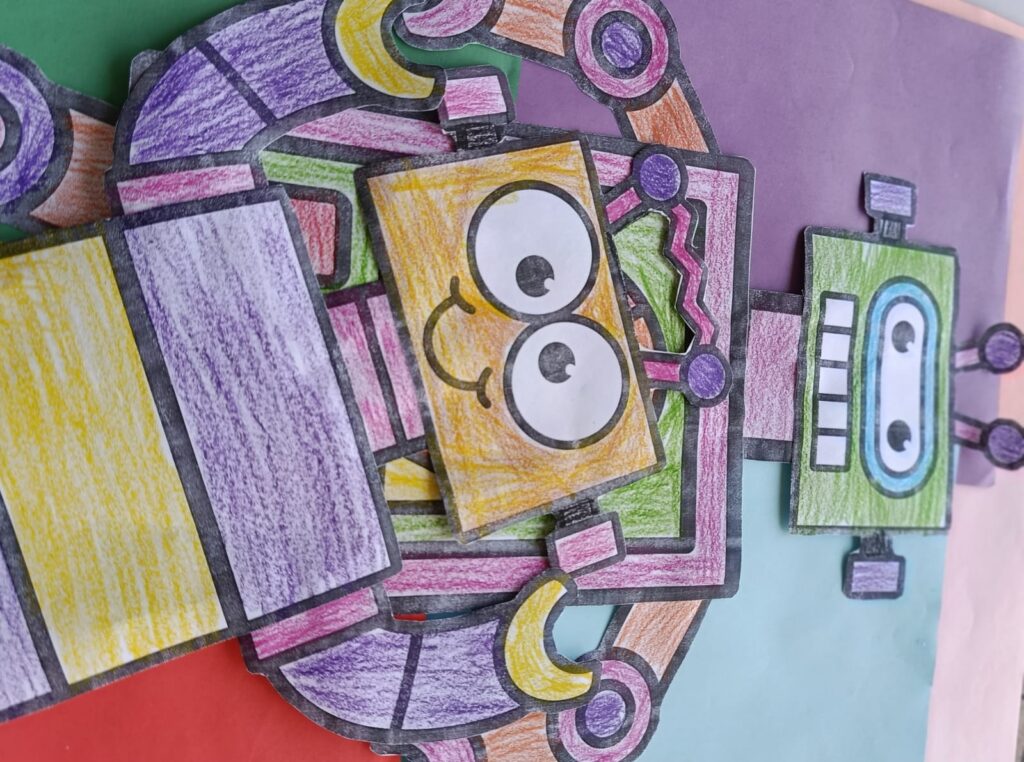
What I love most about this is that it doesn’t feel like a review. Students get so into building their robot that they stop complaining about the math and just… do it. You’ll see them actually sticking with problems instead of checking out.

It’s perfect for those last couple of weeks of school, a math celebration day, or even just a Friday when everyone (you included) needs something different.
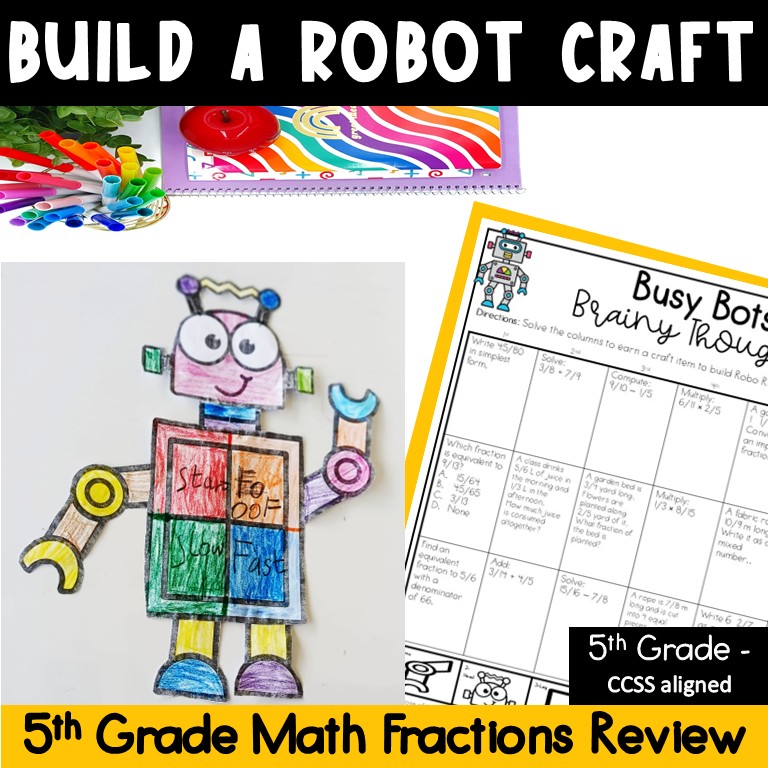
Also, super low prep. Print it, hand it out, and you’re good to go. No complicated setup, which is exactly what you need this time of year.

You can grab the EOY Math Robot Craftivity here! (link)

2. EOY Math Packet 5th Grade Spiral Review

Let’s be real, sometimes you just need something that covers everything without you having to piece it all together yourself.

That’s exactly what this 26-page end-of-year math review packet is for. And when I say it covers everything, I mean it.

Here’s a quick look at what’s inside:

  • Operations with Whole Numbers (addition, subtraction, multiplication, and division)
  • Fractions (adding, subtracting, multiplying, and dividing—including mixed numbers)
  • Decimals (all the way to the hundredths place)
  • Measurement and Data (line plots, volume, conversions)
  • Geometry (2D figures and the coordinate plane)
  • Algebraic Thinking (patterns, expressions, equations)
  • Word Problems (real-world application and critical thinking)

I use this in a bunch of different ways depending on what we need.
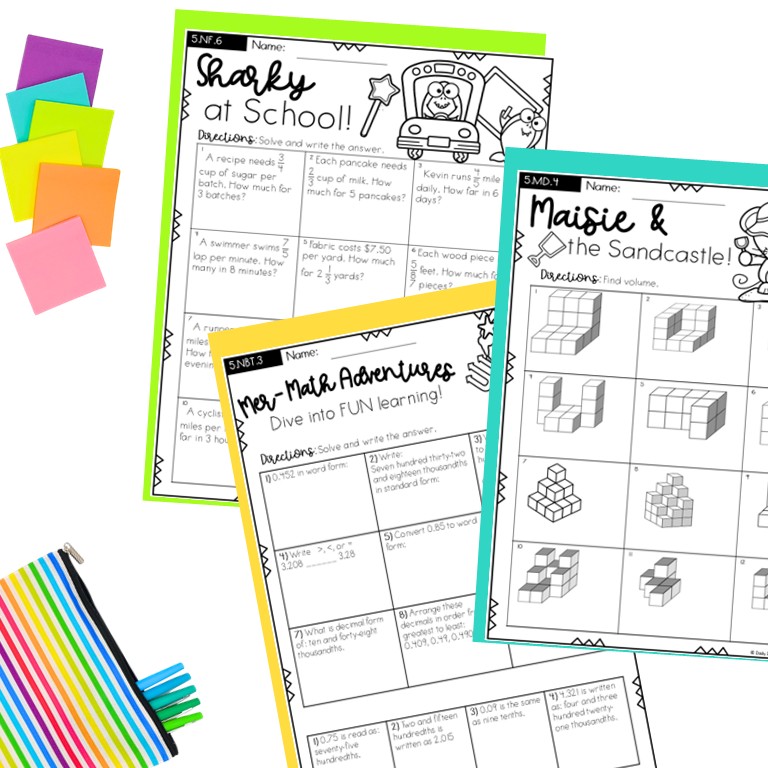
You can run it as a whole-class review, break it into stations, send it home as a summer bridge packet, or use it to help your students heading into 6th grade feel a little more confident.

It’s one of those resources you’ll keep coming back to because it just makes your life easier. Everything is laid out clearly, the pages are student-friendly, and you can either assign the whole thing or just pull the sections you need.

You can grab the End-of-Year Math Review Packet here! (link)

3. EOY Math Task Cards + Pixel Art Activity

Task cards are one of my go-to ways to get students reviewing without them feeling stuck in their seats all day.

This set of 24 task cards works as a full spiral review of what your 5th graders have learned and it keeps things moving, which is key this time of year.

Students work through problems covering:

  • Order of Operations
  • Adding and Multiplying Fractions
  • Decimal Operations
  • Volume
  • Coordinate Plane
  • Geometry and Shape Classification
  • Real-World Word Problems

There’s also a recording sheet included, which makes it really easy to manage. Whether you’re using this as a center or just want some built-in accountability.
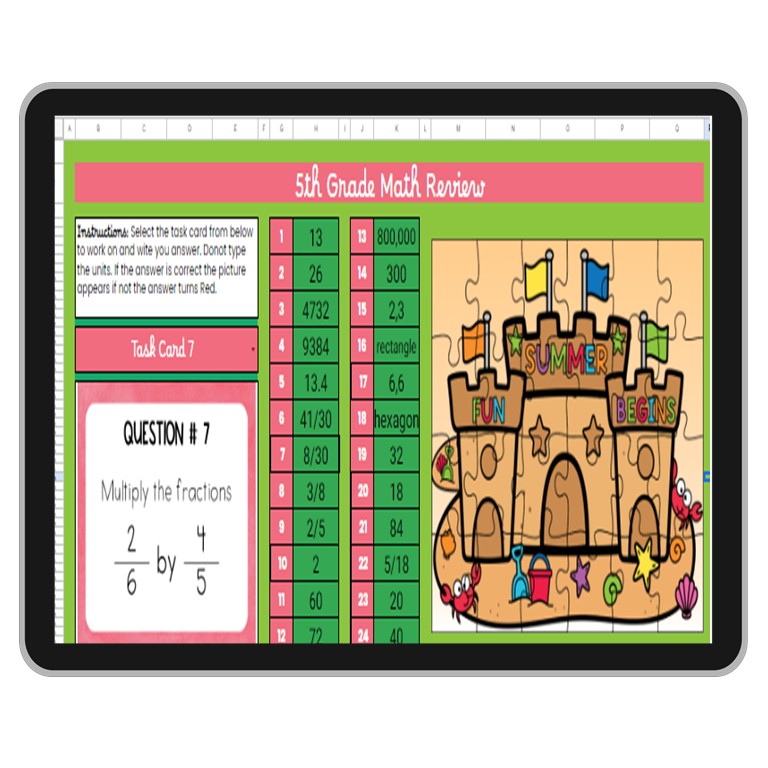
I personally love running this as a Scoot activity where students rotate around the room. They’re up, they’re moving, and they’re way more engaged than if they were stuck in their seats.

The pixel art piece is such a fun bonus especially for tech days. As students answer questions, a mystery image starts to appear little by little.

I swear, they get so into this part. It feels more like a game than a review, which is exactly what you want at the end of the year.
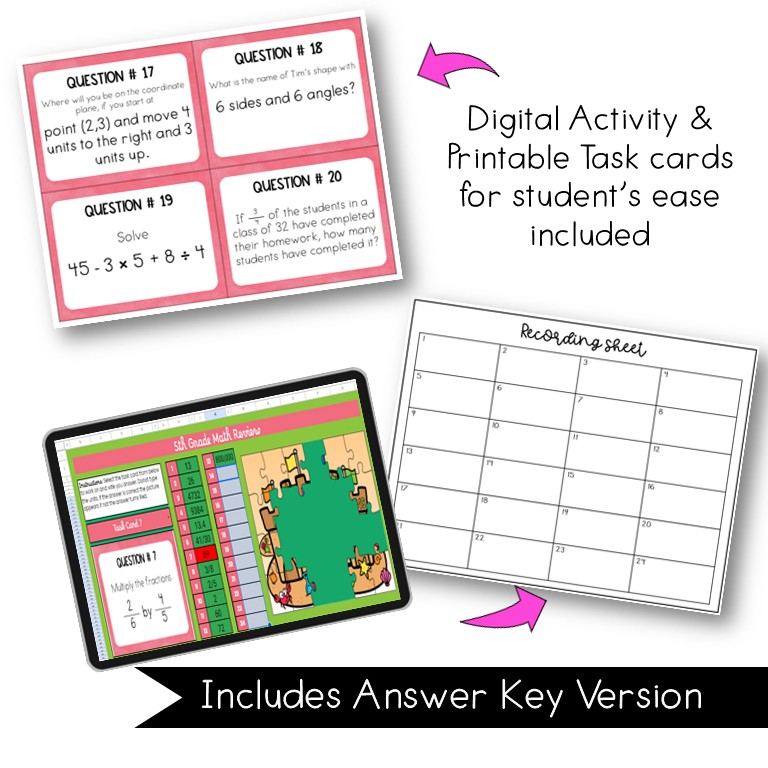
You can use this as a math center, early finisher option, partner activity, or even a whole-class review game it’s super flexible depending on what your day looks like.

You can grab the End-of-Year Task Cards + Pixel Art Activity here!

Tips for Planning Your Last Two Weeks of Math

Now that you’ve got a few solid activities ready, here’s an easy way to actually make them work during those final weeks.

Mix things up throughout the week so students don’t get bored. Maybe you do the craft one day, task cards the next, and sprinkle in the review packet when you need something more structured.

It doesn’t have to be complicated, just keep it varied.

You can also run the task cards during centers while you pull small groups to hit any last-minute gaps. This was always a lifesaver for me when I knew a few students needed extra support before moving on.

And not gonna lie, the finished robot crafts make the cutest bulletin board. My students love seeing their work up there, and it turns into a fun little end-of-year celebration without a ton of extra effort.

If you want to extend the learning, sending the review packet home as a summer bridge is a great option. It helps keep skills fresh before 6th grade but honestly, it works just as well for end-of-year review or even test prep.

At the end of the day, your students have worked really hard all year. These last couple of weeks are a chance to keep learning going while also making things feel a little more fun and memorable.

If you’re looking for more 5th grade math resources, you can check out my TPT store for activities on fractions, decimals, geometry, and more.

Similar Posts

  • |

    Free Adding and Subtracting Decimals Worksheets 6th Grade

    Looking for a fun and exciting way to reinforce decimal operation to your 5th grade kids?

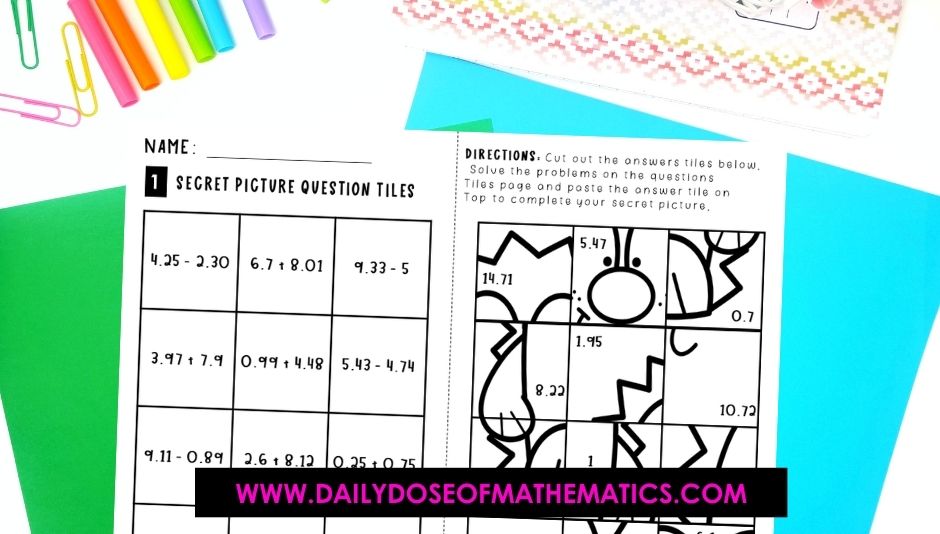
    Use this FREE add and subtract decimals color by number activity as an instant solution you can implement in your class right now to make it fun and engaging for you 5th or 6th grade kids learning decimals.

    Let’s break down three key teaching points from this resource and how to implement them in your classroom.

    1️⃣ Teaching Point #1: Mastering Decimal Addition & Subtraction

    How to Implement

    1. Quick Review: You can start with a 5-minute refresher on how to align decimals and borrowing/carrying when needed. Basically the stuff kids already know
    2. Think Aloud: Teach kids 1–2 problems on the board, and say out loud your thought process.
    3. Turn & Talk: Have your students explain the problem’s steps to a partner before they even start.
    4. Independent Work: Give out the Color by Number worksheet and let students solve it.
    5. Check & Reflect: Let students compare their answers with a partner before coloring.

    Practice Exercise

    Here are a few warm-up problem set you can use with your kids:

    • 3.42 + 2.58 = ?
    • 7.1 – 3.89 = ? A good one to discuss how to align decimals with 1 and 2 decimal places
    • 9.03 + 5.77 = ?

    Discuss the most common mistakes (misaligned decimals, forgetting to borrow, etc.).


    2️⃣ Teaching Point #2: Building Confidence with Self-Checking

    How to Implement

    1. Encourage Estimation: Before solving, have students round numbers and estimate to check their reasonableness.
    2. Check in Pairs: After every five problems, students compare answers before coloring.
    3. Spot the Error: If students see an unexpected color pattern, guide them to rework the problem.

    Practice Exercise

    Have students estimate first and then solve:

    • 4.92 + 3.17 (Estimate: 5 + 3)
    • 10.5 – 7.63 (Estimate: 10 – 8)
    • 6.89 + 1.56 (Estimate: 7 + 2)

    This step reinforces number sense and problem-checking habits.


    3️⃣ Teaching Point #3: Increasing Engagement with Color & Creativity

    How to Implement

    1. Make It a Challenge: Time students and see who correctly solves and colors first.
    2. Personalized Touch: Allow students to choose their own coloring shades.
    3. Create a Math Wall: Display finished work to reinforce effort and accuracy.
    4. Incorporate Tech: Have students take a photo of their work and explain their thinking via a digital tool like Flipgrid.

    Want to get your hands on this FREE decimals operation color by number?

    Sign up and get the worksheets delivered to your inbox!

  • How to Explain Integers and Their Opposites to Students (Without the Confusion)

    If integers make your students’ eyes roll, you’re not alone. Integers and their opposites, especially negative numbers, can feel abstract and confusing.

    This is where students start mixing up subtraction with “opposites” or struggle to see how positive and negative numbers relate. 

    The good news? With the right visuals and activities, integers don’t have to be this overwhelming. 

    In fact, you can make them click for students in a way that actually sticks.

    1. Start with Real-Life Examples

    The fastest way to make integers feel less intimidating in grade 6 is to ground them in everyday life. A few examples that always land with my students are:

    • Temperature: Show how 10° above zero and 10° below zero represent opposites.
    • Elevation: Compare a mountain peak to a cave below sea level.
    • Money: Talk about having $20 in your bank account versus owing $20.

    The goal here is to make the concept more relatable using the example, so the students can connect faster. 

    You can even ask them to share their own examples, maybe like sports scores or video game points going into the negative.

    Integers and Their Opposites activities and pdf worksheets with number line practice

    2. Use a Number Line for Integers and their Opposites

    A number line is the foundation for understanding integers. You should first focus on making sure students understand integers using a number line. 

    When students see numbers laid out visually, they notice the symmetry: every positive number has a negative counterpart that is at the same distance from zero.

    • Highlight how +5 and -5 “mirror” each other.
    • Reinforce the idea that zero is the center, it’s neutral ground, so its negative is also 0.
    • Use visuals (a giant number line taped on the floor works wonders).

    This method makes integers less of an abstract idea and more of a pattern they can see and interact with. 

    3. Introduce Integer Opposites as “Math Twins”

    Kids love simple, fun language. Try describing opposites as math twins:

    • +3 and -3 are twinssame distance, different sides of zero.
    • Use hand motions: one hand moves right, the other moves left.
    • Have students physically “be the numbers” by standing on either side of a taped zero line in the classroom.

    This builds a physical connection, visualizes the concept and gets them out of their seats (which is always a win).

    4. Make it Interactive (Coloring + Games)

    Here is the thing: students learn best when they do. Practicing is the key to success in math. Bring integers to life with:

    • Coloring activities where each answer reveals a picture.
    • Matching games: pair positives with their opposites.
    • Scavenger hunts: hide cards around the room and let students find “integer pairs.”
    Integers and Their Opposites activities and pdf worksheets with number line practice

    So if you want a ready to use resource that saves you prep time, I created a set of integer activities and coloring worksheets designed exactly for this concept. 

    They turn practice into a fun activity while reinforcing integer opposites in an interactive way.

    Integers and Their Opposites activities and pdf worksheets with number line practice

    5. Common Mistakes Students Make

    Even after a lot of practice and explaining with strong visuals, some misconceptions pop up again and again: Here is a list of a few that I encounter again anad again:

    • Mixing up subtraction with opposites: For this, clarify that “the opposite of +4 is -4,” but “subtracting 4” is a different operation.
    • Thinking zero has an opposite: Reinforce that zero is its own buddy it has no opposite.
    • Believing negatives are always “smaller”: Explain that while -10 is less than -2, the distance from zero tells us size in terms of opposites.

    Take a few minutes to address these early, and you’ll prevent bigger struggles in later concepts.

    6. Wrap It Up 

    Teaching integers doesn’t have to be a headache for you or your students. 

    By combining real-life examples, number lines, and interactive activities, you’ll help students finally see opposites in a way that sticks.

    Want to save yourself even more prep time? 

    Grab my Integers and Their Opposites Coloring Worksheets on TPT. You can even find interactive activities for GCF and LCM here. They’re ready-to-go, fun for students, and designed to make integers simple instead of stressful.

    And if you’d like even more freebies for your math classroom, join my email list, where I share grab-and-go resources like fraction operations for busy math teachers like you.

  • |

    3 Digit Addition Problems Activities To Increase Problem Solving Now

    Teaching your students the concept of 3 digit addition problems is essential for their math skills development. Without a solid foundation in these basic skills, students will face challenges as they progress to higher grade levels.

    Let’s explore some strategies you can use inside your classroom to teach 3 digit addition more effectively. So let’s dive in!

    Understanding The Basics of 3 Digit Addition Problems

    To build a solid foundation of 3 digit addition skills in your students, start by introducing the concept of place value.

    Students should know the value of every digit in a 3 digit number. And that should happen even before they begin practicing their addition skills.

    Once your students have mastered the place values, it’s time to introduce them to add 2 and 3 digit numbers. This is the time when you gradually introduce them to the concept of regrouping.

    Building your student’s skills in this way will allow them to make sense of what they are learning sequentially.

    Engaging 3 Digit Addition Problems Worksheet

    Printable worksheets are a must have tool for all math teachers in their classrooms, again not the only ones.

    In addition to this, engaging printable worksheets keep your students in the learning process and draw their attention towards solving math and absorbing what they are learning.

    But creating visually appealing worksheets for your students to work on can be a daunting task.

    Here are a few 3 digit addition problems worksheet ideas to consider using in your classroom.

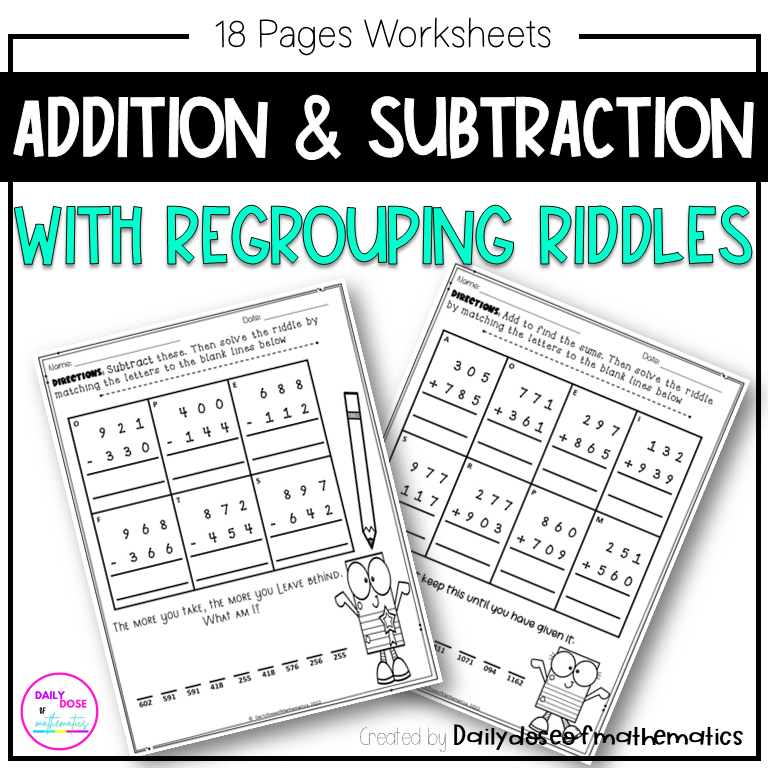
    • 3 Digit Addition Riddles activity


    Adding riddles activity worksheets in your classroom creates an element of excitement in students. Want some inspiration? Check out these 3 digit addition riddles worksheets in my TPT store!

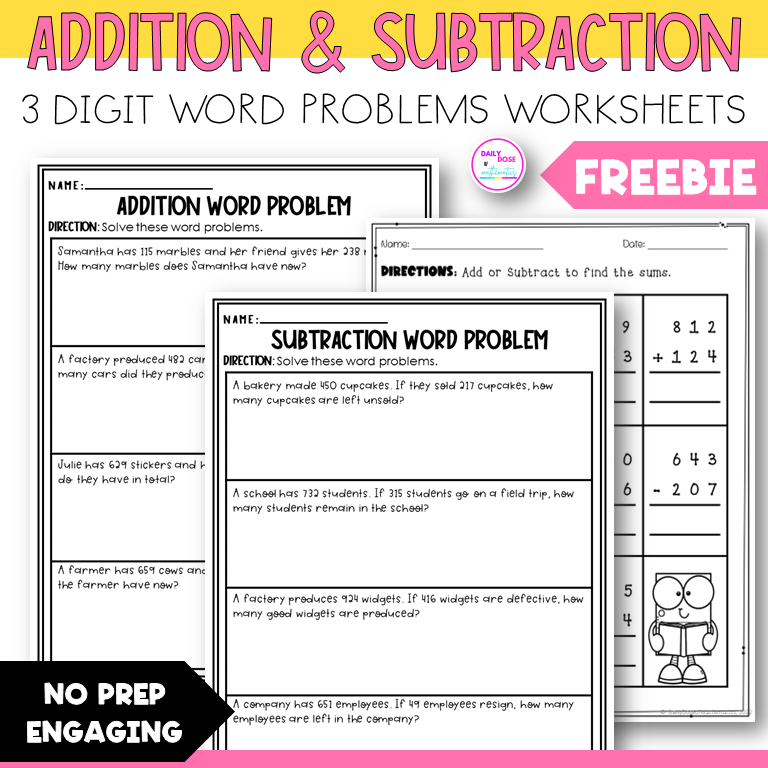
    3 digit addition and subtraction problems worksheets
    Addition And Subtraction Riddles Worksheets


    Here is how it works. Print out one of the worksheets and hand it out to your students. The visually appealing images and the mystery element of the riddles creates a fun and exciting experience for students.

    Students then works on the problems to find the clues and solve the riddles. Once all the problems are solved, students can then look for the answer and write the matching alphabet assigned to the problem in the given blanks.

    Once all the blanks are filled, students reveal the answer to the riddle. Honestly, riddle worksheets are what my students are always begging for more. I always make sure to incorporate such riddles in my class.

    Want to see what I use check them here.

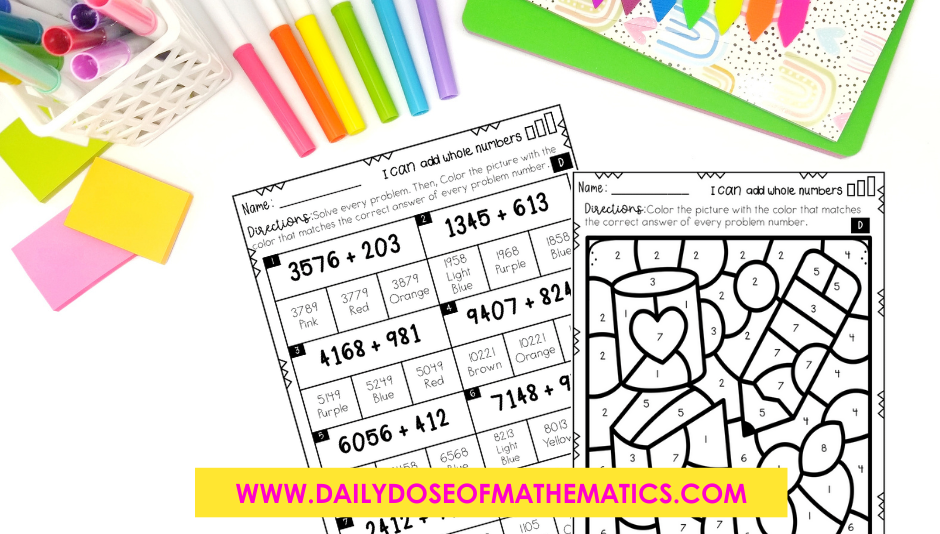
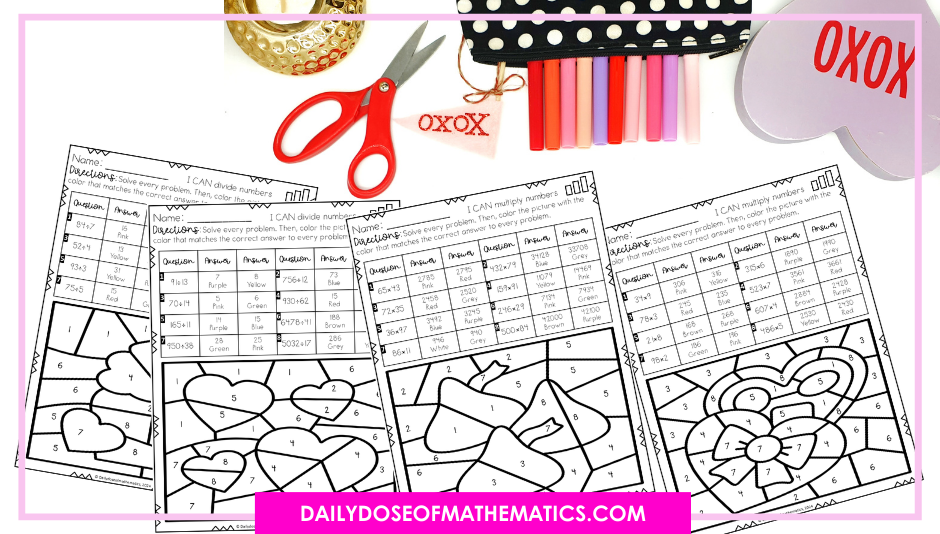
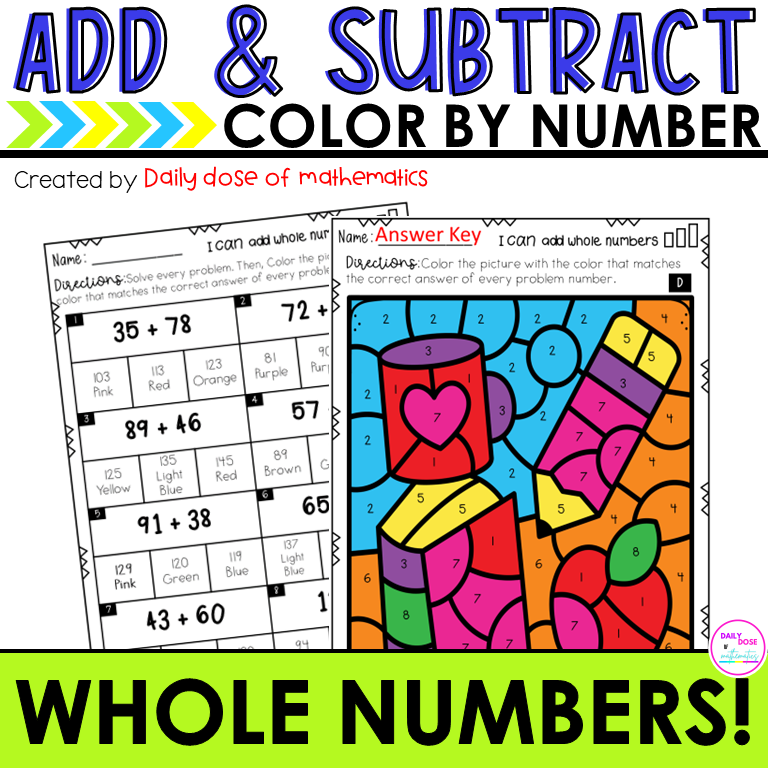
    • 3 Digit Addition Color by Number Worksheets

    Color By Number is another engaging way to add excitement to your classroom. What’s more interesting is these activities are self checking.

    After finding the answer to their problems, kids look for the colors that the correct answer points to and color in the coloring sheet with the desired color.

    This sparks creativity and fun, which makes working on these activities enjoyable. Don’t want to make your own! Check this out

    3 digit addition and subtraction problems color by number worksheets
    3 Digit Addition And Subtraction Color By Number Worksheets

    Lastly, check out the ones I created for busy teachers like you here.

    • 3 Digit Addition Maze Activity


    Another activity you can do in your classroom is this 3 digit addition maze worksheet. These mazes are also self checking which makes less grading and more free time for the teachers. Whereas more learning for the students.

    Want some free 3 digit addition problems maze activity click here for a free printable.

    My kids are excited to find the answer to the problem they are working on and to find out how they are going to navigate the maze. This interactive activity not only increases their addition skill along with problem solving but keeps them actively engaged in solving math problems.

    Want to access Free Math Resources? Click Here!
    Free Adding and Subtracting Decimal Mystery Picture Activity

  • | |

    Why Math Games Are Even More Essential Now in Today’s Classroom

    Kids in upper elementary classrooms are more inclined to learn math through games because math games provide the same environment as today’s gadgets and screens but with the goal of learning something new. 

    This is why, in today’s teaching, it is more important than ever to use game-based learning methods in our math classrooms. 

    In my 10+ years of teaching math to elementary students, I have never encountered a time in my classes when, whenever I pull up a game, my kids do not get excited.  

    It has always been the case for me, no matter what the type of game is! It can be digital as well as printable but what would never happen with board games or game shows is a dry class with no learning excitement for a hard subject like math. 

    Honestly, I feel that having printable games or digital game-based activities should be in every teacher’s toolkit. They are a compelling way for kids to connect and engage with your teaching content. Still not convinced? 

    Here’s a list of why math games are important and how to integrate them into your lesson planning. 

    1. Enhanced Engagement during Math Class

    This is what we all want? I mean, I do! And the best way to increase your class engagement is by using math games to make learning more interactive and exciting. 

    Gamification helps develop critical thinking skills, which are essential for children’s future success. Students are more likely to participate and stay focused when they play a game in pairs, compared to just working through a set of problems on a worksheet.

    So, make your kids work in pairs next time you want them to add some accountability to your math lessons. The added accountability helps them push each other and encourages a sense of responsibility.

    Looking for some fun games? Melissa, a fellow teacher, coach, and TpT author, has a blog post that can give you a comprehensive idea of the benefits of using math board games in classrooms.

    2. Improved Understanding with Math Games

    Understanding is the most important part of the learning process. It is the integral part that should be focused on during lesson planning.

    If your kids can understand the basics of any concept, like fraction operations or the order of operations, they will be able to think through them, understand them, and solve problems on their own, which should always be the goal. 

    This collaborative environment that is created as a result of their teamwork can help them feel more comfortable sharing their thought processes and strategies with their class fellows. 

    With games, we can present kids with the same math problems in various formats like multiple choice, true-false, or even open-ended, which then helps students to see concepts from different angles. 

    This is crucial as it deepens their understanding and helps them apply math skills in various real world situations. 

    During my lessons I try to give kids as many practice problems as possible, but after we have 

    ended a lesson I prefer other formats like multiple choice or true false using interactive activities or riddles to check their understanding and see where the gaps are!

    3. Immediate Feedback

    Of course, getting feedback is important! But what’s more important is making it fun not just for kids but for you too. I try to incorporate self checking games during lessons because of the immediate feedbackkk! 

    We all want our kids to rise and shine but none of us want to go through the painful time taking act of grading and checking the assessments and creating the report cards. 

    That’s why math games can actually be a handy tool. It provides us with a way to keep ourselves on top of all the stuff other than teaching by utilizing the power of active learning, allowing students to practice and reinforce their skills in an interactive way. 

    It allows students to quickly see the results of their actions and understand what they need to improve. This immediate reinforcement can increase their confidence and motivate them to learn more.

    4. Fun and Motivation

    Let’s be honest: It is a chore to make math enjoyable and personalize activities for every kid. However, I believe learning is not only enjoyable with games; students are more than ready to engage with the material. Math games can turn a challenging subject into a fun and rewarding experience, which enhances a positive attitude towards math.

    How to Integrate Math Games in Your Classroom

    Use games that align with holiday themes or seasons, such asFall Place Value and Multiplication Division Games”. This can make learning festive and relevant to the time of year.

    Digital games can be easily integrated into your lesson plans and are great for individual or small group work. One way is to customize games for different skill levels, making sure that all students, regardless of their abilities, are challenged appropriately and can progress at their own pace.

    You can create different stations with various math games, like “Digital Fraction and Decimals Pixel Art Bundle.” Just assign students one of the activities and keep them engaged by exposing them to different types of problems.

    Another way is to organize math game tournaments or challenges inside the classroom to add an element of friendly competition. However, this can even create a challenge of managing competitiveness among students. For this, make sure to emphasize the importance of teamwork and collaboration more. This can motivate students to practice more and improve their math skills.

    Lastly, have students discuss what they learned and reflect on their strategies after playing. This will help solidify their understanding and encourage them to think critically about problem-solving techniques.

    Math games are a fun and effective way to review important math concepts like decimal operations inside classrooms. Incorporating math games into your classroom can transform the way your students learn and engage with math. Making lessons interactive, engaging, and fun will help your students develop a deeper understanding and a love for the subject.

    Looking for other cool ways to make math worksheets more fun for your kids? Check out this blog post on 11 cool ways to make boring worksheets more exciting!

  • |

    Fraction Operations: 3 Creative Ways on how to make Kids Master Fractions

    Fractions operations are hard concepts to learn for many kids. Most of my 5th grade students struggle to understand even the basis of what a fraction or a number in a/b form actually means.

    This idea is not just a problem for upper elementary students but for middle school kids too. Just ask your middle school students to cut a circle in 6 parts and see the results they produce.

    It might look something like this:

    fraction operation | adding and subtracting fractions

    Now the problem is not that these kids do not know how to add subtract multiply or divide fractions. Because all these fraction operations can be understood and practice by simply repeating the exact same steps they need to perform to get the answer.

    Instead the problem is their ability to apply and analyze conceptual parts of fractions, so instead of focusing on the simplification side of the concept what you actually need to focus more on is the conceptual side of the topic that is its application and making kids able to analyze and evaluate their learning.

    To understand it better lets discuss why our students struggle to grasp this important concept and how we can help them.

    Why students struggle with fraction operations

    Many students struggle with the conceptual understanding and just learn to find answers using “tricks” like keep, change, flip for fraction division. These kids are the ones that when asked to solve a real life problem like this one:

    Sara has 3/4 of a cake remaining , and she wants to share it equally among herself and her two friends. What fraction of the cake will each person get?

    Question

    are not able to make sense of it. The mere learning of short tricks can not help them master this crucial skill. What we as a teacher need to do is create a smooth and seamless integration of all the previous concepts learned with the new ideas to make it easier for kids to connect the dots.

    Students need to build upon their prior knowledge of whole numbers and their operations and get comfortable with understand what the “a and “b” in a/b form actually tells them about the problem at hand.

    Which means they not only need to know how much of something is being added (which is the numerator part of fraction) but also what is being added that is the denominator part of the fraction.

    Making them understand fractions from bottom up is the key. What does the denominator and the numerators actually tells.

    For example let’s say kids have to add 2/5 + 1/5:

    Here, the ‘2’ and ‘1’ (numerators) tell us ‘how much‘ of something we have, like two pieces of pizza. The ‘5’ (denominator) tells us into ‘how many parts‘ something is divided, like cutting a pizza into 5 slices. So, when adding 2/5 and 1/5, we’re combining parts of the same whole (like adding two slices to one slice of the same pizza, making it 3/5 of the pizza).

    Understanding both parts of a fraction helps kids grasp what they’re working with, making fractions less intimidating. Once kids know the basis they will be able to solve more complex problems on their own.

    fraction operation | adding and subtracting fractions

    Activities to make their learning addition and subtraction of fraction operations easier

    Not all kids learn the same way. Some are visual learners , some like to explore and ask questions to better understand the concept and as a teacher our job is to understand what our kids understanding is of the topic is how to get hem to become better at it. The best worksheets on addition and subtraction of fractions are the ones with real world problems or activities. Let’s learn more about this:

    1. Visual Learning Through Baking and Cooking

    Who does not like the smell of cookies baking in the oven. It turns your kitchen into a fun place to learn. Did you know that making food is a great way to understand fractions? Whether you’re measuring sugar or cutting a pizza, cooking is a yummy way to learn about parts of a whole.

    Activity to Try: Start by making a simple recipe with your child, like cookies or pizza? This gives you an opportunity and fun time to talk about how fractions are used in cooking. For example, you can ask how much is half a cup of sugar? Or how do you cut a pizza so everyone gets an equal slice? In the end, you get to enjoy a tasty snack together!

    What You’ll Learn: Cooking and baking make fractions easy to understand. It’s one thing to see numbers on paper. It’s another to see fractions come to life when you’re cooking. Seeing and touching the parts that make up a whole makes fractions clear and meaningful.

    I think cooking is not just about making food. It’s a chance to see math in action. Next time you’re in the kitchen with your kids, think of it as a chance to explore fractions. It makes learning math not just useful but also delicious. So, grab an apron, and let’s make learning fractions as easy as pie!

    2. Interactive Games and Activities

    In this modern world where technology touches almost every part of our lives, learning has changed a lot after covid. For those of us who learn best by seeing and doing, the increase in online learning platform has opened doors to new possibilities. This is especially true when it comes to understanding fractions—a topic that many find tricky.

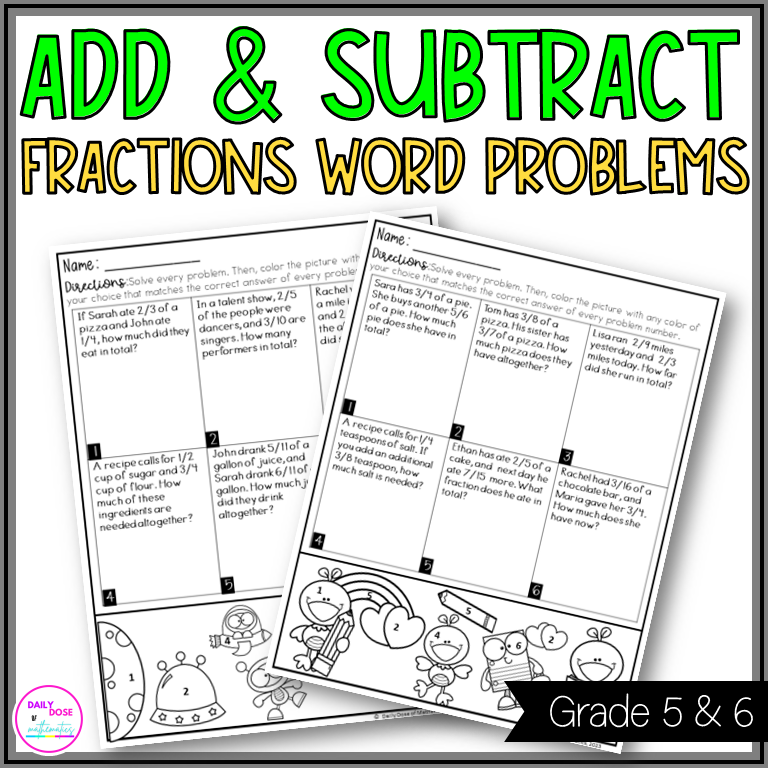
    Digital Fraction addition and subtraction activity along with PDF worksheets: There are tons of digital activities out there designed to help with fractions. When choosing an activity, look for ones that are fun for your students and how they learn, give you feedback on how you’re doing, and let you keep track of your progress.

    A great starter can be Addition and Subtraction of fractions with unlike denominator Color by number worksheets. These aren’t your typical math activities. Instead, they turn learning fractions into an interactive fun activity, making it something your kids will enjoy a lot.

    3. Storytelling and Fraction Tales

    Using storytelling to teach kids fraction and give them a taste of how math is applied in real world is what we all should be doing in our classrooms. You can introduced a story like “The tale of a bee lost in the forest” where Queen bee goes out in the wild and is lost and its the job of the kids to bring her back to her hive and the worker bees.

    But their is a twist, your kids need to solve adding and subtraction fractions with unlike denominator problems to bring her back to her hive. This keep them engaged into meaningful learning.

    Using storytelling like the above to teach kids addition subtraction multiplication and division of fractions and mixed numbers learning more memorable and meaningful. Children are able to connect with the idea on a deeper level that makes learning more enjoyable and fun

    Additional Fun Resources

    Looking for some resources that can be used for reviewing fraction operation with 5th grade students, check out the ones I have in my TPT shop.

    Looking for some free adding and subtracting fractions practice coloring worksheets, Try the one below by signing up.

  • | | |

    5 Unique but Epic Ways To Use Color By Number Worksheets For High Student Engagement This Year

    Using color by number activities in one of my favourite ways to bring excitment and fun inside classroom. I cannot tell you how much my kids look forward to using these for any topic or theme day.

    Seriously its one of the best way in my opinion to keep them on the task while still interested in practicing math during math centers.

    Try using the if your kids are hitting a math practicing roadblock. We even display the art result they produced in our classroom or gallery. Students feel super prod when I do that.

    So today let’s discover five easy ways you can implement math color by number worksheets so you can have an engaged class that’s excited to work on them.

    What is a Color by Number Worksheets:

    Color by number worksheets aren’t just art and math combined today, instead they are a sure way to give your kids a more engaging and educational experience that they might miss out on during a traditional learning environment.

    This way of practicing math provides a structured way to kid’s daily math practice. Today, I’m about to sow you how I use them to add engagement for any topic you want to teach be it fraction operation including word problems or order of operation along with decimal operations.

    Why to use Color by number worksheets for developing understanding:

    Using art in our daily learning is a fantastic way to increase our kid’s educational experience. Think of it this way: your kids solving math problems and revealing a historical place, figure, or even a themed art piece to set the mood for some festive spirit.

    Coloring is also a calming activity that reduces stress and keeps them focused on the task while developing fine motor skills. This is one of the reason why I use color-by-number worksheets as a terrific way to keep them on track with their daily math progress while having fun

    Customizable Math Teaching Tool:

    Every child is different, and no 2 kids can learn the same way. Customizing color by number worksheets to fit their needs and learning styles can drastically boost student’s engagement.

    For visual learners or students who cannot focus on a single task, these worksheets can be a handy tool for any math teacher. 

    Creative Reward and Recognition:

    You can use the completed math coloring worksheets as a positive reinforcement activity for your students.

    Here is how I achieve this. I display the finished color by number worksheets inside our classroom or hallway, which encourages students to perform better and acts as a reward for their hard work.

    Develops Emotional Intelligence:

    This type of activity not only gets student’s creative juices to follow but also keeps them calm and organized. This enhances their emotional intelligence and stamina to endure more demanding challenges in the learning process, which we as a teacher always strive for. 

    Independent and Self-Checking Practice:

    If I had to pick one reason among all the above, this one would always surpass the rest. The most important thing any teacher wants is to cut down the time used for grading so we can actually do more of what we Love, aka “TEACHING“.

    Color by number worksheets are a fantastic way to facilitate independent practice of topics like area of complex figures, order of operations during the math center activities or the morning bell work, or you can even leave them for a sub day and still get the teaching stuff done while you are away. 

    Want to include some color-by-number activities in your class?

    Here are a few free ones for you to use.

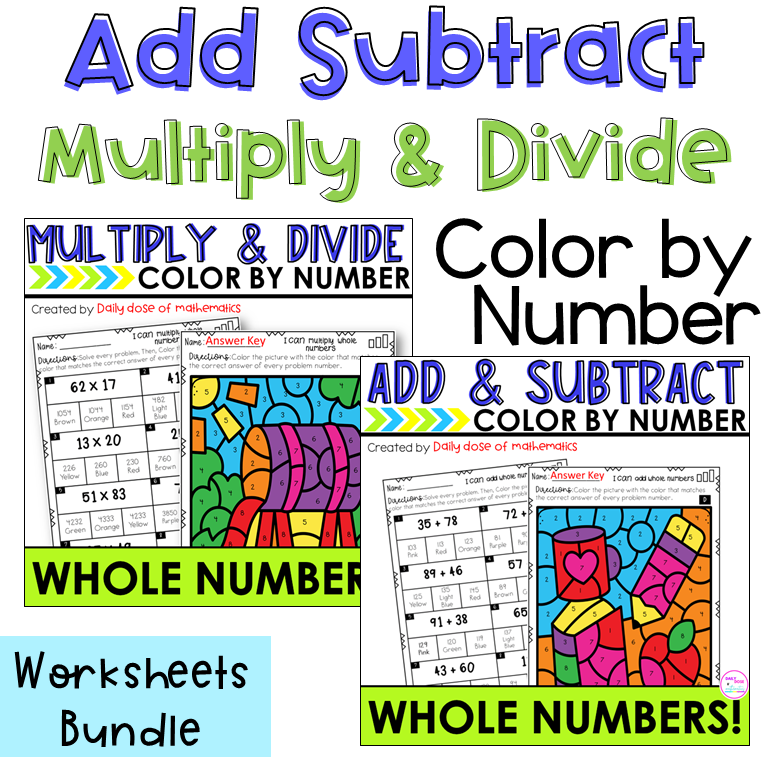
    Get access to Free addition and subtraction color-by-number worksheets and Multiplication Color by number worksheets

    If you would like to see more color by code activities, just click on the cover below.

    Math color by number worksheets and activites for elementary students, decimals and fractions color by number worksheets