Thanksgiving GCF and LCM Coloring Worksheets and Riddles Activities 6th Grade PDF with Answers
| |

Keep Students Engaged with These Thanksgiving GCF and LCM Worksheets (Includes Answers!)

The week before Thanksgiving is pure chaos in most middle school classrooms.

Students are hyped about the holidays, focus levels drop, and teachers (yes, you!) are juggling lesson plans, grading, and trying to keep the class calm.

That’s where seasonal resources come in.

Thanksgiving GCF and LCM worksheets with answers aren’t just a cute idea they’re a strategic teaching tool.

They combine review and engagement so your students practice key math concepts without tuning out.

In this post, we’ll walk through what GCF and LCM are (with examples), why themed math activities work so well, and where you can grab high-quality Thanksgiving worksheets that save you time. But before that let’s first try to answer:

What Is GCF and LCM (with Example)?

Before diving into Thanksgiving math fun for 6th grade math, let’s make sure we’re all on the same page, especially if you’re prepping sub plans or review material for your students.
Thanksgiving GCF and LCM Worksheets and Activities Grade 6 PDF with Answers

Thanksgiving GCF and LCM Worksheets and Activities Grade 6 PDF 1

Thanksgiving GCF and LCM Worksheets and Activities Grade 6 PDF 1

GCF stands for Greatest Common Factor.
It’s the largest number that divides evenly into two or more numbers.

LCM stands for Least Common Multiple.
It’s the smallest multiple that two or more numbers share.

For example:

Let’s find the GCF and LCM of 27 and 45.

Step 1: List the factors.

  • Factors of 27 → 1, 3, 9, 27
  • Factors of 45 → 1, 3, 5, 9, 15, 45

and here GCF = 9, because it’s the largest number both have in common.

Step 2: List the multiples.

  • Multiples of 27 → 27, 54, 81, 108, 135, …
  • Multiples of 45 → 45, 90, 135, …

Therefore, LCM = 135, because it’s the smallest number both share.

When students practice this repeatedly, they start to recognize patterns and that’s exactly what this Thanksgiving GCF and LCM worksheets with answers help reinforce.

Why Use Themed Math Worksheets Around Thanksgiving?

Because engagement matters.
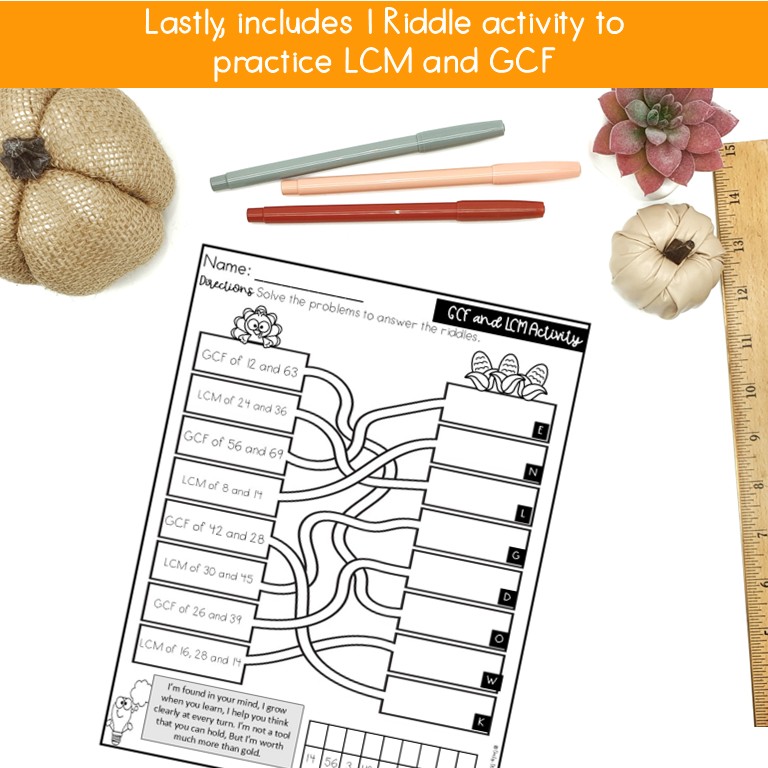
Thanksgiving GCF and LCM Worksheets and Activities Grade 6 PDF with Answers

When math review looks like just another worksheet, students mentally check out.

But throw in a Thanksgiving theme a turkey to color, a riddle to solve, or a math puzzle with a seasonal twist, and suddenly, they’re in it.

These worksheets focus on multiple learning styles at once:

  • Visual learners connect with coloring and design-based activities.
  • Hands-on learners enjoy puzzles and cut-and-paste components.
  • Auditory learners can explain their reasoning as they check answers with peers.

Plus, when the activities include built-in answer keys, it saves you (and your sub) valuable grading time.

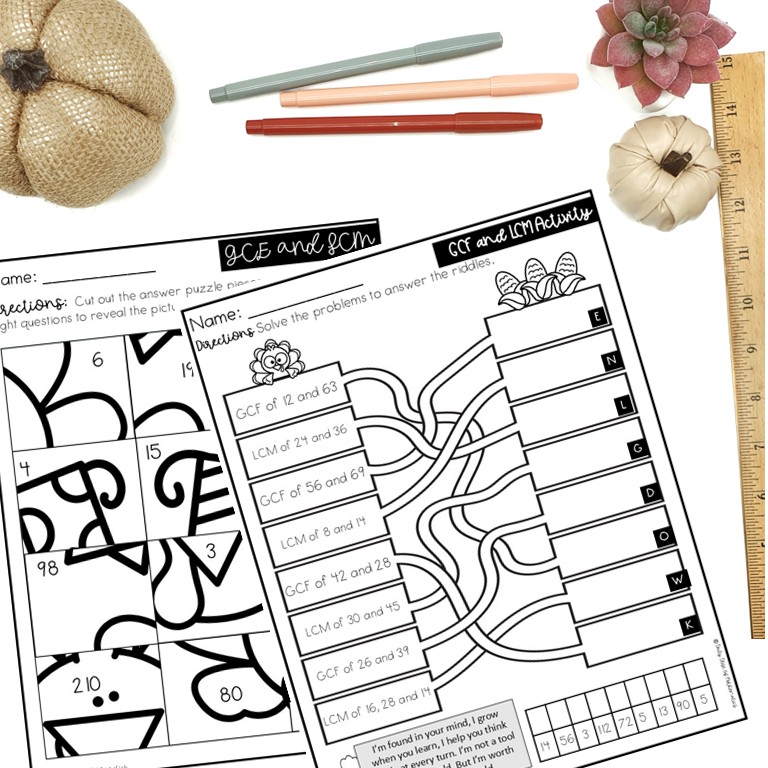
Inside the Thanksgiving GCF and LCM Worksheets

If you’ve been searching for a no-prep, ready-to-go way to review factors and multiples, this set is exactly what you need.

Here’s what’s inside:

  • Engaging coloring activities that make abstract concepts visual.
  • Riddles and puzzles that apply GCF and LCM to real-world-style problems.
  • Cut-and-paste practice for reinforcing math patterns.
  • Answer keys included for quick grading and student self-checking.
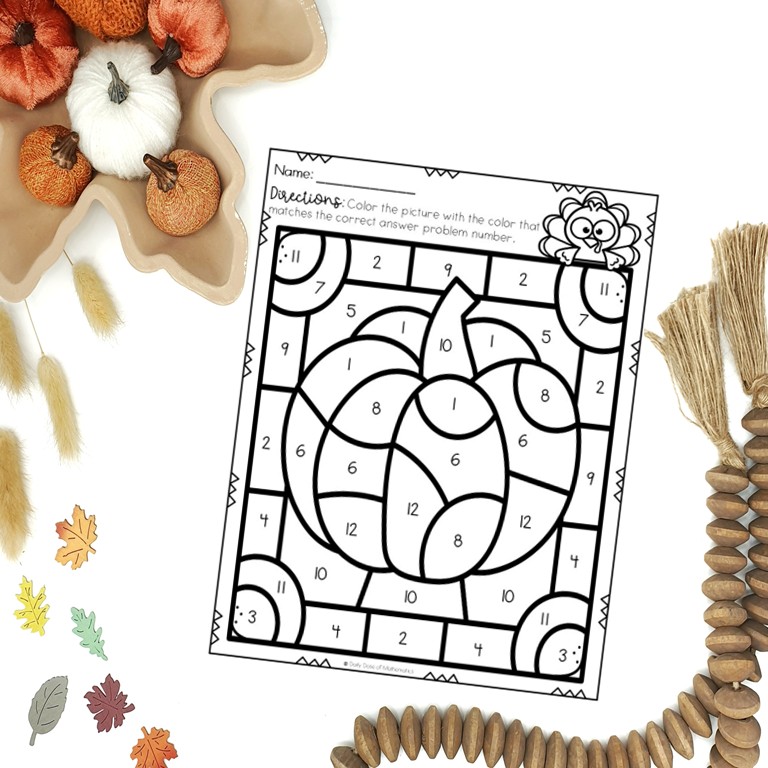
Thanksgiving GCF and LCM Worksheets and Activities Grade 6 PDF with Answers

Check out these Thanksgiving GCF and LCM worksheets with answers pdf and make your pre-break lessons actually enjoyable.

Honestly themed math lessons don’t have to be fluff.

Done right, they can reinforce real math skills and give you a breather during the busiest time of the semester.

So the next time you hear, “Do we have to do math today?”, you can smile and say, “Yup but it’s Thanksgiving style!”

Your students stay engaged, you stay sane, and everyone wins.

Check out Thanksgiving GCF and LCM worksheets pdf with answers and make this year’s holiday math review something your class actually looks forward to.
Similar Posts

  • |

    3 Digit Addition Problems Worksheets For Practicing Addition

    Looking for a 3 digit addition problem worksheets to practice 3 digit addition or subtraction with your students? Look no more because I got you covered.

    Helping students work on word problems is a daunting task.

    Especially if you are trying to encourage them to think independently on math problems and solve them on their own.

    That is why I have created these fun and engaging 3 digit word problem worksheets that are free for you to grab and teach now.

    [Click here to download.]

    3 Digit Addition problems worksheets
    3 Digit Addition & Subtraction Word Problems

    Here is how it works.


    Signup for the freebies and download the file.

    Inside this freebie, you have 3 digit word problems on addition and subtraction. Besides word problems, it also contains no prep 3-digit mixed addition and subtraction problem worksheets.

    Print the problems you want your students to work on and hand them to your class. Students can solve the word problems independently, or you can help them complete the task.

    What I like to do in my class is put them in pairs. This way, even if one of the kids gets stuck, they can help each other out and figure out the solution.

    Here are a few benefits of using 3-digit word problems worksheets in your classroom

    • Increase in reasoning and problem solving skills
    • More understanding of the topic by using comprehension skills
    • Able to break down more significant concepts into small problems
    3 Digit Addition problems worksheets
    3 Digit Addition & Subtraction Worksheets


    Tips to make 3 digit addition problems fun and effective in your classroom

    Here are a few ideas you can implement to make word problems an effective and fun activities in your classroom

    • Solve at least one word problem daily to develop the muscle
    • Make it fun
    • Provide feedback
    • Easier to introduce differentiation

    If you are looking for ways to make 3 digit word problems more fun, here is your opportunity to try these FREE 3 digit word problems in your classroom.

    Hopefully, this will give you enough to practice 3 digit addition using worksheets to keep your kids engaged and excited.

    Do you have any activities that you use in your classroom for addition word problems?

  • How to Explain Integers and Their Opposites to Students (Without the Confusion)

    If integers make your students’ eyes roll, you’re not alone. Integers and their opposites, especially negative numbers, can feel abstract and confusing.

    This is where students start mixing up subtraction with “opposites” or struggle to see how positive and negative numbers relate. 

    The good news? With the right visuals and activities, integers don’t have to be this overwhelming. 

    In fact, you can make them click for students in a way that actually sticks.

    1. Start with Real-Life Examples

    The fastest way to make integers feel less intimidating in grade 6 is to ground them in everyday life. A few examples that always land with my students are:

    • Temperature: Show how 10° above zero and 10° below zero represent opposites.
    • Elevation: Compare a mountain peak to a cave below sea level.
    • Money: Talk about having $20 in your bank account versus owing $20.

    The goal here is to make the concept more relatable using the example, so the students can connect faster. 

    You can even ask them to share their own examples, maybe like sports scores or video game points going into the negative.

    Integers and Their Opposites activities and pdf worksheets with number line practice

    2. Use a Number Line for Integers and their Opposites

    A number line is the foundation for understanding integers. You should first focus on making sure students understand integers using a number line. 

    When students see numbers laid out visually, they notice the symmetry: every positive number has a negative counterpart that is at the same distance from zero.
    • Highlight how +5 and -5 “mirror” each other.
    • Reinforce the idea that zero is the center, it’s neutral ground, so its negative is also 0.
    • Use visuals (a giant number line taped on the floor works wonders).

    This method makes integers less of an abstract idea and more of a pattern they can see and interact with. 

    3. Introduce Integer Opposites as “Math Twins”

    Kids love simple, fun language. Try describing opposites as math twins:

    • +3 and -3 are twinssame distance, different sides of zero.
    • Use hand motions: one hand moves right, the other moves left.
    • Have students physically “be the numbers” by standing on either side of a taped zero line in the classroom.

    This builds a physical connection, visualizes the concept and gets them out of their seats (which is always a win).

    4. Make it Interactive (Coloring + Games)

    Here is the thing: students learn best when they do. Practicing is the key to success in math. Bring integers to life with:

    • Coloring activities where each answer reveals a picture.
    • Matching games: pair positives with their opposites.
    • Scavenger hunts: hide cards around the room and let students find “integer pairs.”
    Integers and Their Opposites activities and pdf worksheets with number line practice

    So if you want a ready to use resource that saves you prep time, I created a set of integer activities and coloring worksheets designed exactly for this concept. 

    They turn practice into a fun activity while reinforcing integer opposites in an interactive way.

    Integers and Their Opposites activities and pdf worksheets with number line practice

    5. Common Mistakes Students Make

    Even after a lot of practice and explaining with strong visuals, some misconceptions pop up again and again: Here is a list of a few that I encounter again anad again:

    • Mixing up subtraction with opposites: For this, clarify that “the opposite of +4 is -4,” but “subtracting 4” is a different operation.
    • Thinking zero has an opposite: Reinforce that zero is its own buddy it has no opposite.
    • Believing negatives are always “smaller”: Explain that while -10 is less than -2, the distance from zero tells us size in terms of opposites.

    Take a few minutes to address these early, and you’ll prevent bigger struggles in later concepts.

    6. Wrap It Up 

    Teaching integers doesn’t have to be a headache for you or your students. 

    By combining real-life examples, number lines, and interactive activities, you’ll help students finally see opposites in a way that sticks.

    Want to save yourself even more prep time? 

    Grab my Integers and Their Opposites Coloring Worksheets on TPT. You can even find interactive activities for GCF and LCM here. They’re ready-to-go, fun for students, and designed to make integers simple instead of stressful.

    And if you’d like even more freebies for your math classroom, join my email list, where I share grab-and-go resources like fraction operations for busy math teachers like you.

  • |

    How can teaching math be made easy and interesting for elementary students?

    As a math teacher with various grade levels teaching experience, I know the struggle math teachers face in their day to day life. Your days are undoubtedly filled with various responsibilities, from strategizing your lessons and managing your classroom to caring for your families. Finding the time and energy to create engaging and effective teaching environments and lessons can be challenging!

    This is why I have created this blog post to help teachers like you with the tools and resources you need in order to ensure your students master math while you have more time for yourself and your loved ones.

    Why should you help your students in learning maths?

    As teachers, I know your first priority is to help your kids master the subject with ease. This is the mere reason why I am excited to share all my valuable findings with you.
    All math teaching strategies to help you make an impact on students learning and foster independent problem solving and critical thinking in your students.

    By implementing these strategies effectively, you can inspire a love for math and develop confidence in their abilities, which is what we all strive for as educators.

    How should you think about these math learning abilities in kids:

    Learning to solve math is very important for our kids’ everyday lives and a country’s growth. All those students that are good at math perform better in STEM fields which are very important in this information and technology driven digital era.

    This is why it is important for schools to help kids develop their mathematical abilities. In recent studies, experts have found that one of the reasons our young learners do not perform well in maths is because math teachers simply don’t have enough knowledge of their subject.

    This could be a direct result of the old-fashioned teaching methods still used in schools.

    One way to fix this problem is by developing your student’s metacognitive skills. This helps them better equip themselves to solve their own problems not only in maths but in life.

    How to implement this in your teaching practices:

    Helping your students develop their metacognitive skills is a tedious task. But being a class facilitator to goal during your teaching would be to help them develop their own thinking for every problem that they encounter.

    Let’s say your students are working through an area and perimeter of composite figures of project. They can check their understanding of the project by calculating what’s required for the task at hand. Now for every problem that they come across during practicing they should be able to plan it out and then check if the plan works. This type of thinking helps them develop the cognitive skills required to solve complex math problems.

    The more your students are able to reflect, plan, and evaluate the math problem at hand the better their understanding gets with time. This is why I like to use math projects riddles and mysteries with my students during my class.

    Strategies to help your kids learn math in an interesting way:
    Here are some math teaching strategies to help kids learn math faster and more easily:

    1. Make it Relevant:

    It is a powerful strategy in math education that aims to give students some real world experience in their math learning. Through this strategy the educator aims to bridge gap between abstract concepts and real scenarios application, which deepens the students understanding.

    Elementary students are in the age group where they are naturally curious about their environment, so connecting math to their everyday lives captivates their interest and sparks more motivation in them.

    In traditional math teaching, students are made to memorize the concept and formulas without any practical understanding. This approach keeps them wondering about the purpose of their math learning beyond the classroom. However, by making math relevant to their environment and everyday life, teacher’s have the opportunity to show how math is an integrated part of our everyday life, from simple to complex discoveries.

    Ways to implement:

    One way to implement this is using math problems such as calculating discounts during shopping or measuring ingredients during cooking so students can immediately see the practical usage of their abilities.

    Such hands on experience solidifies your kid’s understanding of math concepts and boosts their confidence. You can even integrate math with other subjects showing its interconnection with other disciplines.


    For example in science students can use mathematical formulas to understand the laws of motion, or in arts, they explore geometrical shapes and symmetry. This type of understanding nurtures a holistic approach to their learning.

    In conclusion, this strategy is an essential pillar in math education. It  ignites curiosity, foster engagement, and equips learners with the skills they need to tackle real-world challenges with confidence and proficiency.

    As students recognize the practical relevance of math, they are more likely to approach the subject with enthusiasm and become lifelong learners and problem-solvers.

    2. Hands on learning: 

    This strategy involves using physical objects, manipulatives and interactive activities to teach math concepts. Students interact, measure and manipulate the objects to understand abstract ideas more concretely. For instance, using counting blocks to illustrate addition and subtraction or using shapes to teach geometry. This approach caters to different learning styles, making math more accessible and enjoyable.

    making math easy and fun for every one

    3. Problem-Solving Approach:

    The problem-solving approach nurtures students’ critical thinking and analytical skills. Instead of relying on rote memorization, kids are presented with real-world problems that require applying mathematical concepts to find solutions. So if we can encourage them to reason through problems and instill a deeper understanding of math, this will equip them with valuable skills beyond the classroom.

    4. Games and Puzzles:

    Honestly, math games and puzzles make learning math enjoyable and engaging. For my kids, these create a fun learning environment where students can practice math concepts while having fun.

    Games can range from board games that reinforce basic arithmetic to online math challenges that promote strategic thinking. What is most interesting to see is the element of competition between peers. It motivates students to actively participate and reinforce their learning.

    5. Personalized Learning:

    This strategy focuses that students have different learning paces and needs. As teachers we must adapt to cater to individual needs, offering extra support or advanced challenges based on each student’s abilities. This approach builds a positive learning experience, boosts confidence, and helps students reach their full potential.

    6. Visual Representations:

    Visual representations use graphs, charts, diagrams, and drawings to illustrate math concepts. It enhances comprehension and memory retention, especially for complex topics. Visualizing information helps students make connections between abstract ideas and concrete examples.

    7. Real-life Problem-solving:

    Connecting math to real-life situations makes the subject more meaningful and relevant to students. By presenting math as a tool to solve practical problems, such as budgeting, measurements for a classroom project, or understanding patterns in nature, students can see its importance in their daily lives and future careers.

    8. Positive Reinforcement:

    Positive reinforcement involves praising and acknowledging students’ efforts and achievements. Recognizing their progress and hard work promotes a positive attitude toward math. Positive reinforcement builds confidence and motivates students to continue learning and exploring math concepts.

    9. Peer Learning:

    Peer learning encourages students to work collaboratively, discuss concepts, and solve problems. This explaining math to peers helps to reinforce understanding and different perspectives which gives new insights. This cooperative learning environment motivates them to develop effective communication skills and teamwork, both of which are valuable in and beyond math class.

    Educators can create a supportive and stimulating learning environment by incorporating these strategies into math teaching, helping students learn math more effectively and enjoyably. Each strategy complements the others, contributing to a comprehensive and well-rounded math education for young learners.

    Join in to get special FREEBIES and Insider’s FUN!

  • |

    How to teach the area of composite/complex figures in an EPIC way!

    Struggling to teach the area of composite figures in a way your students actually get?

    Ever wondered that every time you feel like thinking about how to get started or how even to think about introducing the topic to your kids, frustration kicks in!

    Believe it or not, we all have been there during our first few years of teaching.

    And you’re not alone… If your kids are zoning out the second you say “area” keep reading, this post breaks it down with easy, engaging ideas that make sense (and work for all levels).

    Teach kids how to find Area of Complex or Composite Shapes  figures | middle school math lessons and activities

    Explore the Area of complex figures in an exciting way

    Let’s be real right now teaching math isn’t what it used to be. Today’s kids are growing up with TikTok-level attention spans and infinite entertainment options at their fingertips.

    That means if your area of complex shapes lessons are not engaging and exciting enough, you’ve already lost half the battle.

    Here’s the good news, you don’t need flashy tech or hours of prep work just to make the area of composite figures click for your students. You just need the right strategy.

    So how do you teach this topic in a way that’s fun, clear, and actually sticks?

    find Area of Complex or Composite Shapes lesson math middle school

    The answer: make it visual, hands-on, and connected to real life, yup, that’s right this way your students aren’t just memorizing formulas, they’re solving problems like mini math detectives on a mission hunt.

    Now the question is where do you begin?

    Start with the Basics:

    Like I said, it all starts with basics.

    And to be honest, there is no other answer to this problem other than nailing the basics!

    Here is the hard truth… if kids find the lesson interesting, they are more likely to be engaged and motivated to learn about the problem, think about it, practice it, and ultimately feel a sense of confidence in their skills.

    This is why using gamified methods of teaching math inside your classroom can be a handy tool for teaching any concept!

    Teach kids how to find Area of Complex or Composite Shapes  figures | middle school math lessons and activities

    Seeing Math Everywhere:

    Here are the steps to help kids see math everywhere in their life.

    Step 1: Help Students See Math Everywhere (Real-Life Hook)

    One of the most effective ways to introduce composite figures is by showing students where these shapes exist in their world.

    What it means is to check for there: Activate prior knowledge. Ask your students:

    • What basic shapes do you already know?
    • Can you think of any objects that are made up of more than one shape?

    Then guide them to see that a playground, a building (maybe school) floor plan, or even a weird-shaped pizza is made of multiple simple shapes.

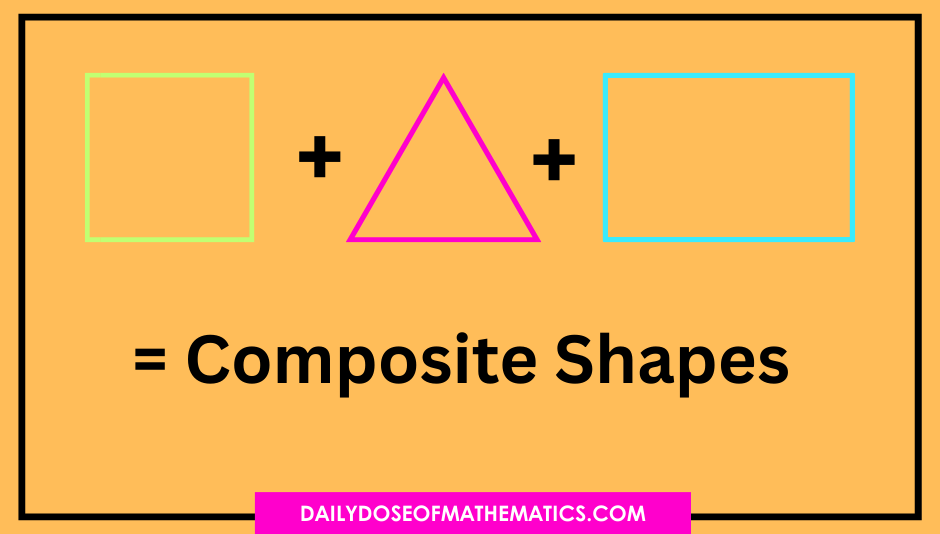
    🟩 + 🟥 + 🟦 = Composite figure.

    Your goal here is to help them realize that composite shapes are just familiar shapes combined, nothing fancy.

    Teach kids how to find Area of Complex or Composite Shapes  figures | middle school math lessons and activities

    Step 2: Revisit the Basics with Hands-On Practice

    Before diving into composite figures, make sure your students are rock solid on calculating the area of:

    • Squares
    • Rectangles
    • Triangles

    Here is a Pro Tip: Use graph paper and have them COUNT squares to confirm what the formulas actually do. This helps your visual and tactile learners “see” the math in action.

    Step 3: Decompose a Composite Figure (using engaging activities)

    Once the basics are solid, it’s time for the real fun, breaking down a complex shape into smaller, manageable parts.

    Here is an activity you can try in your class:

    1. Show them a real-life layout — like a house blueprint or the shape of a playground.
    2. Ask them to identify the basic shapes they see.
    3. Have them outline or color-code each individual shape inside the figure.
    4. Guide them through finding the area of each part — and then adding it all together.

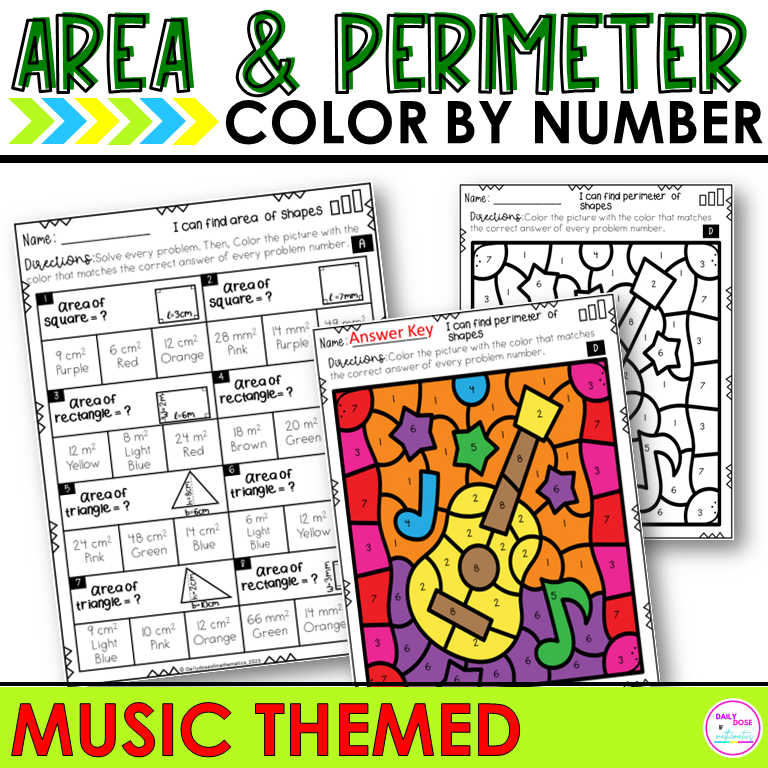
    Want a fun way to reinforce this practice? Try out this this area and perimeter Color by Number activity!

    Finding the Area of Composite Figures or Complex Figures (Color by Number)

    Since kids have already mastered how to calculate the area of regular shapes, it’s time to introduce them to composite figures.

    You can use any composite shape, like a park or a house layout, and ask what they see.

    Tell them to imagine the shape as a whole building made by several small ones and treat every small shape like a rectangle, square, or triangle as a room inside the building.

    Let them think about this concept for a while, and then decompose the shape into its parts and find the area of the individual basic shape.

    Finding Area of Complex Figures Piece by Piece

    Next, it’s time to decompose composite figures like literally breaking the big shape into smaller, familiar parts.

    For better understanding, it’s good to introduce a composite figure with 2 or 3 squares or rectangles and then move on to the more complex figures.

    The next step is to ask your kids how many squares or rectangles they see inside their big figures.

    Have them trace or outline each individual shape in a different color and then calculate the area of each smaller part one shape at a time.

    Pro Tip: Write the area inside each shape as they go to help them see their progress. Next step is to calculate the areas of these individual shapes.

    Since your students by now already know how to calculate the area of regular figures, it would not be a daunting task. Lastly, ask them to add all of them together to get the total area.

    Want some resources to practice the area of squares, rectangles, and triangles in an exciting way? Check out this area and perimeter Color by Number activity below.

    Area of complex figures review practice and perimeter of regular and composite figure, area and perimeter of regular shapes

    Finding the Area of Complex Figures (Trending and Most Popular)

    Now comes the fun part: tell your kids that we are calculating the area of the whole building, not just the single rooms inside.

    They also know how to calculate it by adding the areas of each smaller shape. Basically, by summing up, kids will be able to tell what the area of the complex figure is. 

    Want some fun digital and printable activities to help you with this lesson?

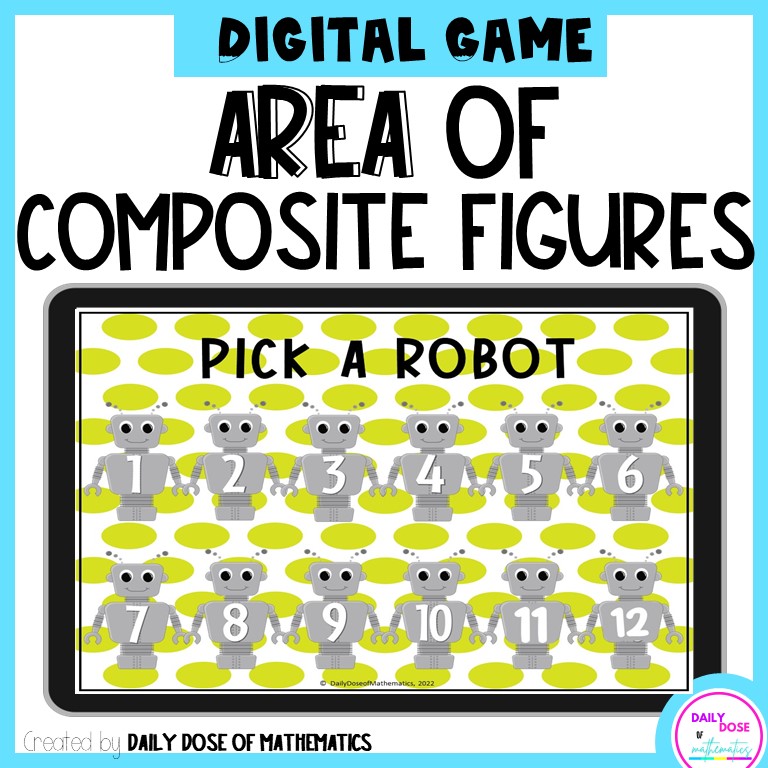
    Check out this exciting whole class activity: Digital game for area of composite figure that also includes printaba le worksheet for student accountability.

    Area of composite figure digital game and activity for 6th grade

    Want to access free math resources worth $29. Click here to learn more!

    Click here to learn more about 5th Grade math activities that keep your students excited while learning math year long.

    Join in to get special FREEBIES and Insider’s FUN!

  • | | | |

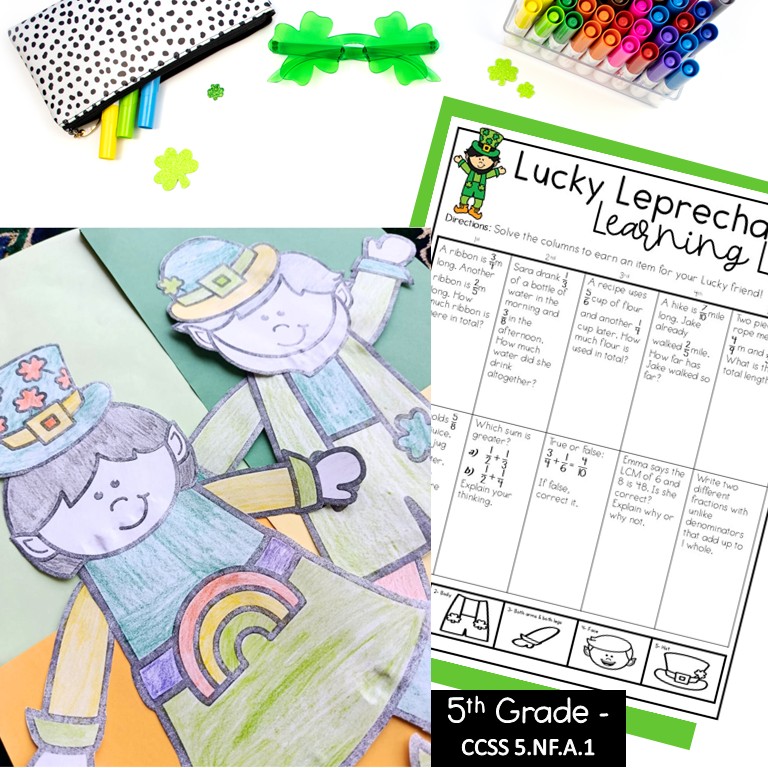
    Best Saint Patrick’s Day Math Activities for 5th Grade to use NOW

    Are you and your kids ready for some festive fun St. Patrick’s Day spirit in your classroom?

    Are you ready to say goodbye to boring activities and see your kids excited to learn math this season?

    Then follow along with me for some super fun things you can try in your classroom this season.

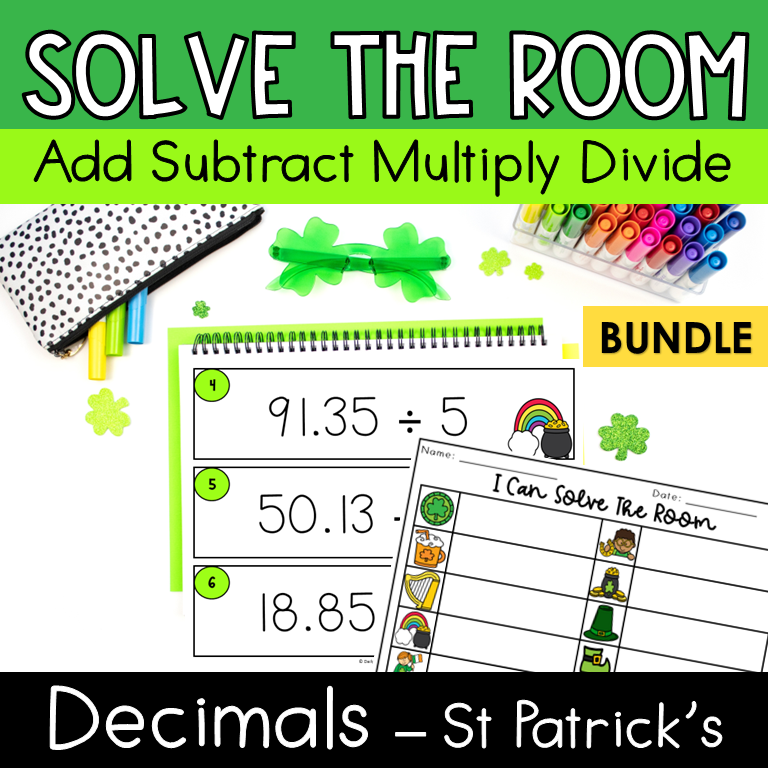
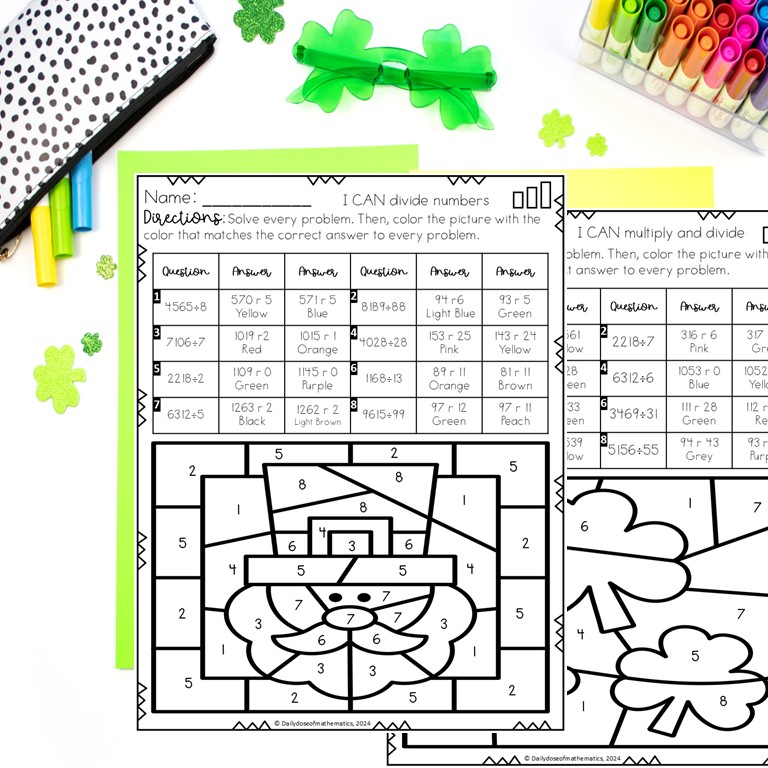
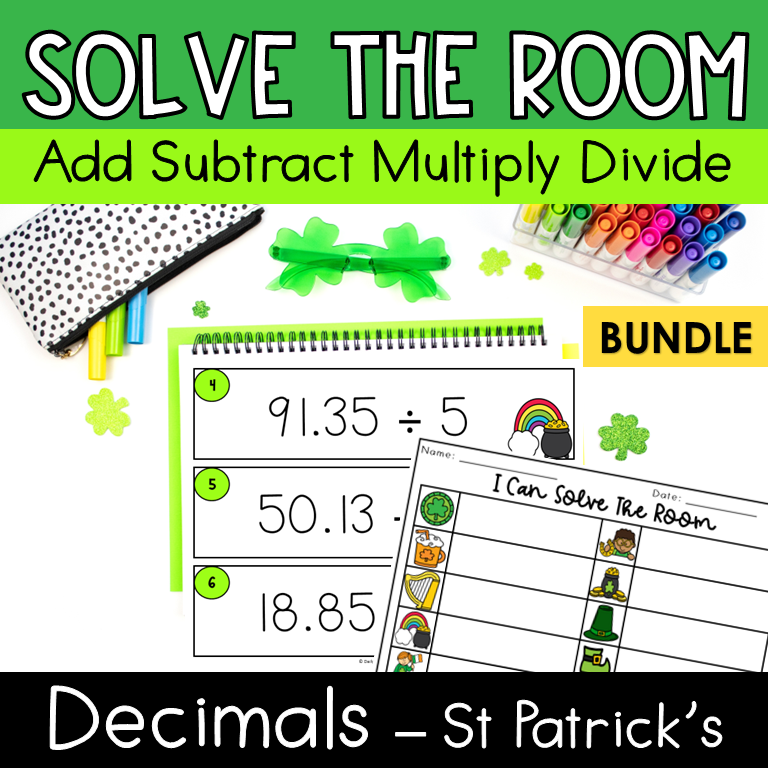
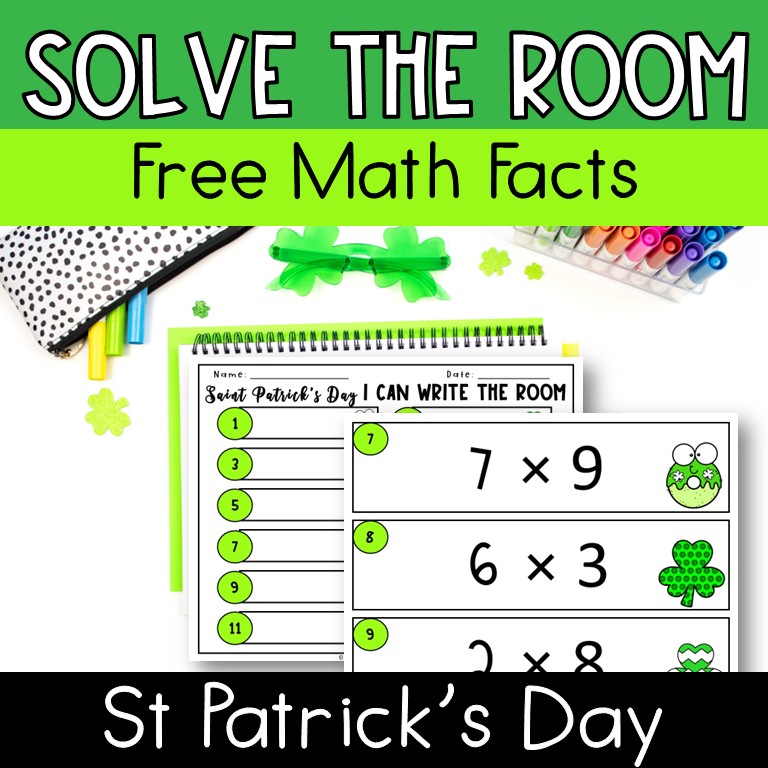
    By using these St. Patrick’s Day themed Solve The Room Activity you will be able to finally bring some Irish charm into your classroom.

    But…

    First things first why would you actually need to use this activity?

    For me personally, this activity is something I use in my 5th grade math classroom whenever I feel like my kids need a break from their usual math learning and it’s time for some movement going to keep their learning juice flow.

    So if it feels like you are facing the same problem, then here are my top 3 reasons why you should use Saint Patrick’s Day themed Scoot activities in your math class:

    1. Encourages Movement and Interaction:

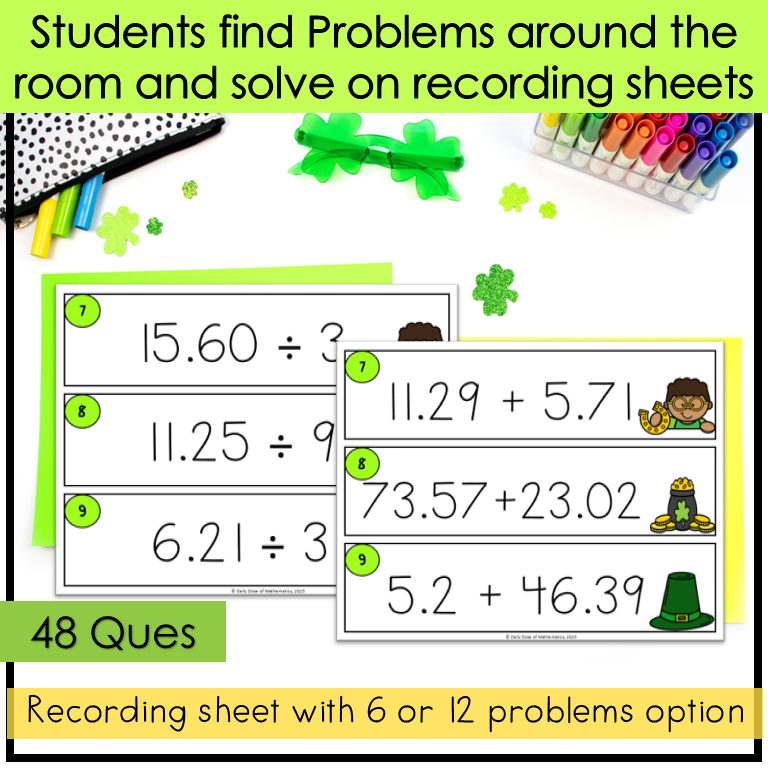
    The ‘Solve The Room‘ aspect of this activity adds a physical aspect to learning.

    Saint Patrick's Day decimal operation scoot practice activities | St. Patty's Day Adding and subtracting multiplying and dividing decimals for 5th grade

    Kids aren’t just sitting at their desks and practicing, instead, they’re moving around the classroom.

    This is even more beneficial for young kids in elementary or upper elementary who learn better when they’re physically engaged.

    2. Engagement through Theme-Based Learning:

    Themed activities are always a win in classrooms.

    Themed seasonal activities like Saint Patrick’s Day Math, are a fantastic way to keep students engaged.

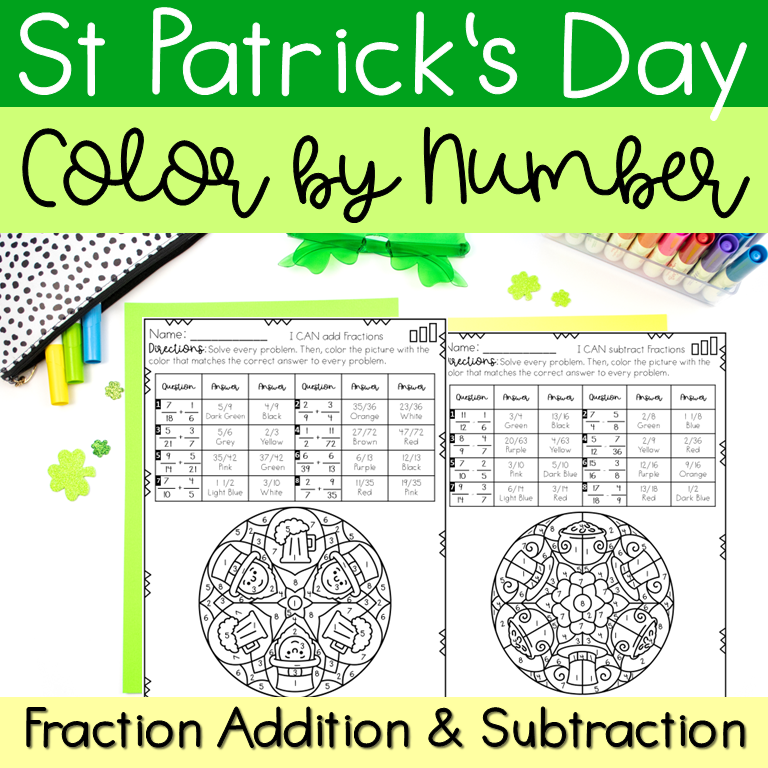
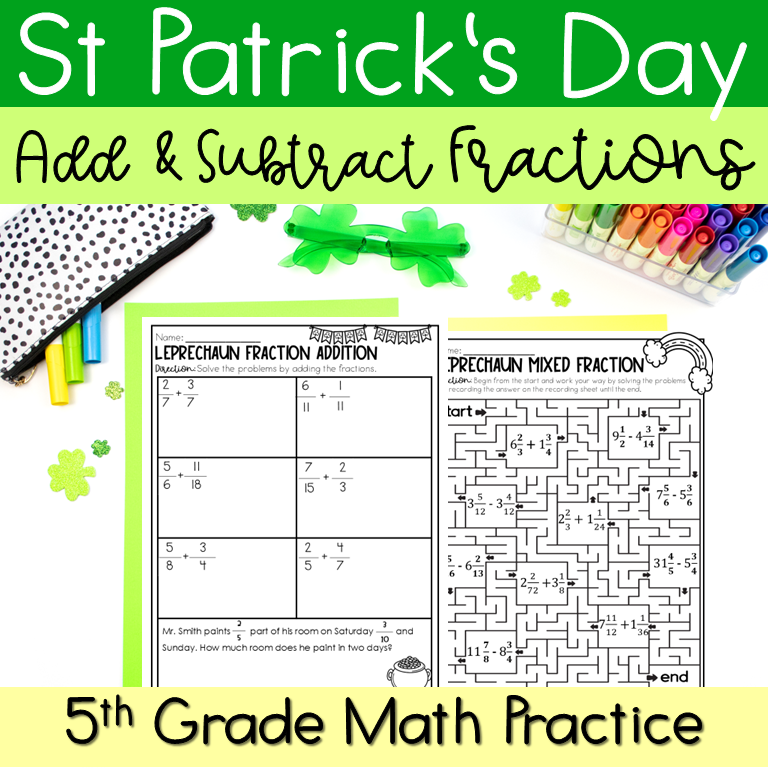
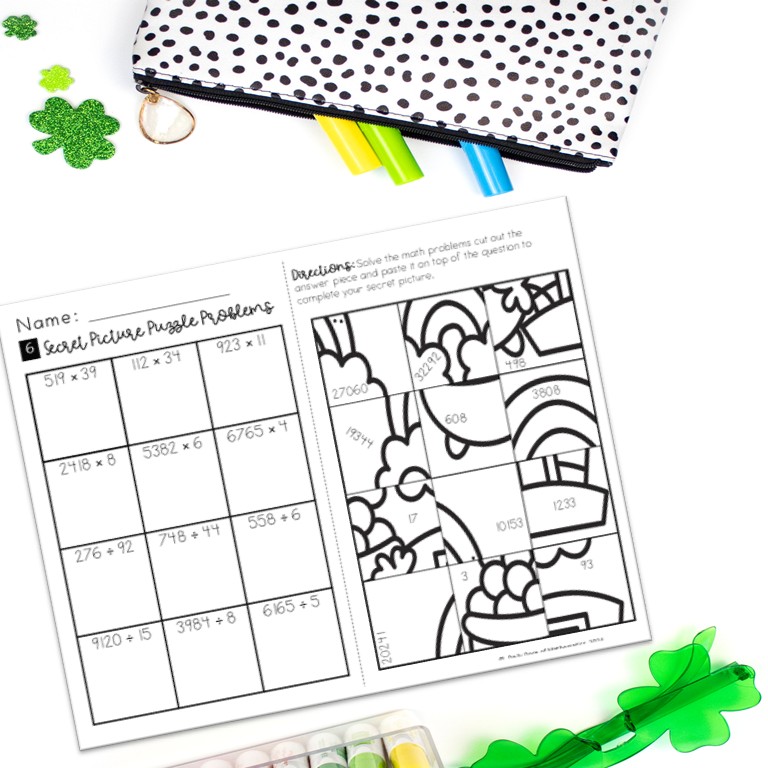
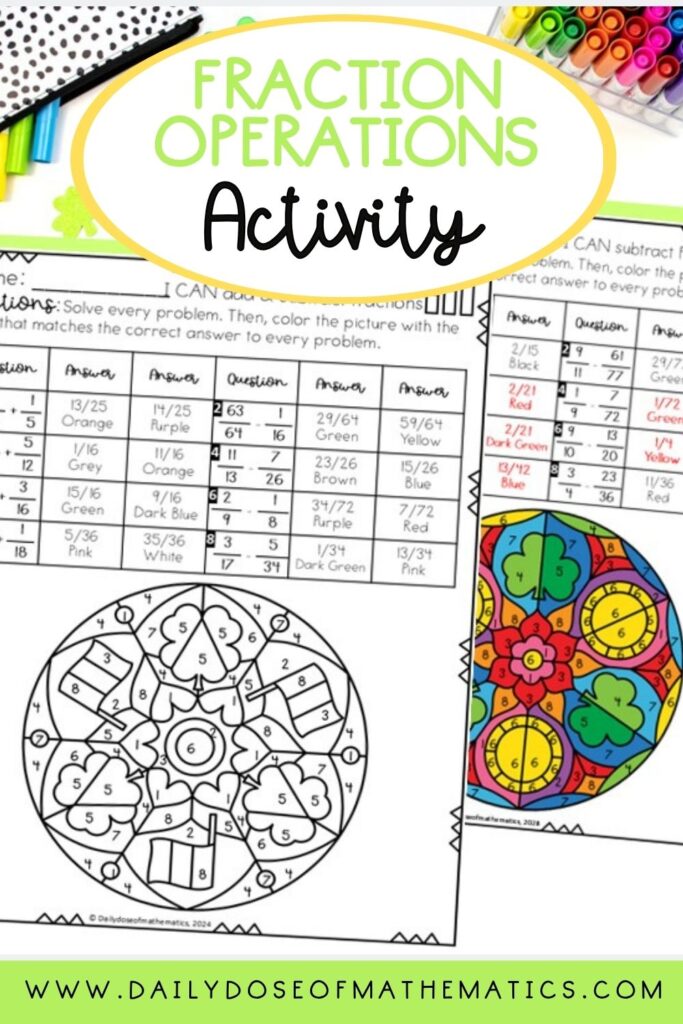
    Saint Patrick's Day fraction operation color by number coloring worksheets and activities | St. Patty's Day Adding and subtracting fractions

    Using these activities we will integrate the fun and festive spirit of the holiday into our March math lesson plans.

    This will not only capture student’s interest but make learning math more enjoyable for them.

    3. Promoting Collaboration and Social Skills:

    With all the rise in the use of technology for learning, kids are being glued to their screens a lot.

    These activities allow them to think outside the box and build their creativity muscle.

    Now… it isn’t just about math; it’s also about working together and developing social skills.

    Saint Patrick's Day fraction operation color by number coloring worksheets and activities | St. Patty's Day Adding and subtracting fractions

    Your kids can work in pairs or small groups which encourages teamwork and communication.

    Want to use these activities inside your classroom?

    Sign up below and get one of the freebies sent straight to your inbox.

  • | |

    Skyrocket your Elementary Kids math learning using Innovative Valentine’s Day Activities To Triple Their Skills

    Do you want this Valentine’s Day to be the best math learning day for your kids while adapting fun and educational activities for your lesson? I got you covered so you do not have to spend a lot of your precious time thinking about what to plan for the day. In this post, I will discuss a wide variety of Valentine’s Day activities including puzzles, color-by-number games, and interactive math games, which not only captivate students’ attention but also help them learn essential math skills.

    Want to know the best part? You don’t have to do anything except for taking the printouts and handing them over to your students. Good deal, right?!

    Spread Math Love using Valentine’s Day Fraction Puzzles and Reinforce the Skills!

    Valentines Day fraction puzzles activity

    Puzzles are a great way to incorporate hands on experience in your teaching. You can use simple sorting puzzles like these Valentine’s Day adding and subtracting fractions with unlike denominators to develop math skills while providing them with gamification to enhance their learning experience. These puzzles provide a playful approach to problem solving and encourage interactive learning. You will enjoy watching your students observe how the puzzles combine to create beautiful Valentine’s Day themed images.

    These activities not only enforce the faction operations skills but also help in developing a collaborative environment where kids learn to work alongside their peers and have to develop teamwork and enhance their social skills. 

    Engaging Valentine’s Day Activities with Word Problem

    Valentines Day Multi Digit Addition and Subtraction Worksheet with Word Problems

    I get how difficult it can be to make kids understand and practice word problems on top of that pair it with plain boring worksheets and all you get is a recipe for disaster in class. So, how do you manage to keep students excited while keeping your lessons on point and still moving the needle? Try using fun and interactive worksheets with a touch of coloring to increase focus while staying on track. 

    Don’t have time to create one, no problem I have done all the grunt work for you and created this highly intriguing Valentine’s Day-themed activity “Addition and subtraction activities along with word problems”. It’s a perfect way to exercise your students’ 3 digit addition and subtraction problem solving skills in a love filled way! These activities have an enjoyable twist on the traditional learning word problems. Your students will enjoy this one and so will you.

    Valentine’s Day Solve the Room Activities

    Why worry about making students get tired or bored while practicing math? Why not use some unconventional ways to keep our math classes mesmerizing while challenging students at the same time? The “Valentine’s Day Solve the Room” activities are designed to do just that. 

    Valentines Day Math Add Subtract Multiply Divide Solve the Room Activity Bundle

    These Solve the Room activities cover basic math skills like 2 digit addition subtraction along with 2 digit multiplication and division. Use them and see kid’s faces lit with joy. All you have to do is put the question cards around the room and students need to find them, solve them, and record the answers in their record sheets.

    The mere activity of walking and solving math turns it into an amusing and delightful physical experience! Students get so engaged and it’s captivating to watch them calculate and get excited!

    Color By Number Activities: A Great Way to Integrate Art and Math.

    For you teachers out there, do not forget to try out Color By Number Activity during the season of Love! It’s not only perfect for kids who love coloring, but the Valentine’s Day theme makes it even more fun and relevant for February. 

    Valentines Day Multidigit Addition Subtraction Multiplication Division Coloring by number

    The activity is a perfect combination of art and math. While coloring and designing something beautiful, students can learn basic addition and subtraction skills. And, the best part! they get to create a gorgeous piece of artwork that you can then hang in the hallway as a reward! It’s a win-win for both learners and teachers.

    Try out these activities as a way to make math enjoyable and intriguing for students, while also keeping the holiday spirit alive. With these activities, students will have the chance to learn these topics and practice the essential skills, while having fun. 

    Moreover, these are great to break up your typical lesson plans and add a fun and lively aspect to your classroom. So, take advantage of these holiday-themed math activities to keep your students engaged and motivated to learn!

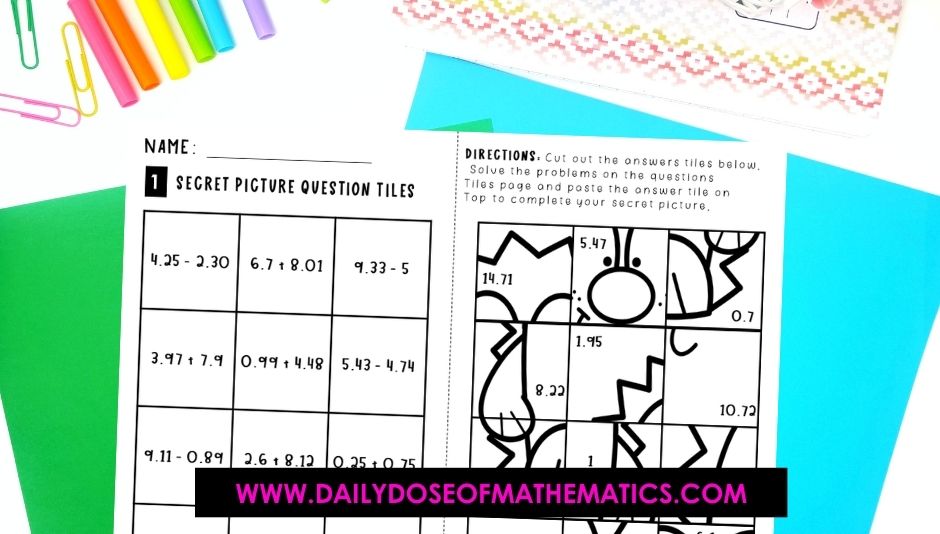
    By the way if you like this activity you might want to check out adding and subtracting decimals activities 5th grade.

    Fun Multiplication and Division Independent Activities Pack

    Valentines Day MultiDigit Multiplication & Long Division Worksheets Word Problem

    Do your kids struggle with poor working memory while reviewing math multiplication or division facts? Do their weak mental math skills frustrate you? Try using interactive activity – it’s super fun and educational! Incorporating this packet into your teaching arsenal could revolutionize the way your students perceive math. No longer just numbers on a page, math becomes a gateway to creativity, problem-solving, and festive fun. It’s an excellent way to maintain academic rigor while also acknowledging the season, making it a win-win for teachers aiming to keep their lessons fresh and students motivated.

    Want to get the insider’s Fun? Join the Club here!