Looking for a fun and exciting way to reinforce decimal operation to your 5th grade kids?
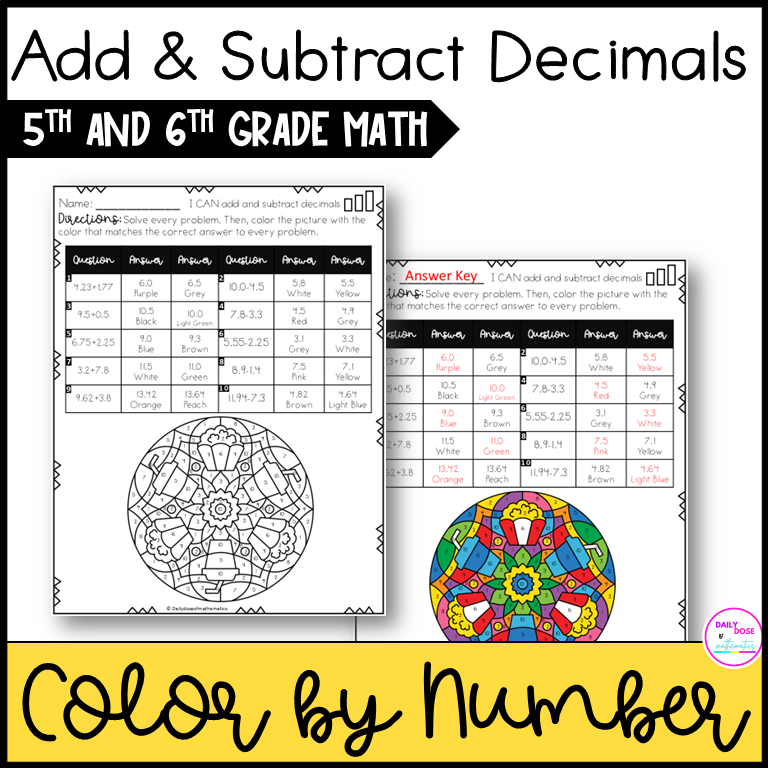
Use this FREE add and subtract decimals color by number activity as an instant solution you can implement in your class right now to make it fun and engaging for you 5th or 6th grade kids learning decimals.
Let’s break down three key teaching points from this resource and how to implement them in your classroom.
1️⃣ Teaching Point #1: Mastering Decimal Addition & Subtraction
How to Implement
Quick Review: You can start with a 5-minute refresher on how to align decimals and borrowing/carrying when needed. Basically the stuff kids already know
Think Aloud: Teach kids 1–2 problems on the board, and say out loud your thought process.
Turn & Talk: Have your students explain the problem’s steps to a partner before they even start.
Independent Work: Give out the Color by Number worksheet and let students solve it.
Check & Reflect: Let students compare their answers with a partner before coloring.
Practice Exercise
Here are a few warm-up problem set you can use with your kids:
3.42 + 2.58 = ?
7.1 – 3.89 = ? A good one to discuss how to align decimals with 1 and 2 decimal places
9.03 + 5.77 = ?
Discuss the most common mistakes (misaligned decimals, forgetting to borrow, etc.).
2️⃣ Teaching Point #2: Building Confidence with Self-Checking
How to Implement
Encourage Estimation: Before solving, have students round numbers and estimate to check their reasonableness.
Check in Pairs: After every five problems, students compare answers before coloring.
Spot the Error: If students see an unexpected color pattern, guide them to rework the problem.
Practice Exercise
Have students estimate first and then solve:
4.92 + 3.17 (Estimate: 5 + 3)
10.5 – 7.63 (Estimate: 10 – 8)
6.89 + 1.56 (Estimate: 7 + 2)
This step reinforces number sense and problem-checking habits.
3️⃣ Teaching Point #3: Increasing Engagement with Color & Creativity
How to Implement
Make It a Challenge: Time students and see who correctly solves and colors first.
Personalized Touch: Allow students to choose their own coloring shades.
Create a Math Wall: Display finished work to reinforce effort and accuracy.
Incorporate Tech: Have students take a photo of their work and explain their thinking via a digital tool like Flipgrid.
Want to get your hands on this FREE decimals operation color by number?
Sign up and get the worksheets delivered to your inbox!
So you have taught fractions unit to your 5th grade kids…Now what?
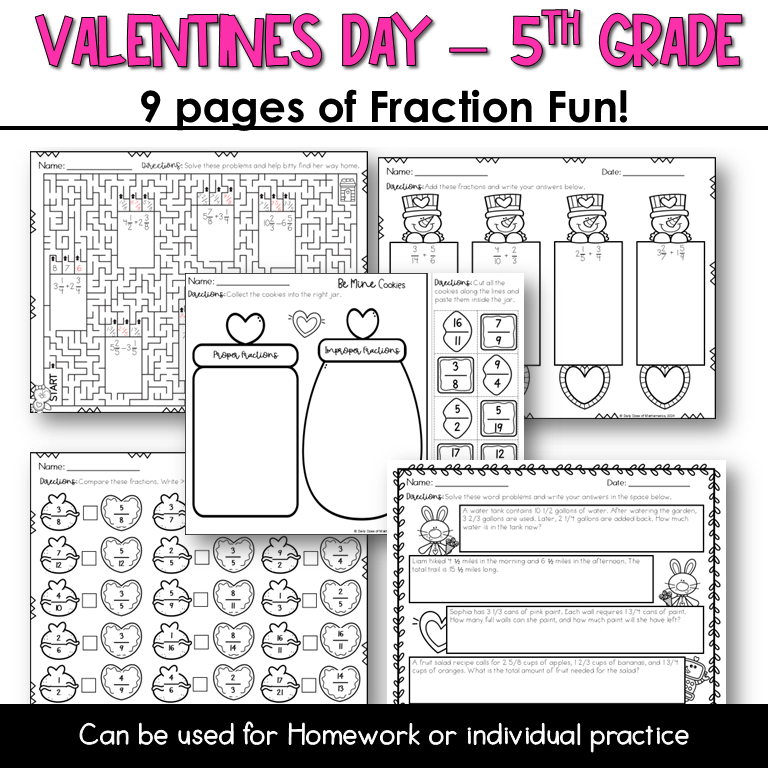
There are many ways you can keep your students practicing there fractions skill this valentines without feeling overwhelm.
This Valentine’s Day get your 5th graders math game strong by using meaningful activities that help them practice various math skills they have already learnt.
one thing I would advice before starting is do not just make this season all about hearts and candies use it as a perfect opportunity to get your kids more engaged in math fun!
So if your goal is to engage your students with math fun… interactive math activities both print and digital is the way to go.
But before we get started a quick reminder, if you need free math activities and worksheets to try with your 5th grade kids, join the newsletter and get them delivered straight to your inbox!
Now let the fun began, here are seven exciting math activities that will help your 5th grader’s attention and get them to practice key mathematical skills.
1. Mystery Picture Puzzles
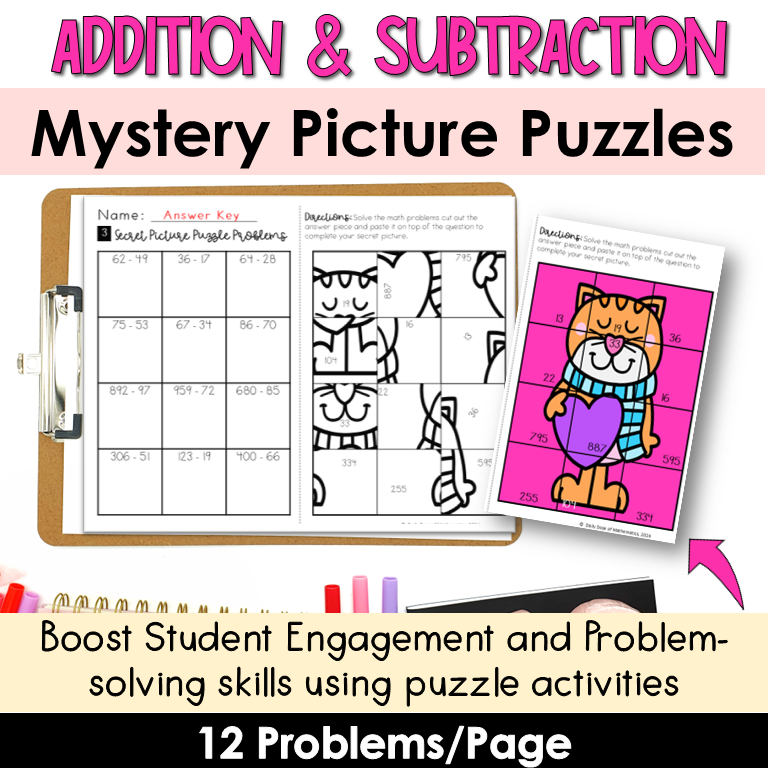
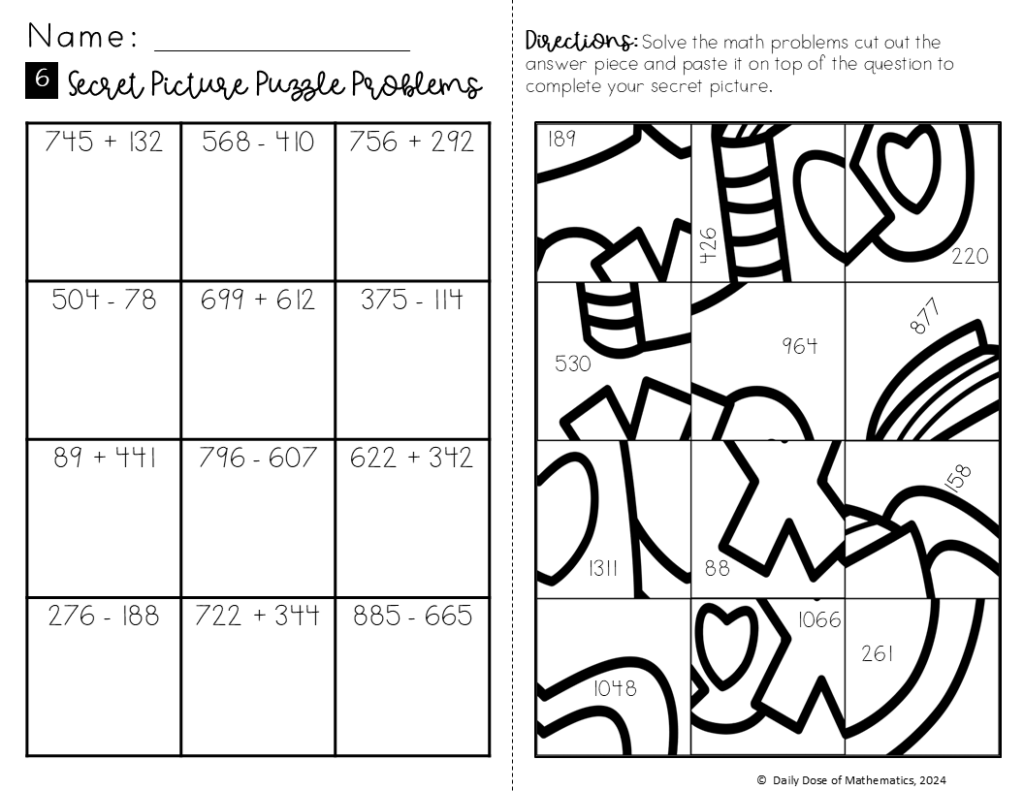
Want to practice multi digit addition and subtraction with regrouping but do not want it to be a boring activity? Mystery picture puzzles are the best way to do it while making it a fun interactive activity.
Your kids will practice their 2 and 3 digit addition and subtraction skills by solving these problems and putting together the puzzle pieces to reveal the picture.
Because look – we math teachers need to know what kids know and what needs more practicing so we can keep our math class more interesting.
So if there is any activity that I can use with my kids to practice their basic operations skills while solving and building a puzzle, I’m am here for it.
How it works:
Prints out the puzzle worksheet and hand it over to the kids. Let them cut the puzzle pieces on the right side.
Once that’s done let them solve and put the mystery pictures together to reveal the picture.
As your students complete the puzzle and uncover the picture you can even instruct them to color it and make it a fun art piece for their classroom bulletin board decoration.
Key Skills this activity helps kids with:
Problem-solving
Attention to detail
Addition and Subtraction fluency
2. Color by Numbers
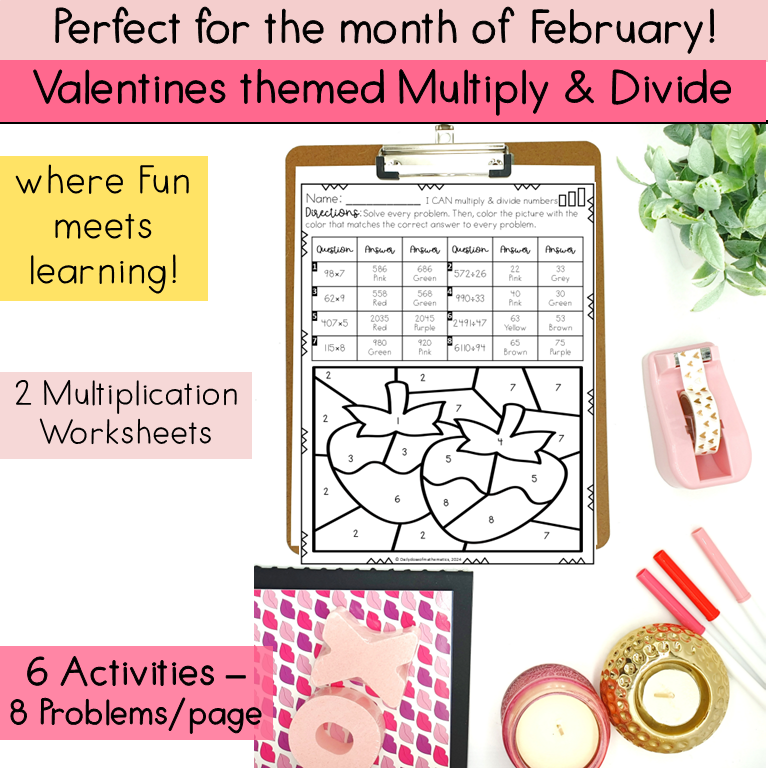
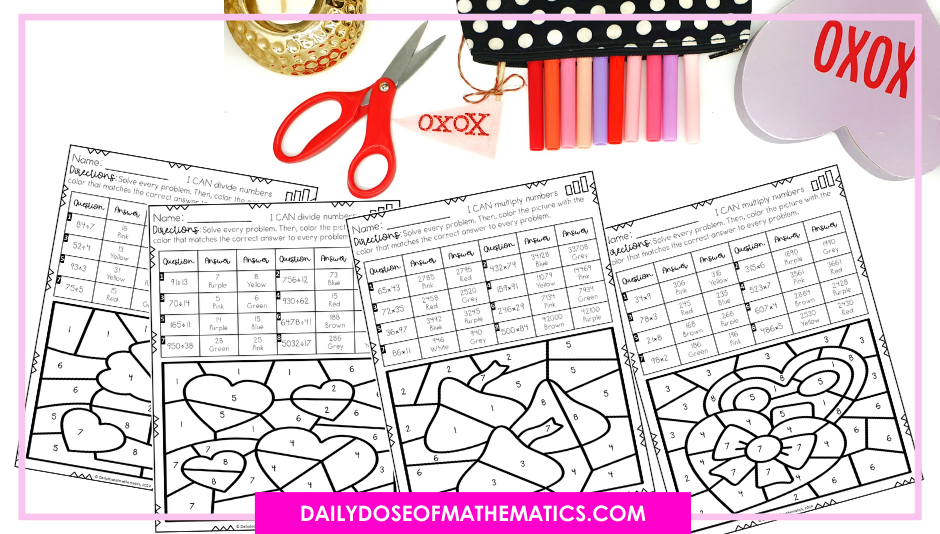
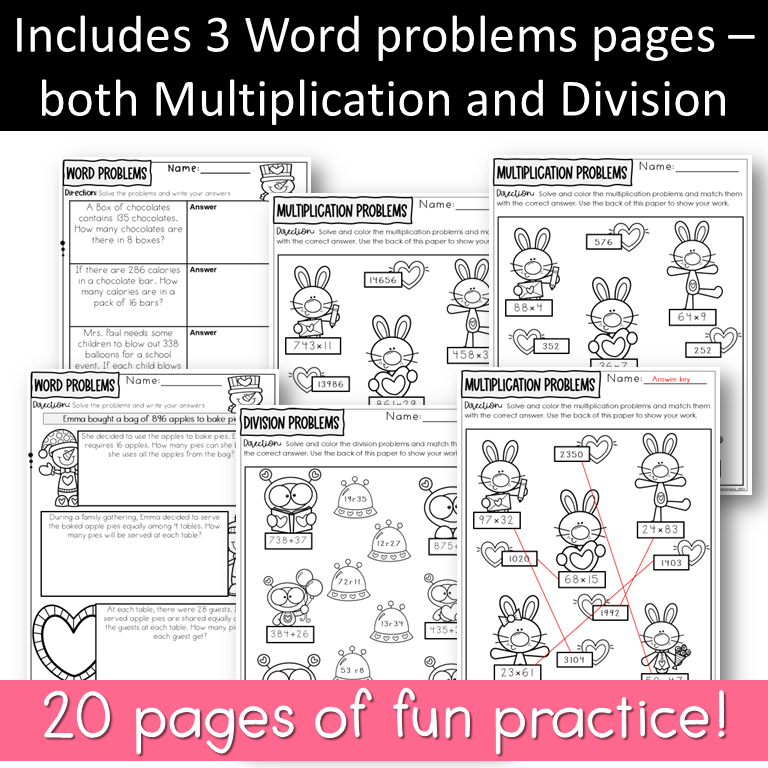
When it comes to practicing math facts especially multiplication and division some things are easier than others. And honestly coloring math activities is like one of those things.
For my kids multiplication and division are the skills that they need more practice with than anything else.
And to tell you the truth it is better to get them to practice these skills more during their upper elementary years more so it’s easier for them to build other math concepts during their middle school years.
This is the exact reason why I have whole year themed multiplication and division color by number activities.
That mainly focuses on multi digits like 2 or 3 digits multiplication and division practice.
The best part is each page has just enough math problems for kids to complete in a day making it a perfect addition to your daily math lesson.
Here is how it works: Kids use the back of the page to solve the problem. Each problem has 2 answer options along with the color they need to use to color the picture.
Students solve and select the right option and work on there coloring part of the activity.
I do not know about you but I still feel like I haven’t fully got the hang of using digital activities in my class.
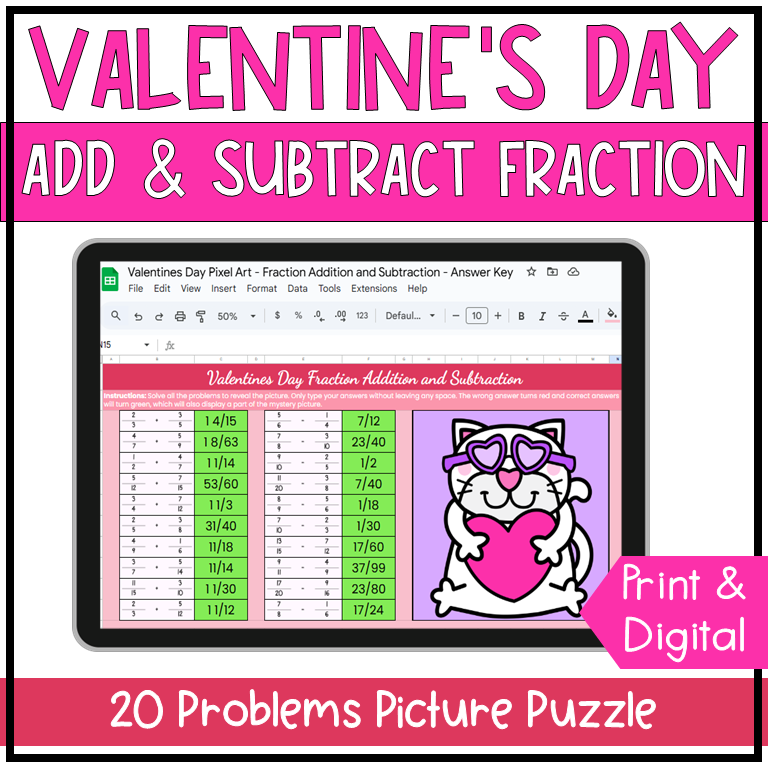
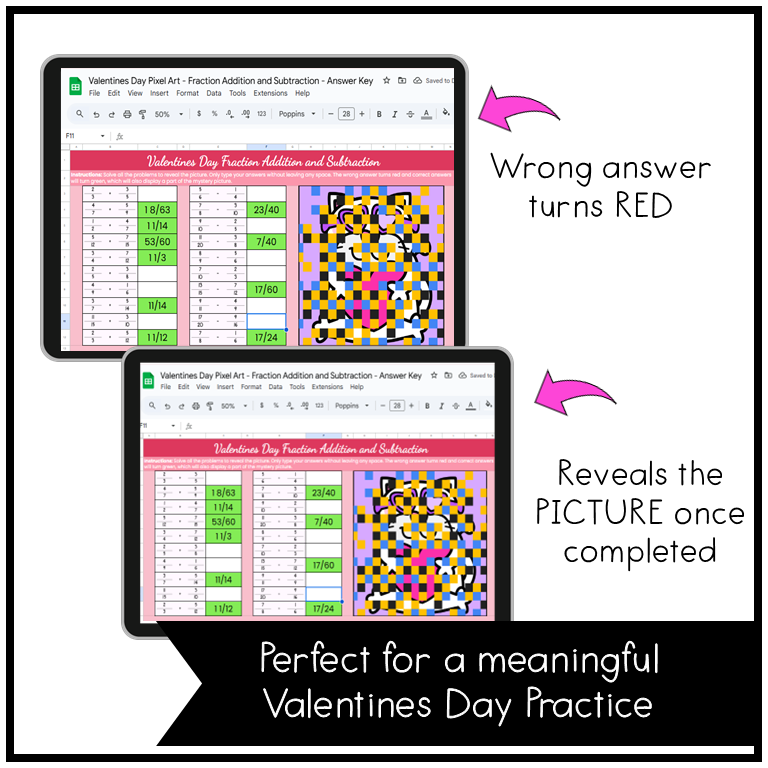
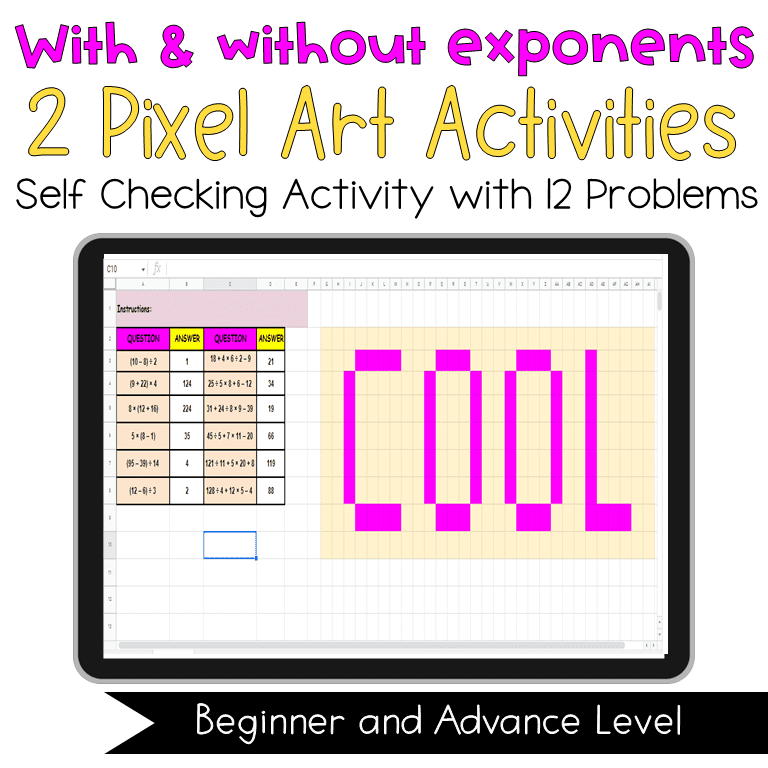
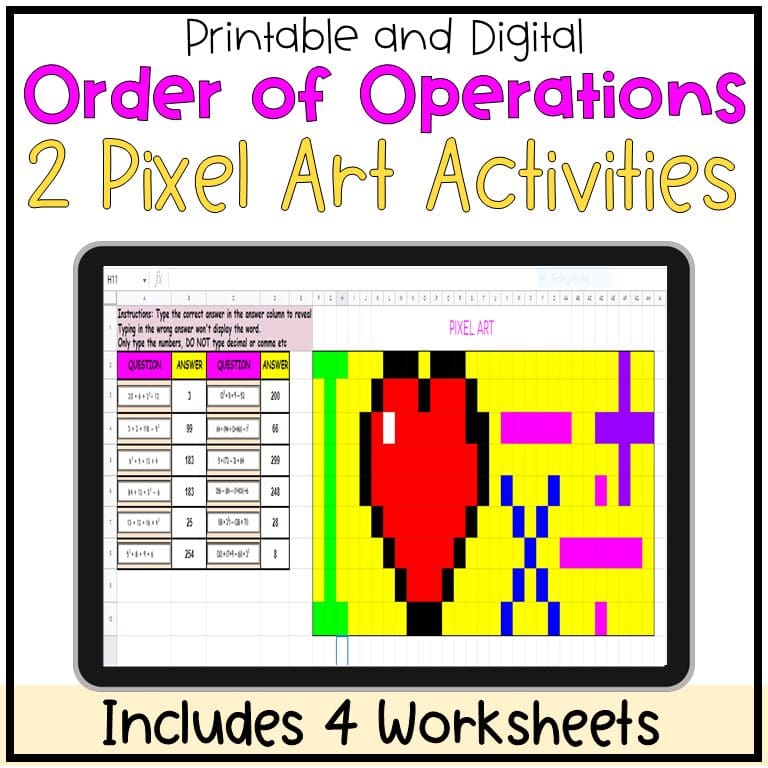
Honestly to leverage technology to get kids practicing math concepts like fractions addition and subtraction with unlike denominator is a bit mess but we are getting though it using Pixel Art Google Sheets(TM) activities.
I assign my students thise activity on their devices and they solve math problems to reveal a pixel art Valentine’s design. The more kids solve the problem right the more picture is revealed which is super FUN!
Puzzles puzzles and some more puzzles. I you one for the people who hear about differentiation or centers in meetings and are excited to try new thing to make it work then this one is for you.
Puzzles are the best part of my centers. Although they take up a little bit of time to prep but its so worth the effort.
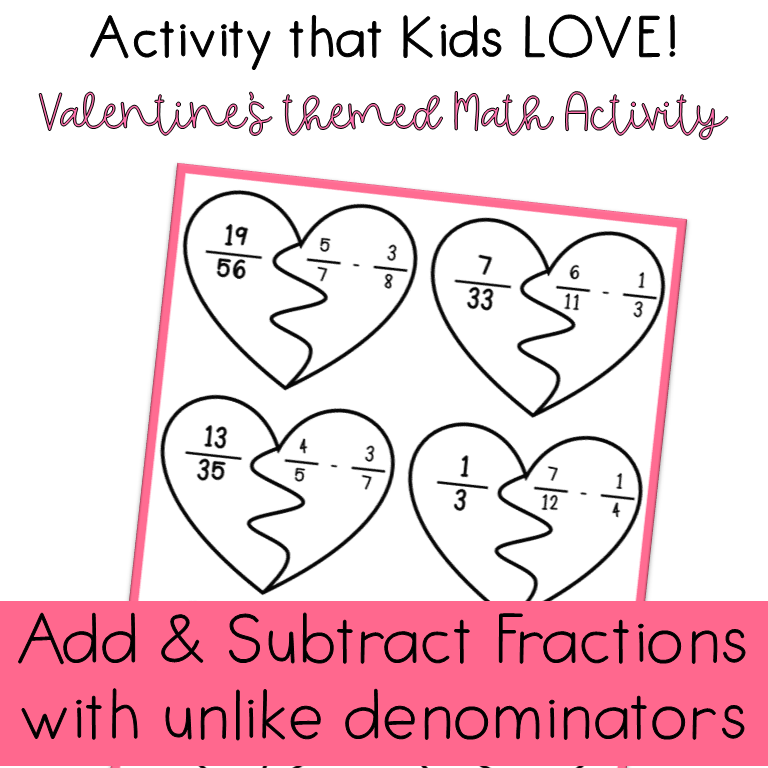
Kids not only have to solve the problem but also find the answer to complete their puzzles making it a perfect game based activity to try during math centers.
The best part… it’s free!
But if those same puzzles are heart shaped fractions problems that’s even better. You can check them here.
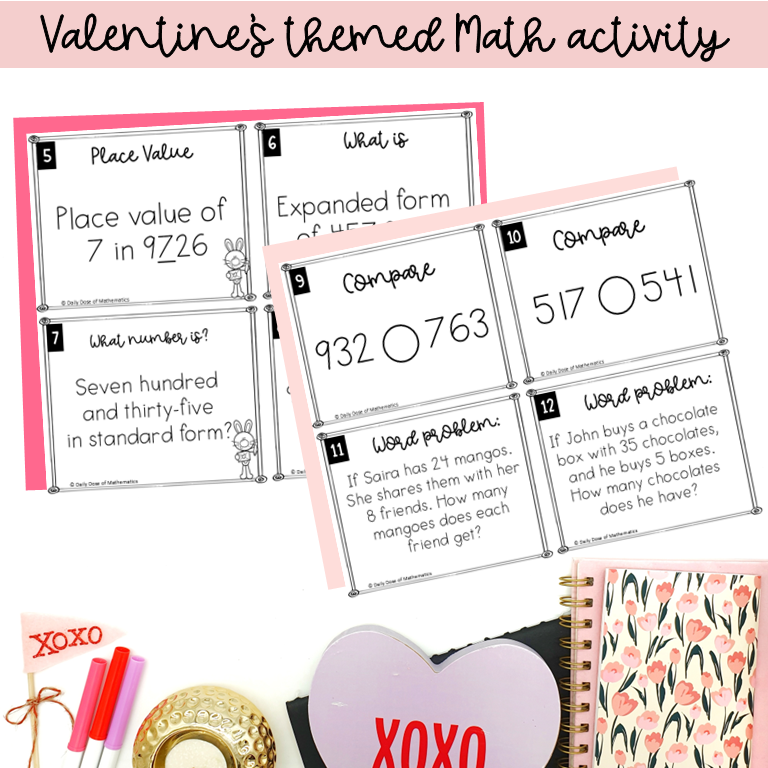
6. Valentine’s Day FREE Solve the Room
This my friend is what I ALWAYS do when I do not have anything planned for the day and need something quick to engage but still keep them learning.
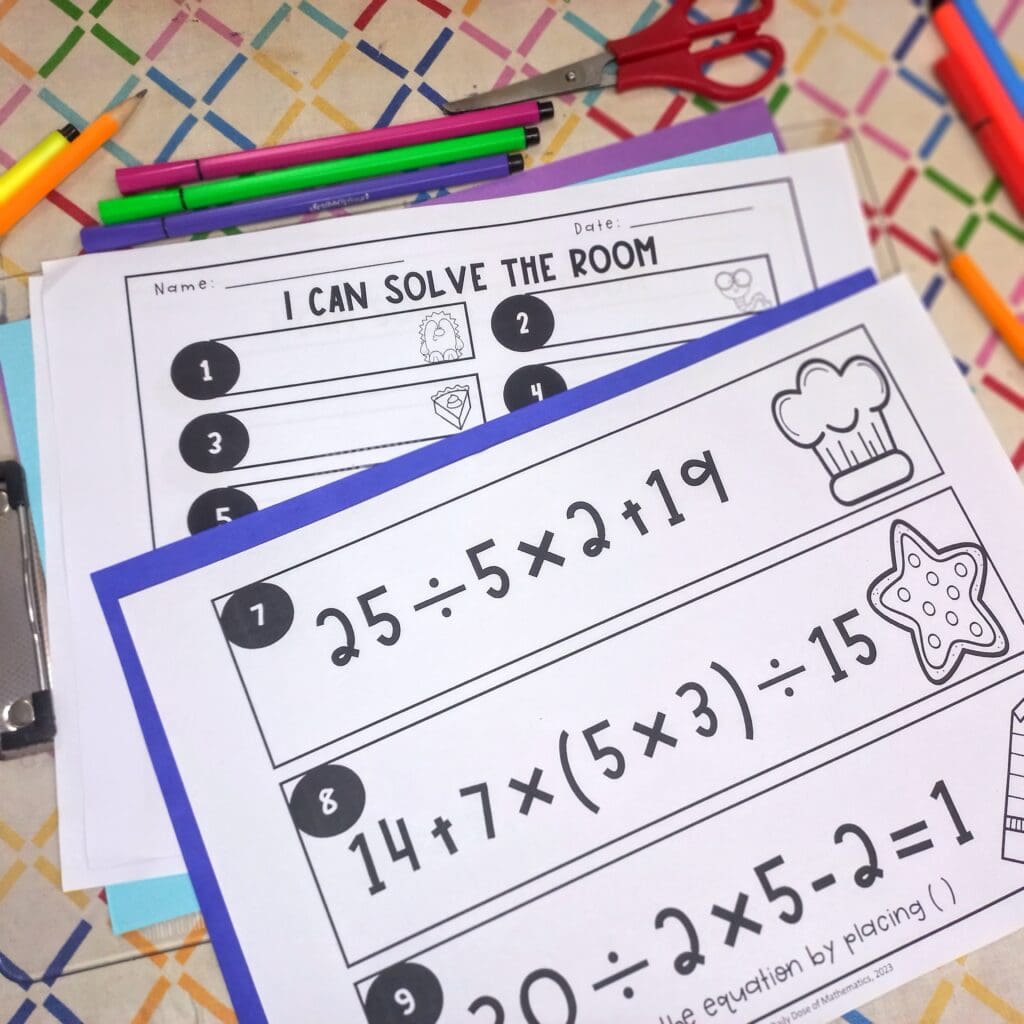
The idea is simple you write math problems on task cards and display them at various points in your classroom.
Kids walk around the room and solve the problems on the recording sheets.
They feel engaged and fun. Not sticking to their chairs and able to walk around is what makes this activity one of my ids favorite thing.
And honestly, I do not blame them. So if you want to transform your classroom into an interactive collaborating math learning place try out math solve the room activities.
We all use worksheets to put the practice kids need to improve their understanding.
In fact, who does not like to use worksheets to make learning fun with Valentine’s-themed images so kids are more likely to solve them and not feel bored?
These Valentine’s Day math worksheets go beyond traditional worksheets by offering engaging, interactive ways to practice their math skills.
By using themes of love, you are helping students see math as an exciting, enjoyable subject.
How do you make learning fun during valentine’s day? Let me know in the comments!
Want to get access to exclusive FREE content? Sign up for the newsletter below!
Once you sign up, you’ll receive the freebies to help you teach elementary math!
Fall gives us teachers the perfect opportunity to engage students with fun, fall themed math activities that build excitement for learning inside classrooms.
For me seasonal math not only brings a fresh twist inside classroom for kids, but it also give me some change to use fun activities to keep my upper elementary kids engaged with unique activities that are different but perfectly with the curriculum.
Here are some way I have found helpful to bring the spirit of autumn into my math lessons to keep students motivated and excited to learn.
Why Use Fall-Themed Math Activities?
Once the back-to-school buzz goes away, students may start to lose some of the enthusiasm they had in the first few weeks of school.
This can be challenging to maintain that level of energy in the classroom as the routine sets in.
And tis is where seasonal activities come in handy and exciting to keep them engaged and ansurprised to work on their task!
Fall-themed math activities can help apture student’s attention and re-energize their will to keep their math learning moving forward.
These activities not only make lessons fun but also ensure students are still practicing critical math skills in an engaging way.
Upper Elementary Fall Math Activities you Should Try this Year:
Here are some of you can use activities to help your 3rd 4th or even 5th grade students get into the Fall spirit while practicing essential math concepts:
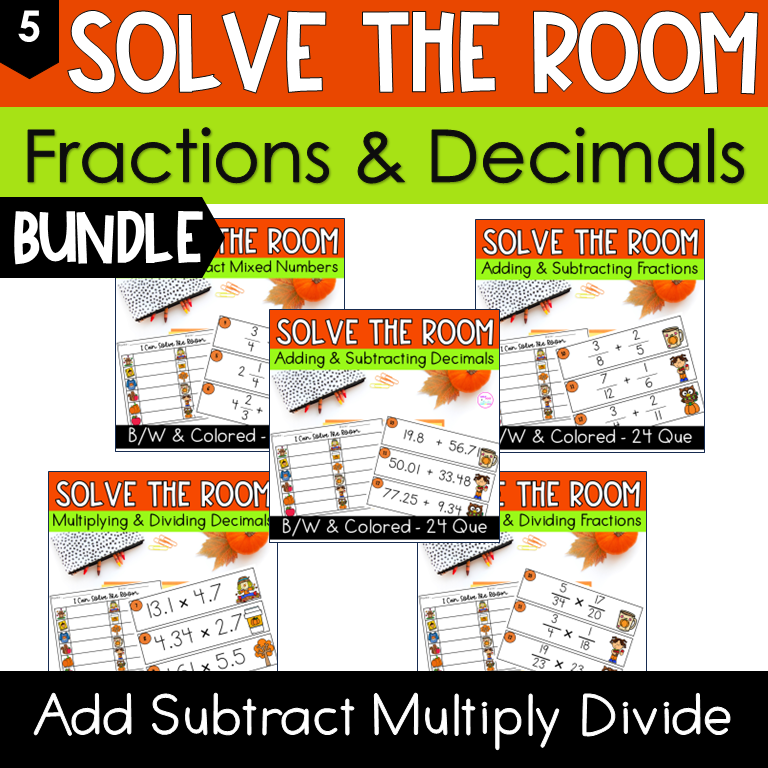
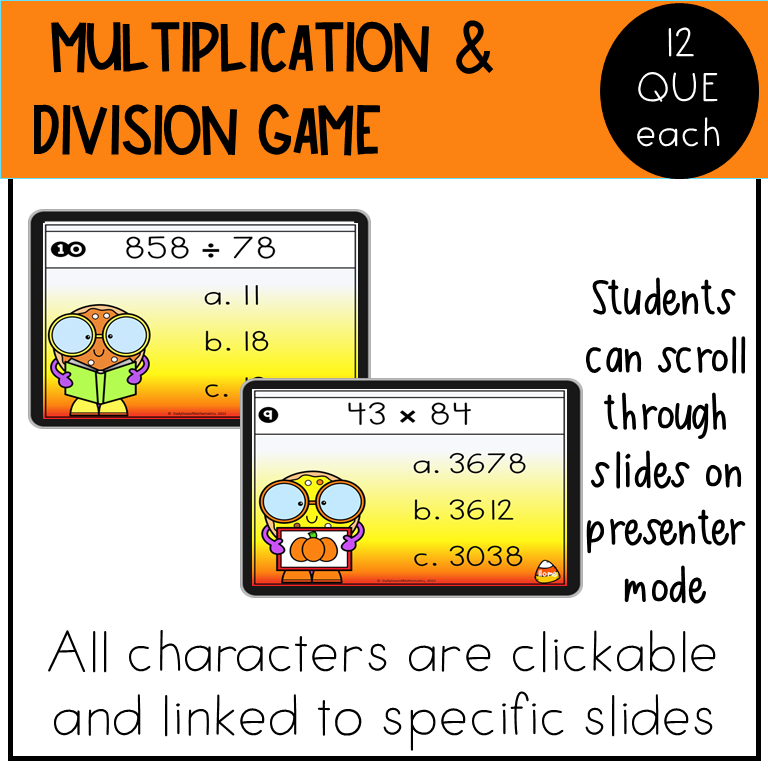
Fall-Themed Solve-the-Room Activities
This activity can transform your classroom into a dynamic learning environment. Students will move around the room, solving math problems with a fall spirit.
Activities like these are perfect for keeping students active while making sure they’re reviewing their key math concepts, such as Decimal and fraction operations or even math facts.
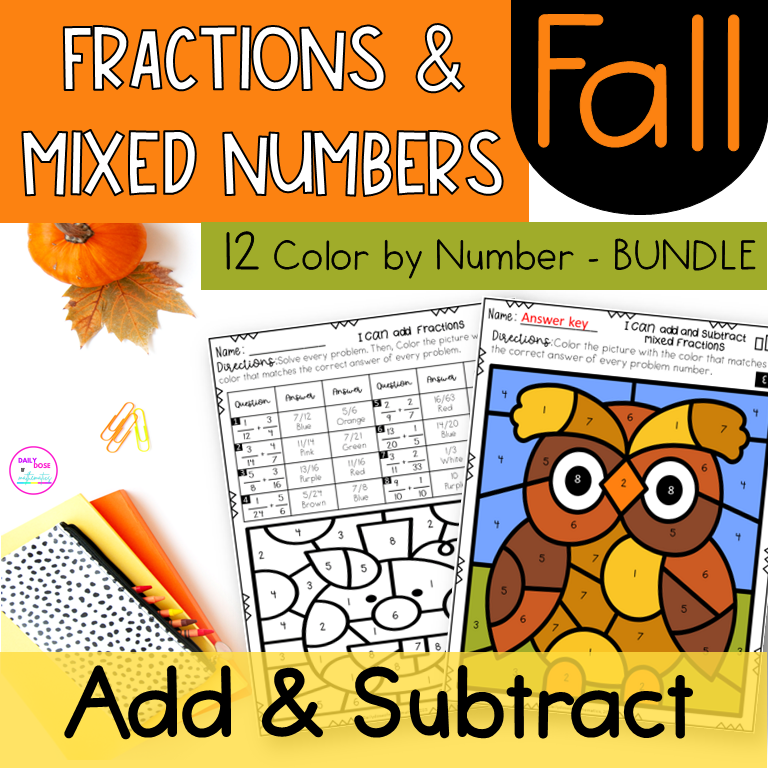
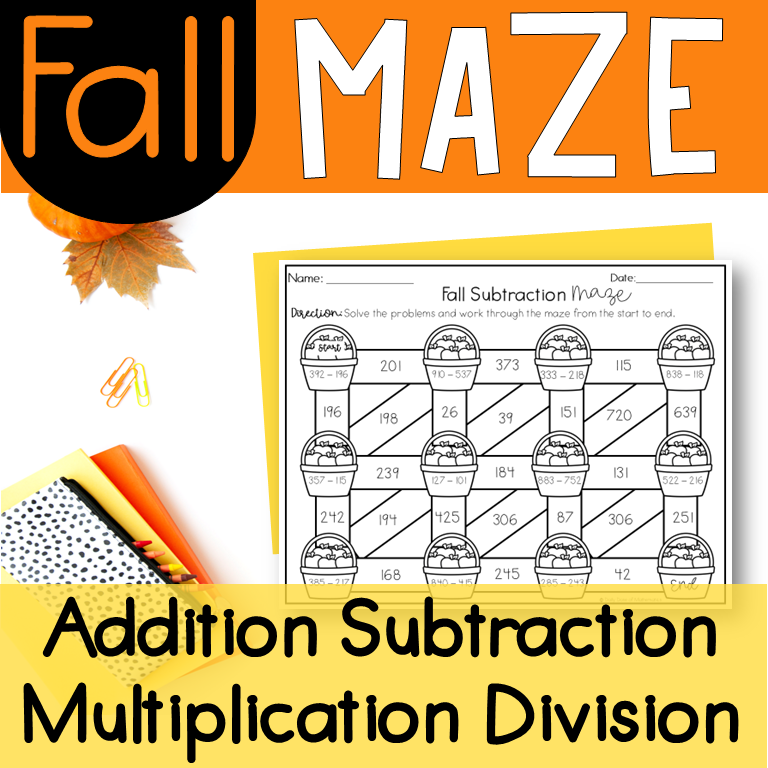
Fall Color-by-Number Worksheets
Ahhh! Who does not like some coloring to go along with their math centers and daily practice?
Color by number worksheets combine creativity with math practice to keep them on their learning journey and reduce their learning fatigue at the same time.
Honestly this alone is like a win win situation for me.
Every time I take out one of these Coloring sheets kids are just excited and motivated to work on them.
What’s most important is there are jut 8 problems they need to solve instead of bajillions just to get them to the coloring part.
This is the reason why they are more motivated to work on this single page coloring math sheets.
Here is how it works: Students will solve math problems and then use their answers to complete fall-themed coloring pages.
It’s a great activity for early finishers or as a calming task during busy classroom days which is a plus.
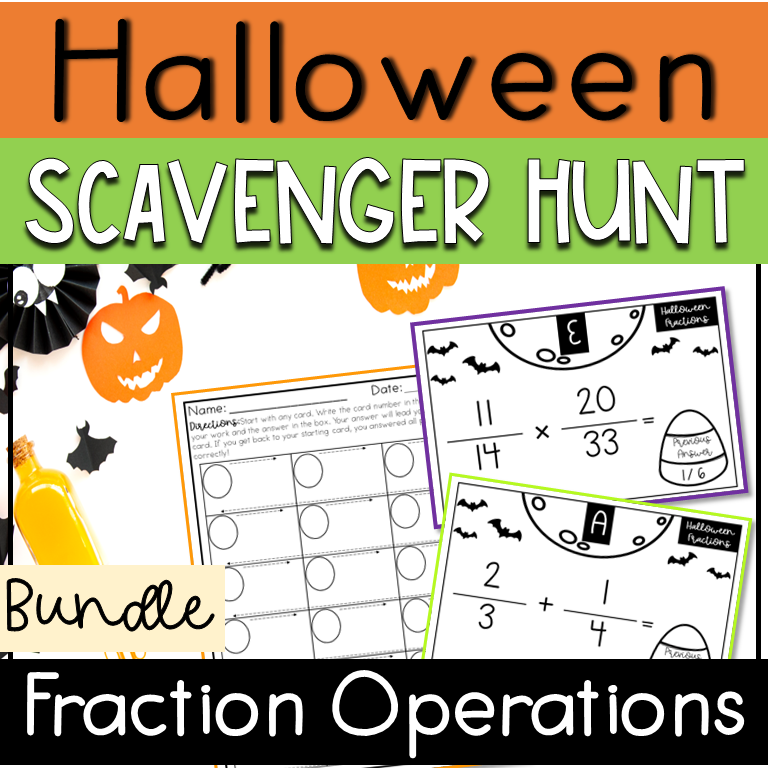
Fall Math Scavenger Hunt
Did you just said hunt? I think math reviews do not have to be boring?
Using this fraction scavenger hunt activity this Fall and turn you class in to a Scavenger Hunt adventure that your kids would love to be in.
Students solve math problems while following clues around the room. It’s an engaging way to review concepts and encourage teamwork.
And the best part is, it’s self checking so less work for you but more fun for them.
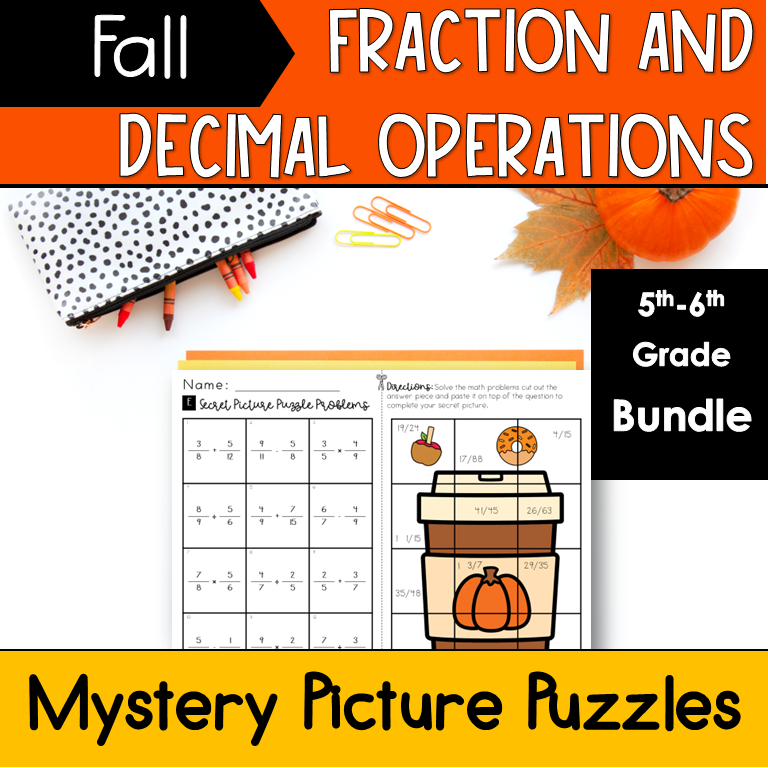
Fall Fractions and Decimal Operations – Mystery Picture Puzzle!
Tired of searching for an engaging and fun way to help your 5th-grade students master fractions and decimal operations?
Maybe try out some mystery picture puzzle math activities.
Using the Fall Fractions and Decimal Operations Picture Puzzle is the perfect way to practice math and increase creativity to keep your students motivated and excited on learning their fractions concepts.
These puzzles gives students the opportunity to solve fractions and decimal problems while slowing revealing a fall-themed picture.
Whether you’re looking for a way to reinforce lessons on adding, subtracting, multiplying, and dividing fractions and decimals or simply want to add an interactive twist to your math centers, this activity does it all!
How to Implement It
This resource is dynamic and easy to use into your classroom. You can use it as:
A fun, no-prep fall math center
A homework assignment to reinforce what was taught in class.
An engaging review activity before an upcoming test.
A small group activity for collaborative learning.
How to have Fall-Themed Math Spirit in the Classroom
Using fall-themed classroom activities and resources into your lessons is easy, and literally there are so many creative ways to do it!
Here are a few ideas from me to get you started:
Create Fall-Themed Math Centers: Yup that’s the first one. You need to set up multiple fall-themed stations in your classroom where students can rotate between different activities, like the Fall Solve-the-Room or Color-by-Number sheets. This gives kids diverse options and allows students to work independently or in small groups.
Use for Early Finishers or Warm-Up Activities: These activities are perfect for students who finish their work early or for a quick and engaging warm-up to get everyone focused on math first thing in the morning.
Fall Decor for Extra Fun: This one is a must! Decorate your classroom with fall leaves, pumpkins, and other seasonal visual elements. Then, use these resources as part of a fall-themed math review or even a class competition!
By using these fun ideas, you’re not only bringing fall into the classroom but also boosting students’ enthusiasm for math.
To bring the magic of fall into your math lessons. You will be able to watch your students’ willingness to work on their classwork soar, the big idea is to use multiple Fall themed elements in your day and your kids will thank you for all that you do for them.
Ready to add some seasonal fun to your math lessons?
Check out our Fall Math Activities on my TPT store Daily Dose of Mathematics store!
I get it, I get it, as an upper elementary math teacher, we can teach order of operation to 5th grade students for what can feel like forever. So long that you may feel like you are running low on new ideas to teach it anymore.
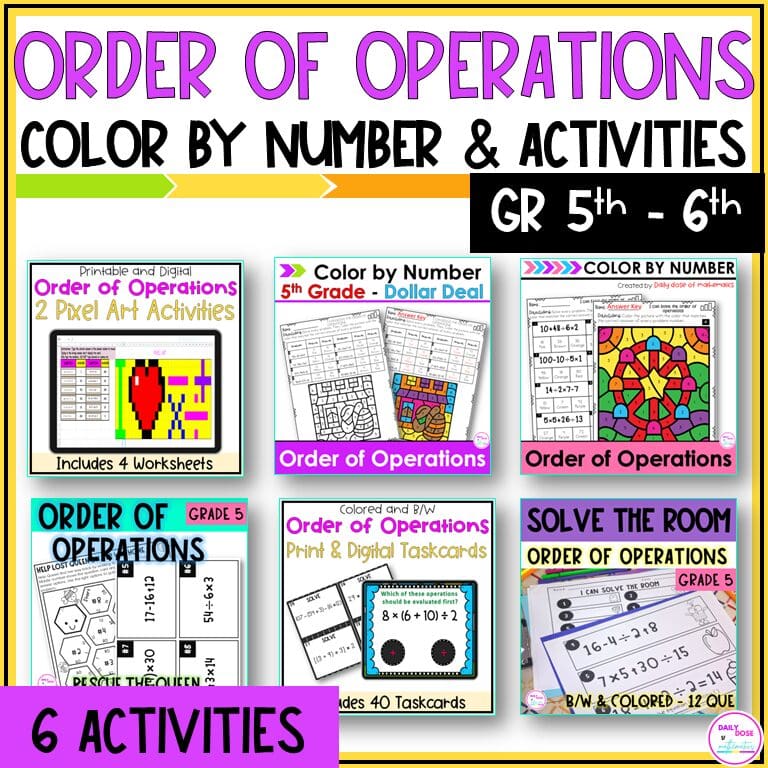
All these are my favorite activities. They include both printable and digital options so there is something for everyone.
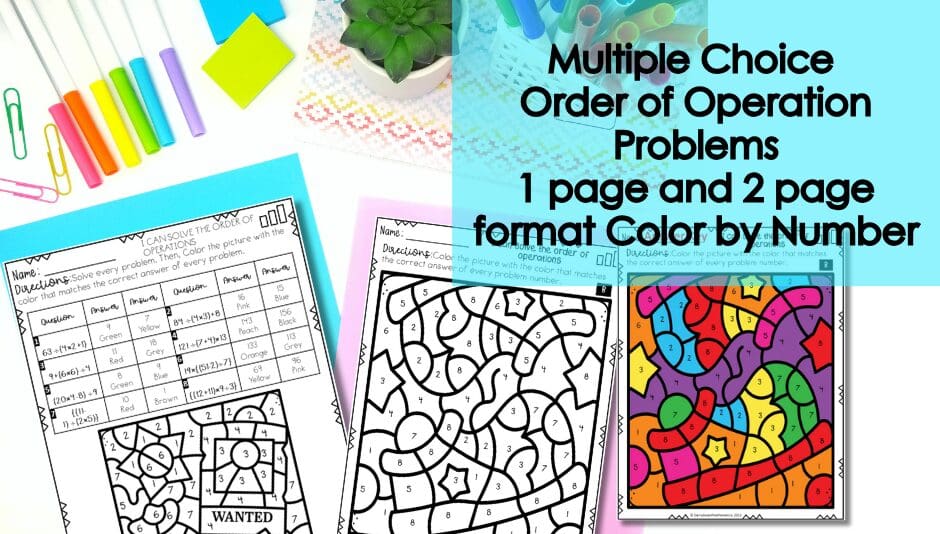
Color by Number Order of Operations Activities
Getting students excited about the order of operation topic can be a challenge but not if you are using the right activities to engage and get kids to think more about the order of operation.
Students do not just need to know how to solve order of operations problems. It is equally important that kids learn why learning about the order of operations is important.
It’s a way to make sure every one of us arrives at the same answer to a particular problem.
You can teach them various strategies like “please excuse my dear aunt sally” to make it easier for them to remember.
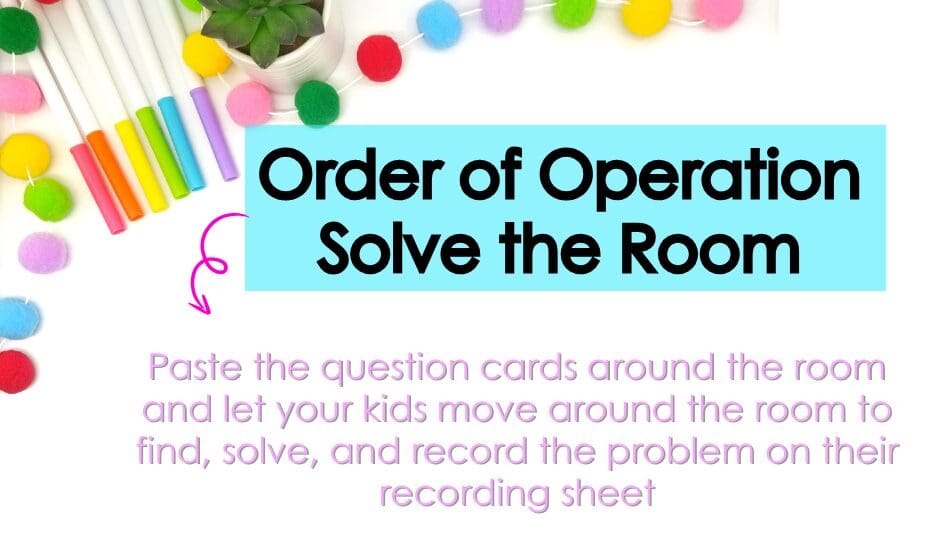
You post task cards with math problems for your students to work on at different stations or different areas of your classroom.
Then give each student a recording sheet to record their answers.
Students move around the room to find these problems, solve and record them on the given recording sheet.
Why this is the best activity to try:
Engagement: Traditional worksheets can sometimes bore students, but Solve the Room adds an element of excitement and movement, keeping students motivated and interested.
Concept Mastery: Students often struggle with the order of operations. This activity offers repeated practice in a fun and hands-on way, helping kids to solidify their understanding.
Classroom Management: By moving around the room and focusing on different problems, students are less likely to become restless or distracted, leading to better classroom management.
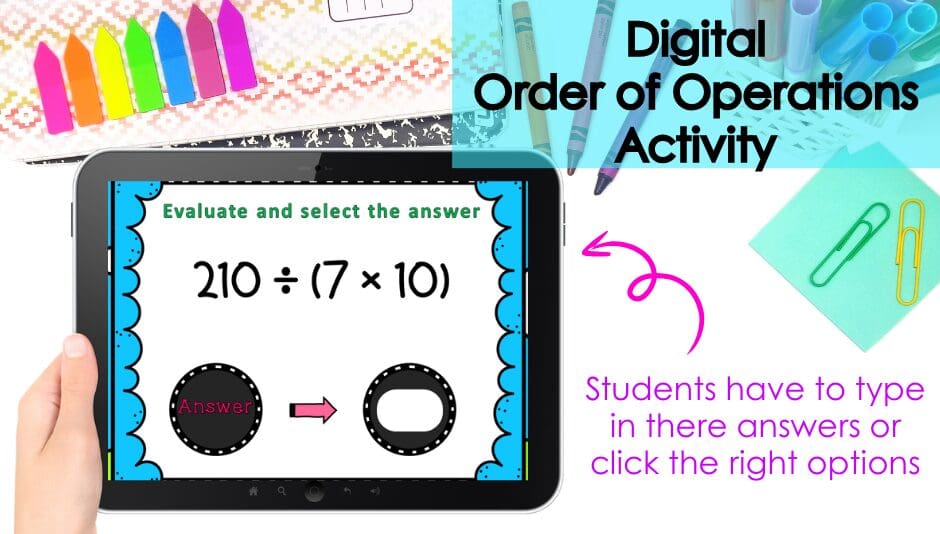
Free Order of Operations Practice Digital PowerPoint Game Activity
Couldn’t find something you were looking for?
No worries… here is a FREE fun activity to help your students master the order of operations?
This interactive game is perfect for bringing some cheer into your classroom while reinforcing this essential math skills.
What is it?
This engaging PowerPoint game challenges students to solve order of operations problems with a winter theme.
Each correct answer helps them progress through the game, while a wrong answer directs kids to try the problem again.
It helps to reinforce learning and makes sure that students understand the concepts before moving on.
Fractions operations are hard concepts to learn for many kids. Most of my 5th grade students struggle to understand even the basis of what a fraction or a number in a/b form actually means.
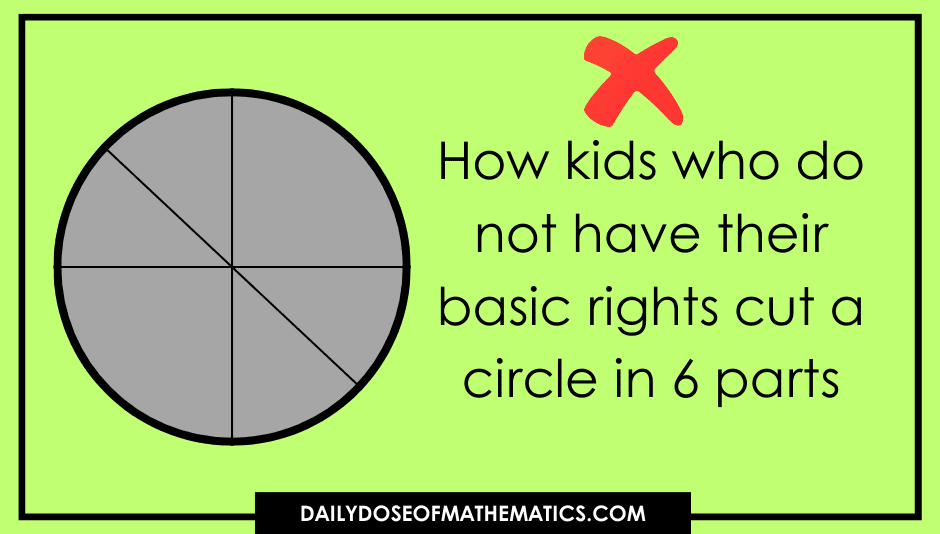
This idea is not just a problem for upper elementary students but for middle school kids too. Just ask your middle school students to cut a circle in 6 parts and see the results they produce.
It might look something like this:
Now the problem is not that these kids do not know how to add subtract multiply or divide fractions.
Because all these fraction operations can be understood and practice by simply repeating the exact same steps they need to perform to get the answer.
Instead the problem is their ability to apply and analyze conceptual parts of fractions, so instead of focusing on the simplification side of the concept what you actually need to focus more on is the conceptual side of the topic that is its application and making kids able to analyze and evaluate their learning.
To understand it better lets discuss why our students struggle to grasp this important concept and how we can help them.
Sara has 3/4 of a cake remaining , and she wants to share it equally among herself and her two friends. What fraction of the cake will each person get?
Question
are not able to make sense of it. The mere learning of short tricks can not help them master this crucial skill. What we as a teacher need to do is create a smooth and seamless integration of all the previous concepts learned with the new ideas to make it easier for kids to connect the dots.
Students need to build upon their prior knowledge of whole numbers and their operations and get comfortable with understand what the “a“and “b” in a/b form actually tells them about the problem at hand.
Which means they not only need to know how much of something is being added (which is the numerator part of fraction) but also what is being added that is the denominator part of the fraction.
Making them understand fractions from bottom up is the key. What does the denominator and the numerators actually tells.
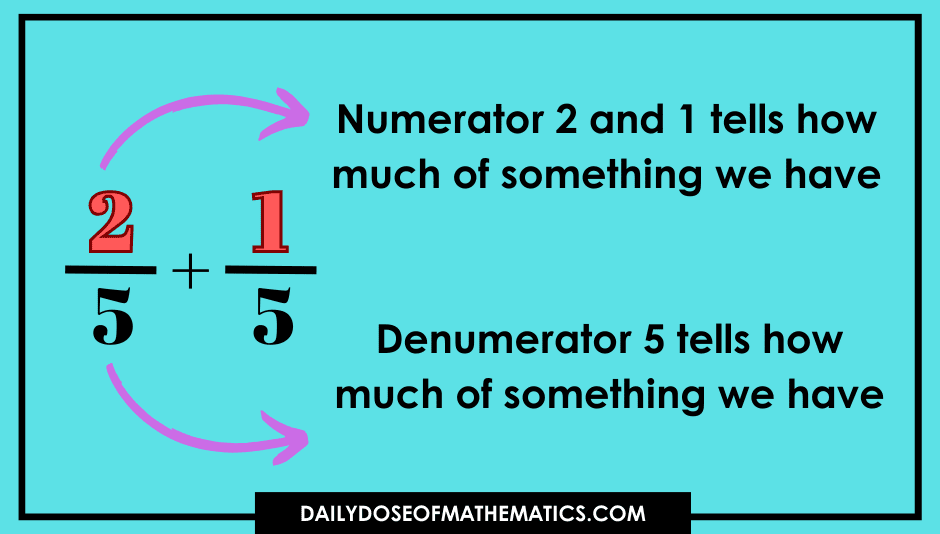
For example let’s say kids have to add 2/5 + 1/5:
Here, the ‘2’ and ‘1’ (numerators) tell us ‘how much‘ of something we have, like two pieces of pizza.
The ‘5’ (denominator) tells us into ‘how many parts‘ something is divided, like cutting a pizza into 5 slices. So, when adding 2/5 and 1/5, we’re combining parts of the same whole (like adding two slices to one slice of the same pizza, making it 3/5 of the pizza).
Understanding both parts of a fraction helps kids grasp what they’re working with, making fractions less intimidating. Once kids know the basis they will be able to solve more complex problems on their own.
Activities to make their learning addition and subtraction of fraction operations easier
Not all kids learn the same way. Some are visual learners , some like to explore and ask questions to better understand the concept and as a teacher our job is to understand what our kids understanding is of the topic is how to get hem to become better at it.
The best worksheets on addition and subtraction of fractions are the ones with real world problems or activities. Let’s learn more about this:
1. Visual Learning Through Baking and Cooking
Who does not like the smell of cookies baking in the oven. It turns your kitchen into a fun place to learn. Did you know that making food is a great way to understand fractions? Whether you’re measuring sugar or cutting a pizza, cooking is a yummy way to learn about parts of a whole.
Activity toTry: Start by making a simple recipe with your child, like cookies or pizza? This gives you an opportunity and fun time to talk about how fractions are used in cooking. For example, you can ask how much is half a cup of sugar? Or how do you cut a pizza so everyone gets an equal slice? In the end, you get to enjoy a tasty snack together!
What You’ll Learn: Cooking and baking make fractions easy to understand. It’s one thing to see numbers on paper. It’s another to see fractions come to life when you’re cooking. Seeing and touching the parts that make up a whole makes fractions clear and meaningful.
I think cooking is not just about making food. It’s a chance to see math in action. Next time you’re in the kitchen with your kids, think of it as a chance to explore fractions. It makes learning math not just useful but also delicious. So, grab an apron, and let’s make learning fractions as easy as pie!
2. Interactive Games and Activities
In this modern world where technology touches almost every part of our lives, learning has changed a lot after covid. For those of us who learn best by seeing and doing, the increase in online learning platform has opened doors to new possibilities. This is especially true when it comes to understanding fractions—a topic that many find tricky.
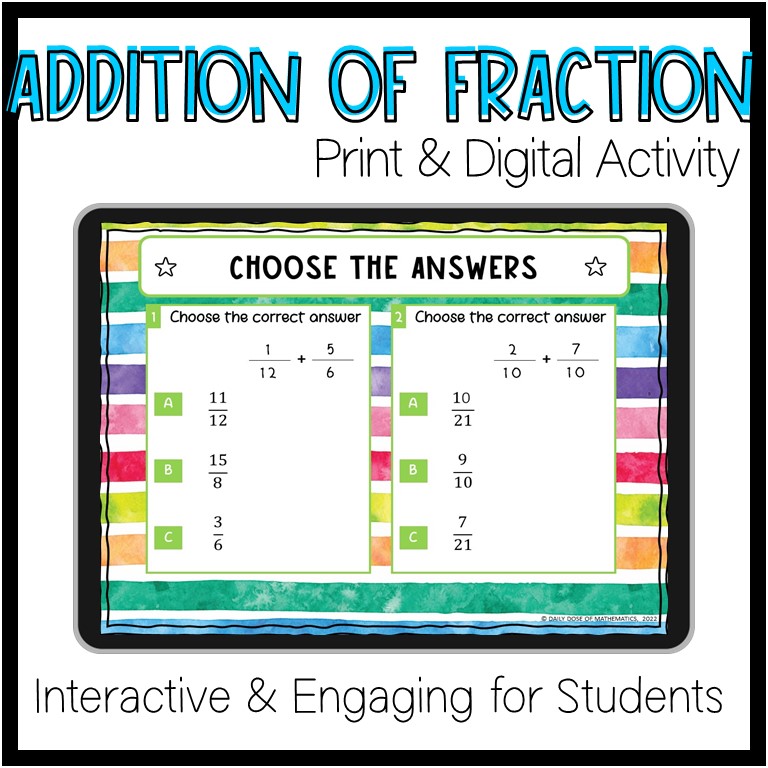
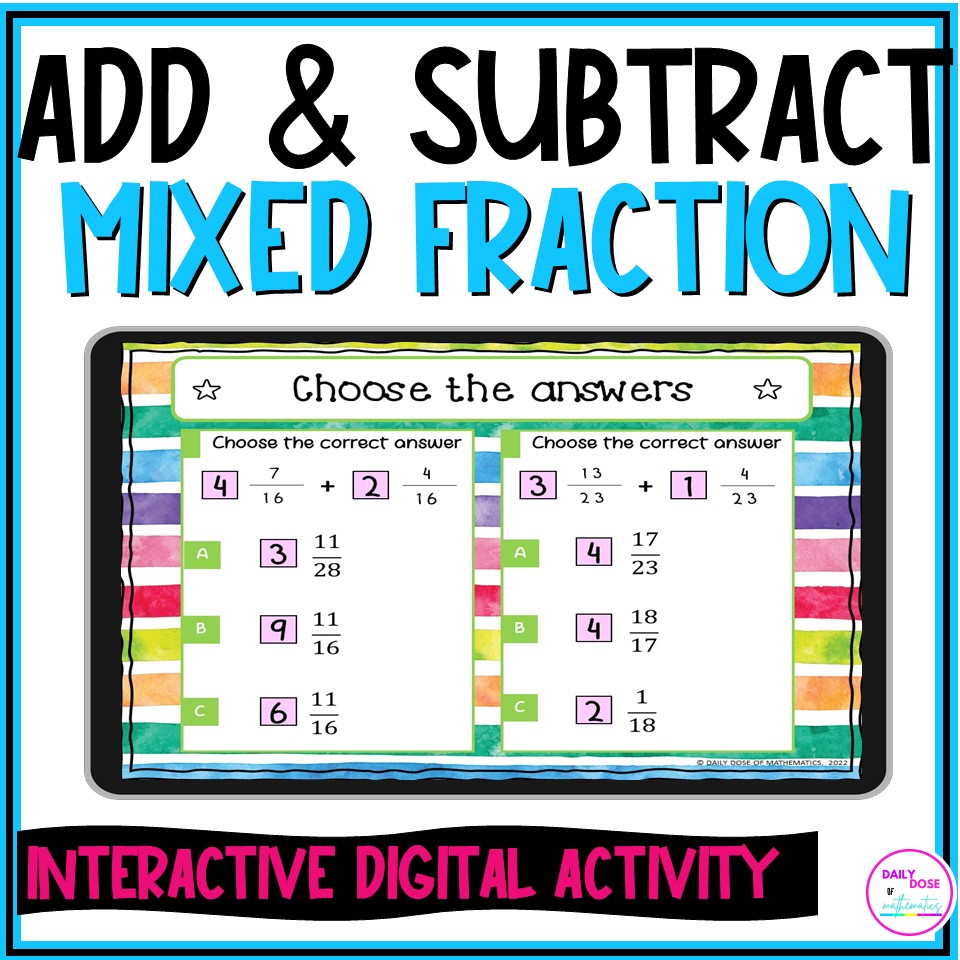
Digital Fraction addition and subtraction activity along with PDF worksheets: There are tons of digital activities out there designed to help with fractions. When choosing an activity, look for ones that are fun for your students and how they learn, give you feedback on how you’re doing, and let you keep track of your progress.
Instead, they turn learning fractions into an interactive fun activity, making it something your kids will enjoy a lot.
3. Storytelling and Fraction Tales
Using storytelling to teach kids fraction and give them a taste of how math is applied in real world is what we all should be doing in our classrooms.
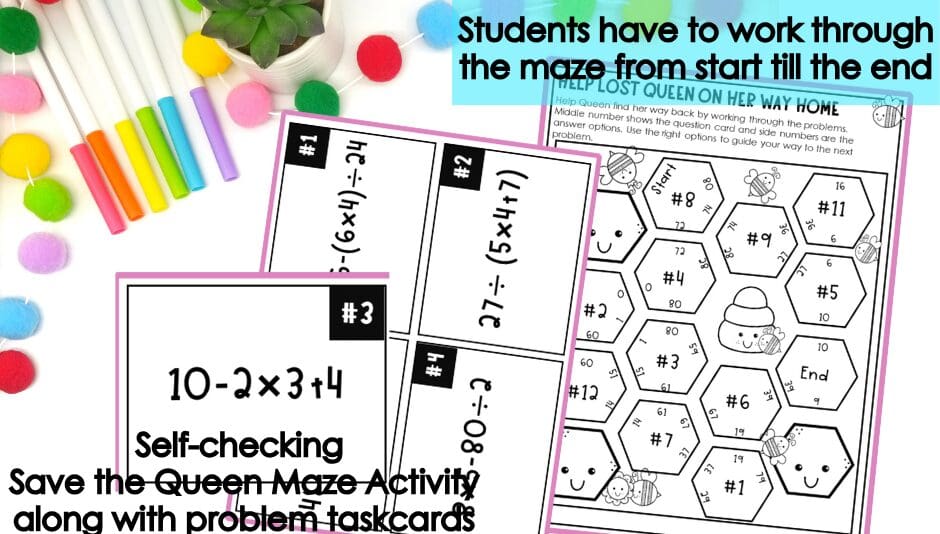
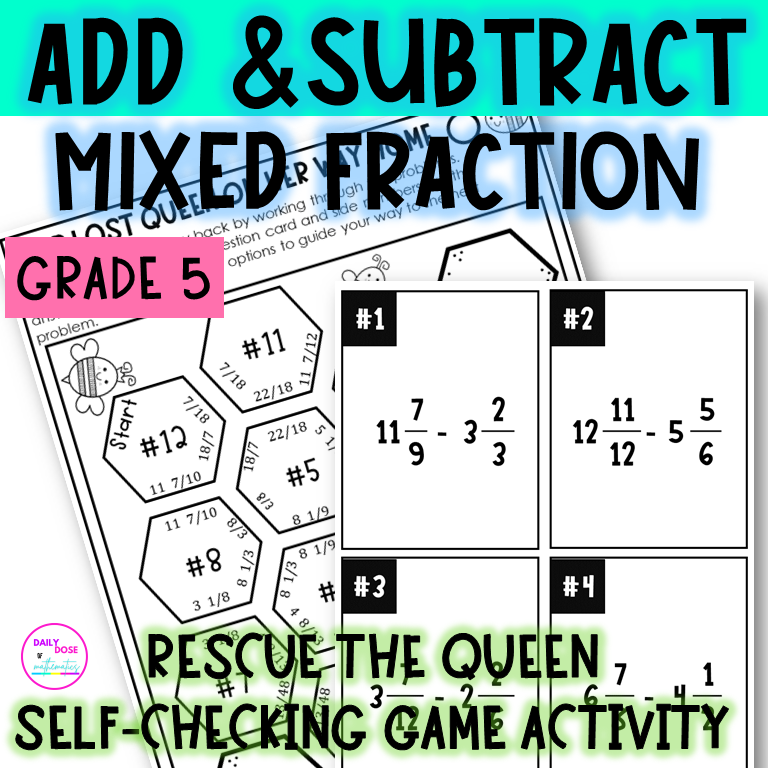
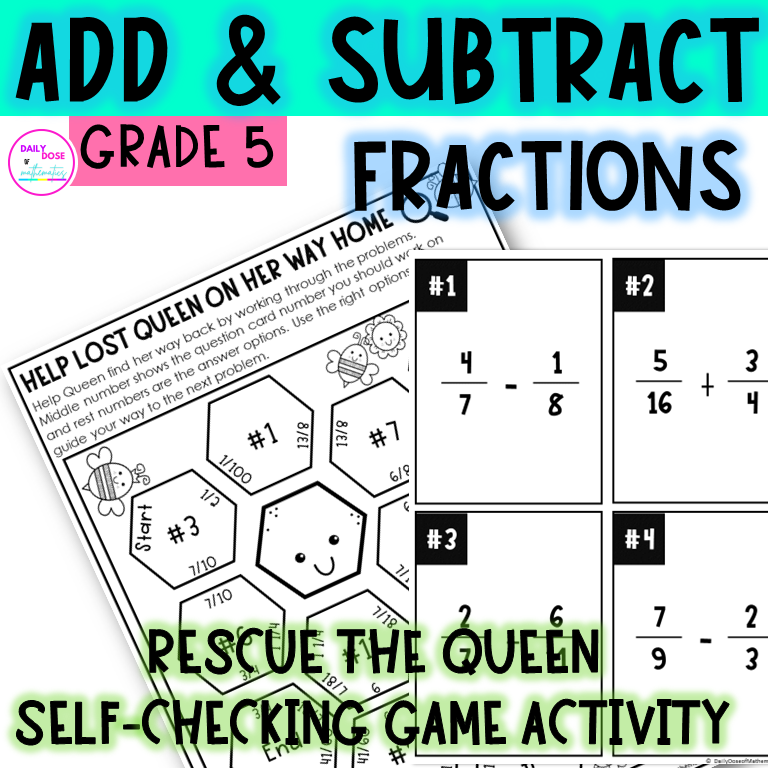
You can introduced a story like “The tale of a bee lost in the forest” where Queen bee goes out in the wild and is lost and its the job of the kids to bring her back to her hive and the worker bees.
But their is a twist, your kids need to solve adding and subtraction fractions with unlike denominator problems to bring her back to her hive.
This keep them engaged into meaningful learning.
Using storytelling like the above to teach kids addition subtraction multiplication and division of fractions and mixed numbers learning more memorable and meaningful.
Children are able to connect with the idea on a deeper level that makes learning more enjoyable and fun