Ways to make worksheets fun and interesting for kids
| |

11 Cool Ways to Make Boring Worksheets Fun and Interesting

Are you ready to learn how to make Boring Worksheets Fun in your next math class and make math the coolest part of your kids day . Try out these fun ideas and say goodbye to boring old traditional worksheets.

In this post I’ve got 11 super fun ideas to make math feel like a game. Imagine your students racing to finish math problems, playing bingo with math questions, or even turning your classroom into a mini escape room.

Let’s make sure learning math is not just about numbers but also about having a great time. And yes you can have fun in you math class even using your old math worksheets that maybe your district in mandating you to use.

1. Math Races:

I am all about healthy competition and honestly my kids even love it. All you have to do is give your students a competitive atmosphere by timing them as they complete their assigned math activities or worksheets. This will motivate them to finish quickly and accurately and turn the routine task into an exciting race against the clock.

2. Worksheet Bingo:

Another idea that you can implement is turn your normal daily worksheet problems into a bingo game. Which basically means with each correct answer you made your students to mark off a task or problem completed and check off a square. What can even motivate them more is to give them a small prize or award recognition for their effort or to the one that get a line first.

3. Math Puzzles:

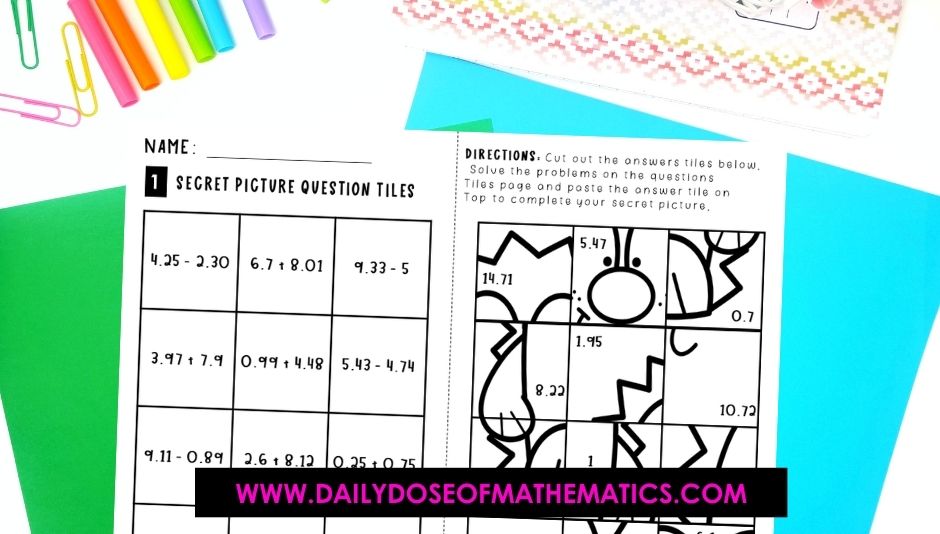
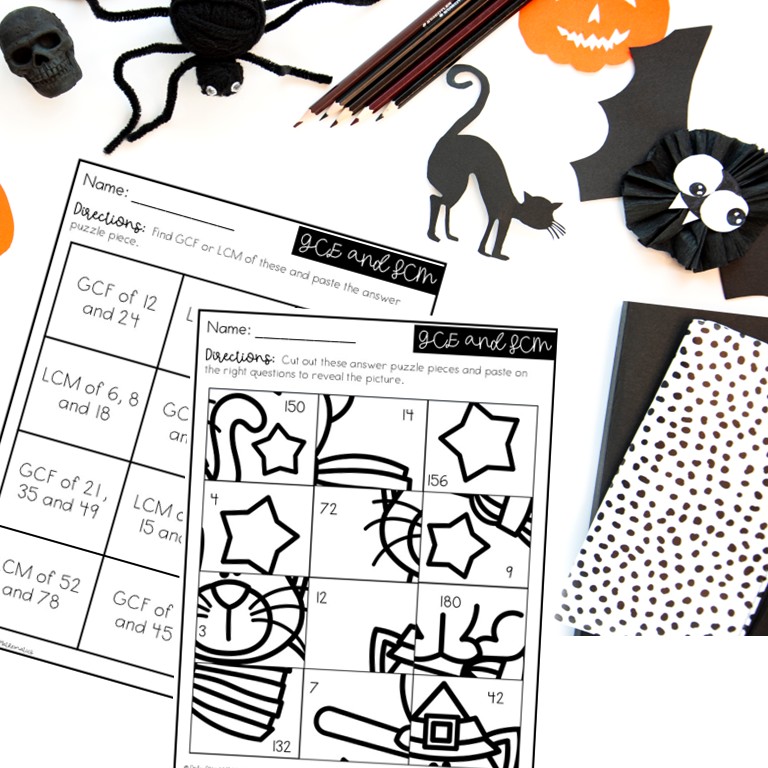
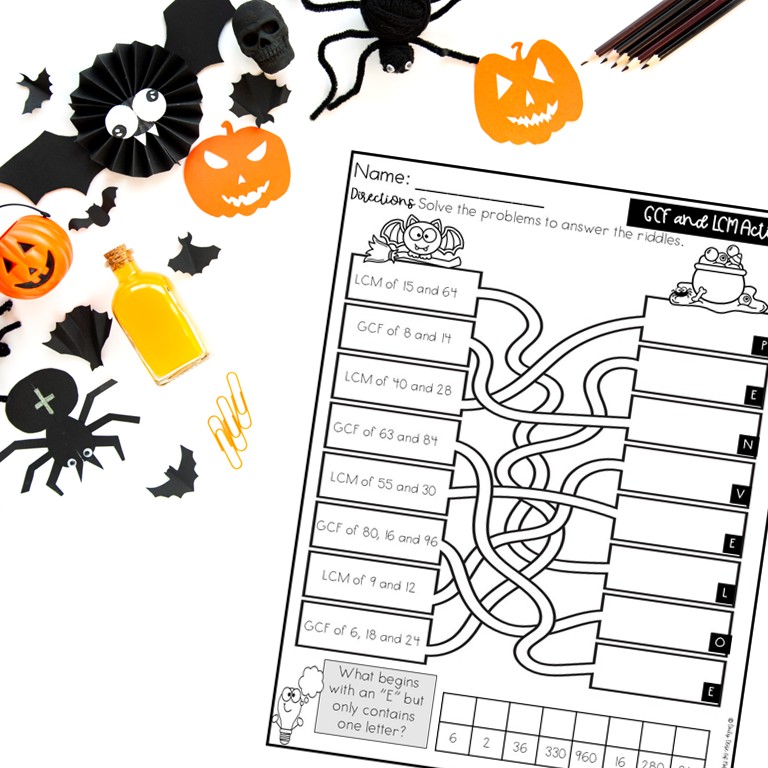
Using puzzles as worksheets where with every problem that they solve gives them some clue for the next problem they need to solve. It can be a riddle, a hidden message, or a mystery that gets solved with each correct answer. I used on of these mystery puzzles worksheets for reviewing addition and subtraction inside my classroom and my kids just loved it.

4. Interactive Worksheets:

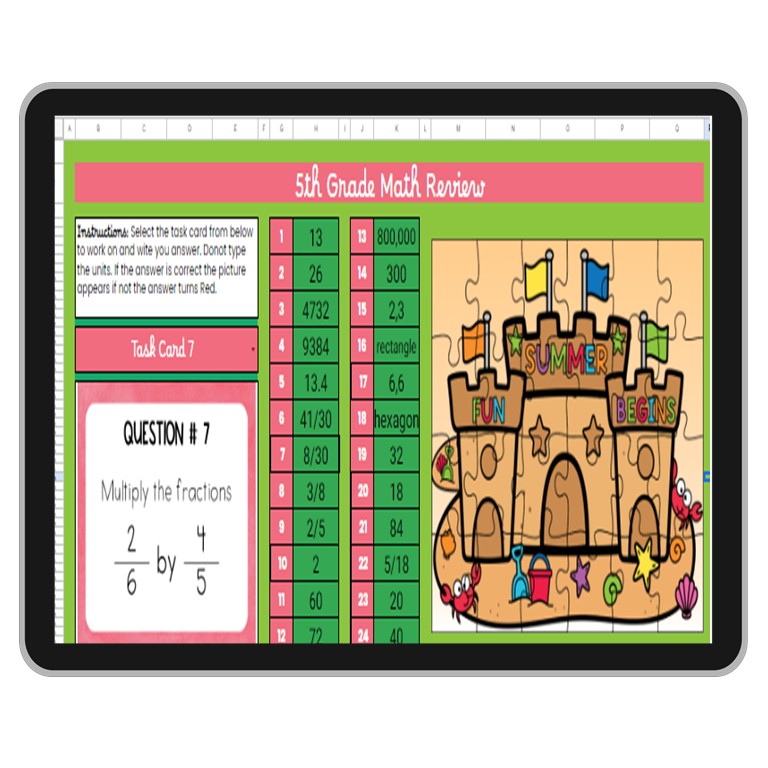
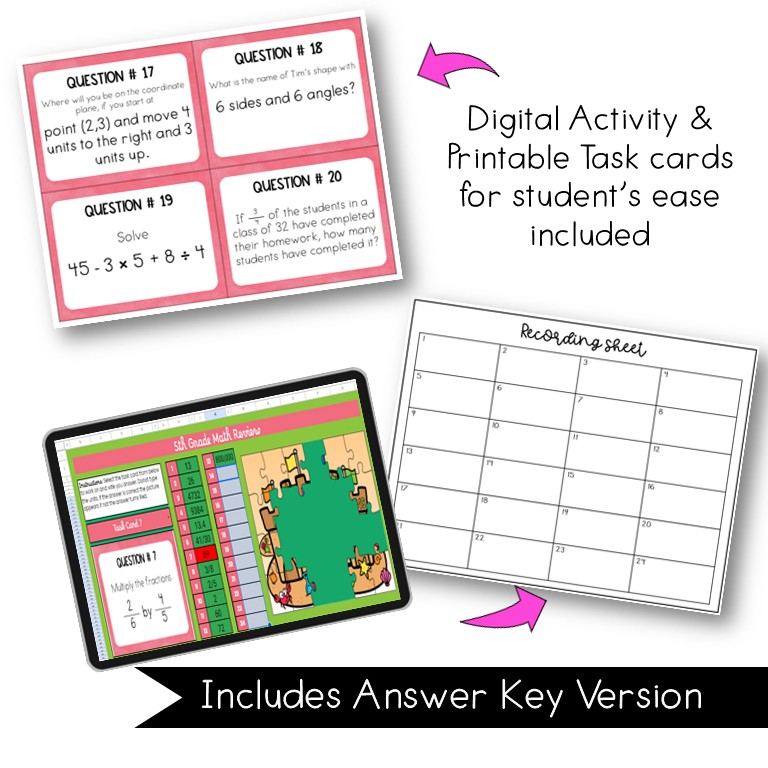
Using technology to turn your already made worksheets into interactive digital activities. This way you do not have o do the work again and still keep your kids engaged in fun way. Best way I do it is by turning the task cards in to images and then adding those task cards as background images inside Google Slides(TM) and add a text box on top of it for my kids to put their answers.

Second thing that you can do is insert the same task cards as images in Google forms(TM) and use the multiple choice option to create a multiple choice self Checking activity like this for your class, either way your kids are gonna love the special twist of learning experience you put on turning boring worksheet fun.

5. Group Challenges:

Team work in important for every classroom whether its ELA, math, arts or even music. No matter what you are teaching encouraging teamwork by having students work in small groups to complete the the assigned math task. This way they can develop their social and leadership skill along side learning which is a win win. Students can discuss strategies and help each other out which fosters a collaborative learning necessary for their future growth.

Creating activities like math mazes, puzzles or mystery activities gives them the opportunity they need to develop their collaborative skills and turn boring worksheets into fun learning experiences.

6. Real-World Application:

Connect math problems to real-life scenarios. This not only makes the worksheet more interesting but also helps students understand the practical application of what they’re learning.

7. Math Stations:

Set up different stations around the room, each with a math task or worksheet to complete. Students rotate through the stations that breaks the monotony of boring routine and adds movement and excitement to the class.

8. Creative Rewards:

Positive reinforcement is essential for kids to learn and get motivated to do better next time. You can give them their favorite snack as an award, a Home work pass or a chance to play their favorite game.

9. Incorporate Art:

Have them illustrate their mathematical thinking into art. This gives them the ability to develop further their problem solving skills and critical thinking skills.

10. Math Journals:

Math journals like goal journals and others can be useful. Instead of boring worksheets, have students keep math journals where they not only solve math problems but also write about their thought process, making the activity more reflective and personalized. This helps students organize their thought and develop creative thinking.

11. Escape Rooms:

Design worksheets that mimic an escape room challenge. Each correct answer helps “unlock” the next section until they “escape” by completing the entire sheet. This adds an element of adventure to the task.

Remember, the goal is to make learning math not just educational but incredibly fun too. So, try to use these strategies and ideas to your advantage, and turn boring worksheets fun and use them to your advantage. Here is one such example of an multi digit addition and subtraction escape room I did in my that my kids totally loved.

Use this and see your students discover the joy in numbers, and most importantly, develop a lasting love for learning. Implementing all these ideas might require a bit more effort on your part but I assure you it will be 100% worth it.

Find the tips useful, share with other teacher friends!
Similar Posts

  • | |

    Why Math Games Are Even More Essential Now in Today’s Classroom

    Kids in upper elementary classrooms are more inclined to learn math through games because math games provide the same environment as today’s gadgets and screens but with the goal of learning something new. 

    This is why, in today’s teaching, it is more important than ever to use game-based learning methods in our math classrooms. 

    In my 10+ years of teaching math to elementary students, I have never encountered a time in my classes when, whenever I pull up a game, my kids do not get excited.  

    It has always been the case for me, no matter what the type of game is! It can be digital as well as printable but what would never happen with board games or game shows is a dry class with no learning excitement for a hard subject like math. 

    Honestly, I feel that having printable games or digital game-based activities should be in every teacher’s toolkit. They are a compelling way for kids to connect and engage with your teaching content. Still not convinced? 

    Here’s a list of why math games are important and how to integrate them into your lesson planning. 

    1. Enhanced Engagement during Math Class

    This is what we all want? I mean, I do! And the best way to increase your class engagement is by using math games to make learning more interactive and exciting. 

    Gamification helps develop critical thinking skills, which are essential for children’s future success. Students are more likely to participate and stay focused when they play a game in pairs, compared to just working through a set of problems on a worksheet.

    So, make your kids work in pairs next time you want them to add some accountability to your math lessons. The added accountability helps them push each other and encourages a sense of responsibility.

    Looking for some fun games? Melissa, a fellow teacher, coach, and TpT author, has a blog post that can give you a comprehensive idea of the benefits of using math board games in classrooms.

    2. Improved Understanding with Math Games

    Understanding is the most important part of the learning process. It is the integral part that should be focused on during lesson planning.

    If your kids can understand the basics of any concept, like fraction operations or the order of operations, they will be able to think through them, understand them, and solve problems on their own, which should always be the goal. 

    This collaborative environment that is created as a result of their teamwork can help them feel more comfortable sharing their thought processes and strategies with their class fellows. 

    With games, we can present kids with the same math problems in various formats like multiple choice, true-false, or even open-ended, which then helps students to see concepts from different angles. 

    This is crucial as it deepens their understanding and helps them apply math skills in various real world situations. 

    During my lessons I try to give kids as many practice problems as possible, but after we have 

    ended a lesson I prefer other formats like multiple choice or true false using interactive activities or riddles to check their understanding and see where the gaps are!

    3. Immediate Feedback

    Of course, getting feedback is important! But what’s more important is making it fun not just for kids but for you too. I try to incorporate self checking games during lessons because of the immediate feedbackkk! 

    We all want our kids to rise and shine but none of us want to go through the painful time taking act of grading and checking the assessments and creating the report cards. 

    That’s why math games can actually be a handy tool. It provides us with a way to keep ourselves on top of all the stuff other than teaching by utilizing the power of active learning, allowing students to practice and reinforce their skills in an interactive way. 

    It allows students to quickly see the results of their actions and understand what they need to improve. This immediate reinforcement can increase their confidence and motivate them to learn more.

    4. Fun and Motivation

    Let’s be honest: It is a chore to make math enjoyable and personalize activities for every kid. However, I believe learning is not only enjoyable with games; students are more than ready to engage with the material. Math games can turn a challenging subject into a fun and rewarding experience, which enhances a positive attitude towards math.

    How to Integrate Math Games in Your Classroom

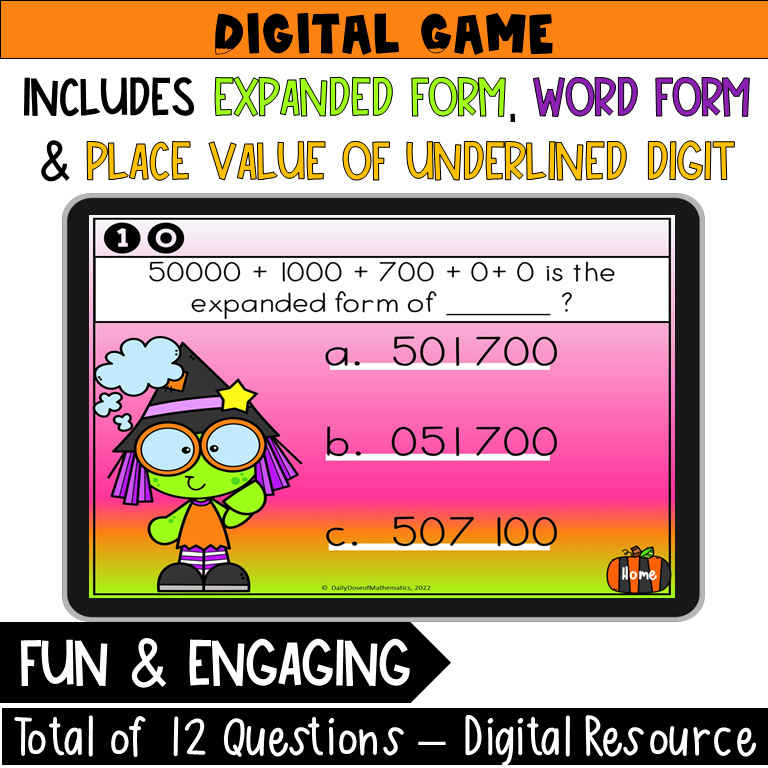
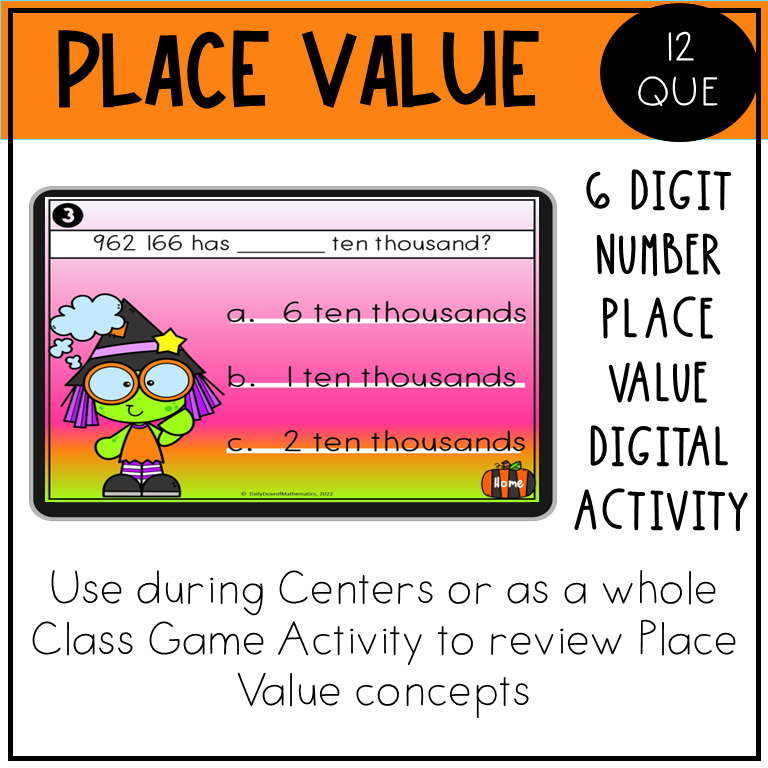
    Use games that align with holiday themes or seasons, such asFall Place Value and Multiplication Division Games”. This can make learning festive and relevant to the time of year.

    Digital games can be easily integrated into your lesson plans and are great for individual or small group work. One way is to customize games for different skill levels, making sure that all students, regardless of their abilities, are challenged appropriately and can progress at their own pace.

    You can create different stations with various math games, like “Digital Fraction and Decimals Pixel Art Bundle.” Just assign students one of the activities and keep them engaged by exposing them to different types of problems.

    Another way is to organize math game tournaments or challenges inside the classroom to add an element of friendly competition. However, this can even create a challenge of managing competitiveness among students. For this, make sure to emphasize the importance of teamwork and collaboration more. This can motivate students to practice more and improve their math skills.

    Lastly, have students discuss what they learned and reflect on their strategies after playing. This will help solidify their understanding and encourage them to think critically about problem-solving techniques.

    Math games are a fun and effective way to review important math concepts like decimal operations inside classrooms. Incorporating math games into your classroom can transform the way your students learn and engage with math. Making lessons interactive, engaging, and fun will help your students develop a deeper understanding and a love for the subject.

    Looking for other cool ways to make math worksheets more fun for your kids? Check out this blog post on 11 cool ways to make boring worksheets more exciting!

  • | | |

    5 best Saint Patrick’s Day math activities for kids to try this year!

    Woohoo! Are you ready to shamROCK your math lessons this Saint Patrick’s Day? Get ready to sprinkle some leprechaun magic into your maths classroom with these 5 best Saint Patrick’s Day math activities for kids!

    We’re talking about turning your ordinary math session into a pot of gold-filled adventure, complete with colors, word searching, and plenty of math mischief. So grab your greenest gear to explore through some math-tastic fun on Saint Pattys Day!

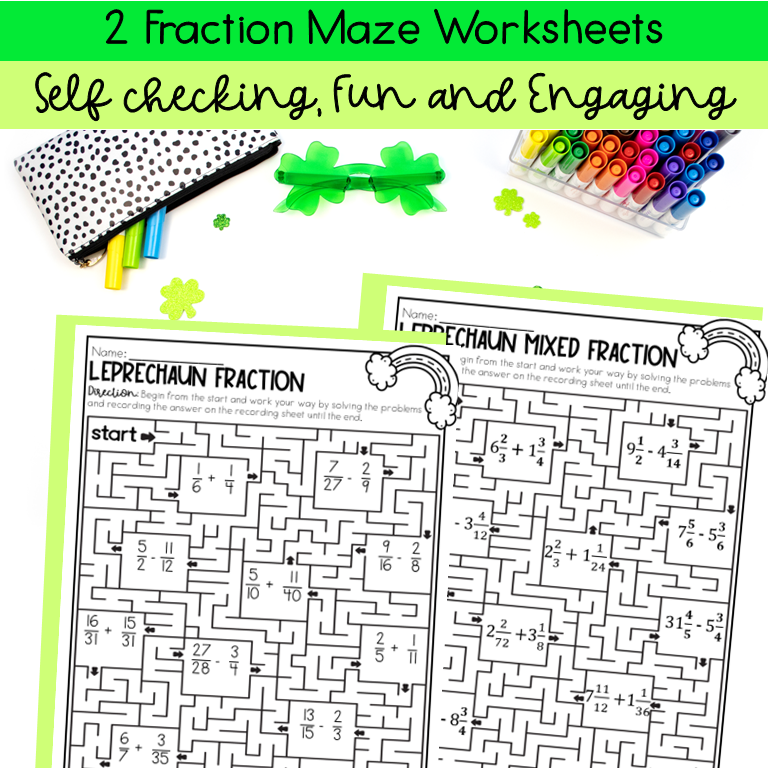
    Saint Patrick’s Day Fractions Operations Worksheets with Word Problems

    Introducing you the blast of fun education with which your upper elementary students dive into a world where every word problem is a clue, leading them closer to uncovering the mysteries of fractions.

    Whether they’re asked to solve addition and subtraction of fractions, these worksheets will keep them engaged, challenged, and entertained throughout their math journey.

    But wait, there’s more! This worksheet pack is best equipped with so much more fun with word search and coloring opportunities. This is not only to reinforce their fraction skills but also to enhance their imagination and love for math.

    So, what are you waiting for? Grab your Saint Patricks Day math activities for 5th grade!

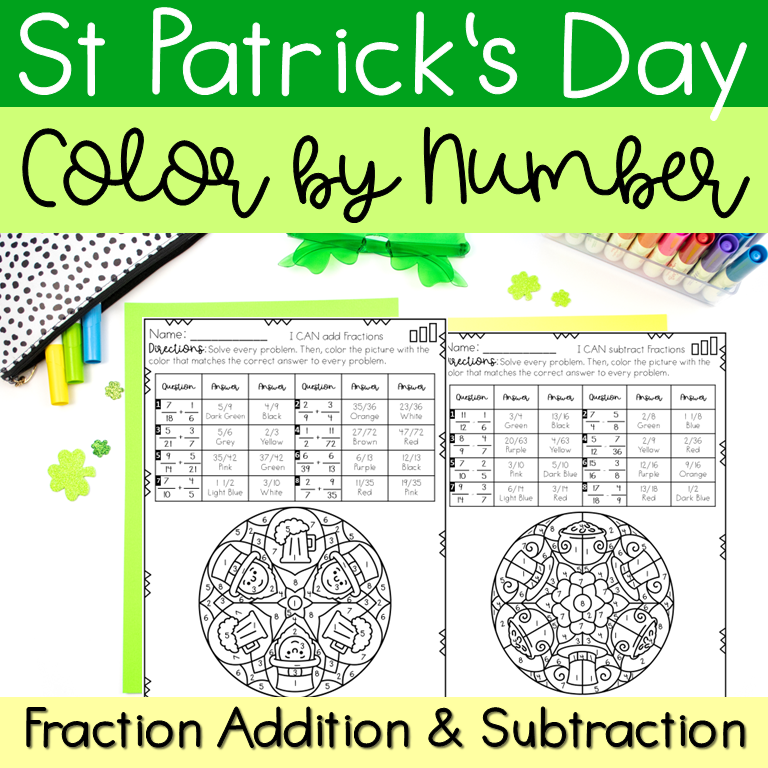
    Saint Patrick’s Day Multidigit Addition Subtraction Multiplication Division Coloring

    Get ready to add a splash of color to your Saint Patrick’s Day math lessons with our Saint Patrick’s Day Multidigit Addition, Subtraction, Multiplication, and Division Coloring activity pack!

    Who says math has to be dull and dreary? With these vibrant worksheets, your 5th-grade students will be diving into a world of mathematical mysteries while discovering their inner artists. Making them able to solve multidigit addition, subtraction, multiplication, and division problems, means to internalize the fraction operations creatively.

    But the fun doesn’t stop there! Not only will they be honing their math skills, but they’ll also be exercising their imagination and attention to detail. With Saint Patricks day math color by number, they’ll be one step closer to discovering the secret treasures hidden within each worksheet.

    So, why settle for ordinary math practice when you can add a splash of Saint Patrick’s Day magic to your lessons? Let’s make math fun, engaging, and unforgettable with these magical worksheets!

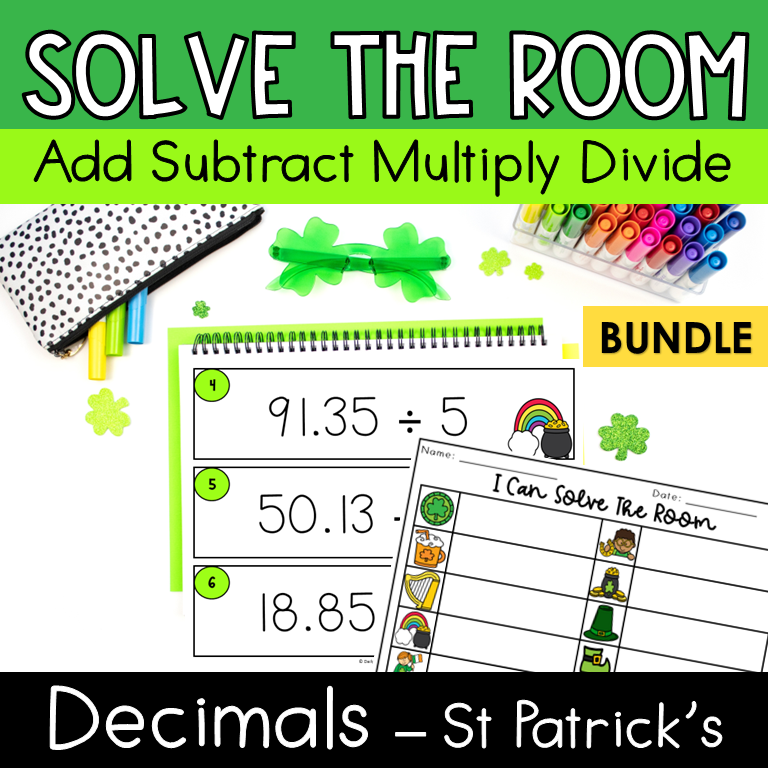
    Saint Patrick Solve The Room Decimal Addition Subtract Multiply Divide Activity

    With Decimal Addition Subtract Multiply Divide Solve The Room Saint Patrick Day Activity, we Call all 5th-grade math detectives—it’s time to put your problem-solving skills to the test in this thrilling, shamrock-filled adventure.

    Not only will they be sharpening your decimal arithmetic skills, but they’ll also be up on their feet, moving from task card to task card like true math adventurers. It’s a dynamic, interactive way to engage with math that’ll have your students buzzing with excitement from start to finish.

    And the best part? As the students crack each code and conquer each challenge, they’ll be one step closer to the ultimate prize—a sense of accomplishment and mastery over decimals that’ll leave them feeling like true math wizards.

    So, are you ready to turn your classroom into a Saint Patrick’s Day math maze? Let’s make learning decimals an unforgettable adventure with our Decimal Addition, Subtraction, Multiplication, and Division Solve The Room St. Patrick’s Day Activity!

    Decimal Addition Subtract Multiply Divide Saint Patrick Day Fun Activities

    Are you feeling excited to make the learning active and more engaging? Here’s the time when the Saint Patricks day math decimal operations worksheet comes into use!

    As the students navigate the room and solve each challenge, they’ll be engaging in active learning, moving, and collaborating with their fellow math adventurers. It’s a dynamic, hands-on approach to math that’ll have them on the edge of their seats and eager to conquer each new challenge.

    And the best part? Not only will they be honing their decimal arithmetic skills, but they’ll also be enriching themselves in the spirit of Saint. Patrick’s Day is surrounded by the magic and mystery of Irish folklore.

    So, are you ready to turn your classroom into a math-filled treasure hunt this St. Patrick’s Day? Let’s make learning decimals an adventure to remember with our Decimal Addition, Subtraction, Multiplication, and Division Saint Patricks day math decimal operations worksheet!

    Saint Patrick’s Day Adding and Subtracting Fractions Word Problems

    Are you looking to make fractions more fun and engaging for your 5th-grade students this Saint Patrick’s Day? Look no further! Our worksheets are designed to turn ordinary fraction practice into an exciting adventure filled with puzzles for word problems to make students excited to search for answers for operations.

    Each worksheet is packed with word problems that will challenge your students to add and subtract fractions while unraveling the mysteries of Saint Patrick’s Day. From dividing up pots of gold to sharing lucky charms with mischievous leprechauns, every problem is a chance for your students to flex their fraction skills in a fun and meaningful way.

    But that’s not all! Our worksheets are also designed to boost critical thinking and problem-solving skills as students decipher word problems and apply their fraction knowledge to find solutions. It’s a fantastic way to reinforce math concepts while immersing your class in the magic of Saint Patrick’s Day.

    So, are you ready Saint patricks day word search activities? Let’s make adding and subtracting fractions a festive and unforgettable experience!

    And there you have it, folks—5 shamrockin’ Saint Patrick’s Day math Fraction operations activities to add a pinch of magic to your classroom festivities!

    Whether you’re counting gold coins, graphing leprechaun preferences, or solving rainbow fractions, these math-tastic adventures are sure to make your celebration unforgettable.

    Want something fun and free to use in your class check this Free Saint Patty’s day activities!

    So, don your greenest attire, grab a handful of lucky charms, and let the math mischief begin! May the luck of the Irish be with you all year round!

  • | |

    Keep Students Engaged with These Thanksgiving GCF and LCM Worksheets (Includes Answers!)

    The week before Thanksgiving is pure chaos in most middle school classrooms.

    Students are hyped about the holidays, focus levels drop, and teachers (yes, you!) are juggling lesson plans, grading, and trying to keep the class calm.

    That’s where seasonal resources come in.

    Thanksgiving GCF and LCM worksheets with answers aren’t just a cute idea they’re a strategic teaching tool.

    They combine review and engagement so your students practice key math concepts without tuning out.

    In this post, we’ll walk through what GCF and LCM are (with examples), why themed math activities work so well, and where you can grab high-quality Thanksgiving worksheets that save you time. But before that let’s first try to answer:

    What Is GCF and LCM (with Example)?

    Before diving into Thanksgiving math fun for 6th grade math, let’s make sure we’re all on the same page, especially if you’re prepping sub plans or review material for your students.

    Thanksgiving GCF and LCM Worksheets and Activities Grade 6 PDF with Answers

    Thanksgiving GCF and LCM Worksheets and Activities Grade 6 PDF 1

    Thanksgiving GCF and LCM Worksheets and Activities Grade 6 PDF 1

    GCF stands for Greatest Common Factor.
    It’s the largest number that divides evenly into two or more numbers.

    LCM stands for Least Common Multiple.
    It’s the smallest multiple that two or more numbers share.

    For example:

    Let’s find the GCF and LCM of 27 and 45.

    Step 1: List the factors.

    • Factors of 27 → 1, 3, 9, 27
    • Factors of 45 → 1, 3, 5, 9, 15, 45

    and here GCF = 9, because it’s the largest number both have in common.

    Step 2: List the multiples.

    • Multiples of 27 → 27, 54, 81, 108, 135, …
    • Multiples of 45 → 45, 90, 135, …

    Therefore, LCM = 135, because it’s the smallest number both share.

    When students practice this repeatedly, they start to recognize patterns and that’s exactly what this Thanksgiving GCF and LCM worksheets with answers help reinforce.

    Why Use Themed Math Worksheets Around Thanksgiving?

    Because engagement matters.

    Thanksgiving GCF and LCM Worksheets and Activities Grade 6 PDF with Answers

    When math review looks like just another worksheet, students mentally check out.

    But throw in a Thanksgiving theme a turkey to color, a riddle to solve, or a math puzzle with a seasonal twist, and suddenly, they’re in it.

    These worksheets focus on multiple learning styles at once:

    • Visual learners connect with coloring and design-based activities.
    • Hands-on learners enjoy puzzles and cut-and-paste components.
    • Auditory learners can explain their reasoning as they check answers with peers.

    Plus, when the activities include built-in answer keys, it saves you (and your sub) valuable grading time.

    Inside the Thanksgiving GCF and LCM Worksheets

    If you’ve been searching for a no-prep, ready-to-go way to review factors and multiples, this set is exactly what you need.

    Here’s what’s inside:

    • Engaging coloring activities that make abstract concepts visual.
    • Riddles and puzzles that apply GCF and LCM to real-world-style problems.
    • Cut-and-paste practice for reinforcing math patterns.
    • Answer keys included for quick grading and student self-checking.
    Thanksgiving GCF and LCM Worksheets and Activities Grade 6 PDF with Answers

    Check out these Thanksgiving GCF and LCM worksheets with answers pdf and make your pre-break lessons actually enjoyable.

    Honestly themed math lessons don’t have to be fluff.

    Done right, they can reinforce real math skills and give you a breather during the busiest time of the semester.

    So the next time you hear, “Do we have to do math today?”, you can smile and say, “Yup but it’s Thanksgiving style!”

    Your students stay engaged, you stay sane, and everyone wins.

    Check out Thanksgiving GCF and LCM worksheets pdf with answers and make this year’s holiday math review something your class actually looks forward to.

  • How to Use a Teacher Planner PDF to Streamline Your School Routine Now

    We all know how teachers are juggling lesson plans, grading tests, meetings, and trying to manage personal time can be exhausting. That is why a teacher planner pdf should be a necessary tool in every teacher’s toolbox. 

    Honestly, a well-organized planner can be your best friend in creating a streamlined and well organized daily school routine.

    In this blog post, we’ll explore how you can effectively use a teacher planner to bring order to your busy school days.

    Why a Teacher Planner?

    That’s a very interesting question, but before we address the “how,” let’s first discuss the “why.” 

    A teacher planner isn’t just a notebook; it’s a comprehensive tool designed to help you manage your time, tasks, and priorities. 

    Not only this it also offers a common place to keep track of your lesson plans, schedules, student progress, and administrative tasks so you can have everything in one place.

    Think of it as a hub for all your day to day activities.

    This drastically reduces the stress about missing deadlines and increases productivity.

    The result: you get to have more time doing what you LOVE, aka actual “Teaching” not just paper work or admin tasks.

    Step 1: Set Up Your Teacher Planner PDF

    Choose the Right Planner: First, select a planner that fits your needs. Look for one that includes sections for daily and weekly planning, monthly overviews, and room for notes.

    Ensure it has enough space to write detailed plans and record important dates.

    Personalize It: Add tabs for quick access to different sections.

    Use color-coded stickers or highlighters to differentiate between various tasks and priorities. Personalizing your planner makes it more enjoyable to use and easier to navigate.

    Step 2: Map Out Your School Year

    Annual Overview: Start by filling out the annual overview section. Mark important dates such as holidays, professional development days, parent-teacher conferences, and end-of-term deadlines.

    This gives you a big-picture view of the school year and helps you plan ahead.

    Monthly Breakdown: For each month, break down the key events and deadlines into manageable chunks. This might include units of study, major projects, and assessment periods. Having a monthly plan helps you stay on track and makes sure you don’t miss important events.

    Step 3: Weekly Planning

    Weekly Layout: At the beginning of each week make sure to spend a few minutes planning your schedule. Outline your goals for the week, both professional and personal. Plan specific times when you will be doing lesson planning, grading student work, and completing admin tasks.

    teacher planner pdf 2024 2025

    Prioritize Tasks: List your tasks in order of priority. Focus on the most important tasks first, such as lesson planning and student assessments.

    If in doubt and not able to decide what to focus on, use the Eisenhower Matrix (urgent vs. important) to help prioritize your tasks more effectively.

    Flexible Scheduling: While planning is essential, flexibility is key. Teachers always remember to leave some free time in your schedule for unexpected events or tasks that arise from time to time and need to be done asap.

    This will help you adapt to changes without feeling overwhelmed in the long run.

    Step 4: Daily Routine with Teacher Planner PDF

    Morning Routine: Start each day by reviewing your planner. Check the day’s schedule and tasks, and make any necessary adjustments. A quick morning review helps set the tone for a productive day.

    Lesson Planning: Use the daily sections of your planner to jot down detailed lesson plans. Include objectives, materials needed, and key points to cover. This keeps your lessons organized and ensures you’re prepared for each class.

    Task Management: Throughout the day, refer to your teacher planner to stay on track with tasks. Tick off completed tasks and make notes of any new ones that arise. This not only keeps you organized but also gives a sense of accomplishment.

    teacher planner pdf 2024 2025

    Step 5: Reflect and Adjust

    End-of-Day Review: At the end of each day, spend a few minutes reviewing what you completed that day. Note any tasks that need to be carried over to the next day. This reflection helps you understand your productivity patterns and make necessary adjustments.

    Weekly Reflection: At the end of the week, review your planner to see what worked well and what didn’t. Use this insight to improve your planning for the following week. Reflecting on your successes and challenges helps you grow and adapt as a teacher.

    Tips for Effective Use Teacher Planner PDF

    Consistency is Key: Make using your planner a daily habit. Consistent use is crucial for reaping the benefits of an organized routine.

    Stay Flexible: While a teacher planner pdf helps you stay organized, life can be unpredictable. Be flexible and willing to adjust your plans as needed.

    Make It Enjoyable: Add a personal touch to your planner. Use colorful pens, stickers, and motivational quotes to make it a tool you enjoy using every day.

    Leverage Technology: Combine your paper planner with digital tools. Sync your teacher planner pdf with your online calendar and set reminders for important tasks and deadlines.

    Overall I would say a teacher planner is more than just a scheduling tool. It’s a powerful resource that can transform your daily routine.

    By planning your year thoughtfully and mapping out your whole school year like planning weekly, managing daily tasks, and reflecting regularly, you can streamline your workflow and increase your teaching effectiveness.

    But make sure to use it as a guide and not a strict rulebook. The key is consistency and flexibility. Happy planning!

    Need some free math fraction activities to try in your classroom, Checkout this post!

  • How to Plan Your Entire School Year in One Weekend Using a Printable Teacher Planner!

    What if I told you I planned my ENTIRE school year in just one weekend using my 5 step process and a printable teacher planner, and you can too! 

    Yes that’s right… When I first started teaching, I did not know what a lesson plan was, let alone how to create one. 

    Planning for the whole year without knowing when and how things will eventually start to go South was something I never understood. 

    Honestly, during those starting years, with all the lesson planning burnouts and wasted Sundays trying to keep my sanity intact during the weekdays was STRESSFUL. 

    And with all the chaos, I knew something had to change. There has to be a better solution to all this mess. 

    This is the reason why I started experimenting with my school planning and created my very own printable teacher planner that helps me map everything out without being overwhelmed. 

    It’s the exact tool I use every year to keep me organized.

    In this post, I’m walking you through my exact 5-step system so you can plan your whole year in one weekend, too. 

    Why burn out when we can enjoy the ride? So, let’s get to the nitty-gritty, shall we?

     STEP 1: Your Teaching Year-at-a-Glance

    This is what you do before you even think about detailed weekly or daily lesson plans. Zoom out and lay your yearly plan. 

    I always start with a year at a glance calendar page from my teacher planner. I block out all the non-negotiables like holidays, testing weeks, PD days, school events like sports week etc — anything that’ll take up my teaching time.

    This helps me see exactly how many teaching weeks and days I have, and more importantly, it reduces decision fatigue later. 

    I’m not scrambling in March because I “forgot” that Spring Break takes up a whole week. Trust me this calendar is your sanity saver.

     STEP 2: Set Monthly Teaching Goals

    Once your calendar year overview is laid out, now you can move on to set some monthly focus points. 

    Personally I like to use the monthly overview pages to sketch out major themes or units. For example, I like to focus on fractions in February and test prep in Mid March/April. 

    Planning it now means I don’t have to guess or wing it later. Of course, you can change that as you go, but having a plan still keeps you organized. 

    This will also make it so much easier to align your resources or activities and avoid that “what should we be doing this week?” chaos. Yeah, I know we all go through that. 

    The key here is to know you’re not just planning for content, you’re planning for confidence. 

     STEP 3: Create Weekly Skeleton Plans

    This is where things get juicy but still simple. I use the weekly templates from my planner to lay out a basic structure for each week. 

    I’m talking recurring things like morning meeting, centers, whole group lessons, spiral review — whatever your weekly rhythm looks like.

    The key here? You’re not writing detailed lesson plans. You’re building a flexible skeleton so your brain isn’t starting from zero every Sunday. It’s like giving Future You a damn hug.

     STEP 4: Plug In the details

    Now that your weeks have structure, it’s time to drop in the big rocks — major tests, projects, assessments, and anything else that requires extra prep. 

    I use the weekly planner pages (or just the notes section) to map this out.

    Mapping these ahead of time means you’re not blindsided by a science fair or a unit test sneaking up on you. 

    You’ll know when to prep, when to review, and when to chill — because it’s all part of the plan.

    STEP 5: Keep It All In One Place

    Guess what here’s the secret sauce most teachers skip: organization that actually lasts. After I plan everything, I print it all, pop it into a binder, and it’s DONE. 

    No digging through files or clicking through 42 tabs. I use tabs for months, washi tape to make it cute (because yes, aesthetics matter), and my favorite budget-friendly printer that doesn’t eat ink like a monster. 

    Everything stays in one place so I can just open, teach, and live my life.

    By planning your year thoughtfully and mapping out your whole school year like planning weekly, managing daily tasks, and reflecting regularly, you can streamline your workflow and increase your teaching effectiveness.

    ✅ Ready to be more organized this year and avoid the chaos for good?

    Grab the full printable planner here — it’s the exact system I use every year to stay organized and productive as a math teacher.

    Get your Printable Teacher Planner by clicking here!

    Here is what you get:

    • ✅ Year-at-a-glance calendar page
    • ✅ Monthly planning spreads
    • ✅ Weekly template that you can duplicate and print as many times as you like
    • ✅ Fun pages like student information etc. 

    and so much more… No more wasted time thinking “how to plan your school year” and getting lesson planning organized haphazardly. No more Sunday scaries. 

    Just one weekend of work for a full year of peace. 👉 Grab yours here: Printable Teacher Planner

    Here’s the truth: You do not have to spend every Sunday buried in lesson plans. You don’t have to live in survival mode. You deserve a system that supports you — not one that drains you.

    A plan + process = Actual Freedom.

    Freedom to rest. Freedom to live your life. Freedom to stop winging it week after week.

    I’ve walked you through the exact steps I use to plan my entire school year in one weekend — and it all starts with the right tools. 

    💛 You’re doing better than you think — and your students are so lucky to have you. 

  • |

    How can teaching math be made easy and interesting for elementary students?

    As a math teacher with various grade levels teaching experience, I know the struggle math teachers face in their day to day life. Your days are undoubtedly filled with various responsibilities, from strategizing your lessons and managing your classroom to caring for your families. Finding the time and energy to create engaging and effective teaching environments and lessons can be challenging!

    This is why I have created this blog post to help teachers like you with the tools and resources you need in order to ensure your students master math while you have more time for yourself and your loved ones.

    Why should you help your students in learning maths?

    As teachers, I know your first priority is to help your kids master the subject with ease. This is the mere reason why I am excited to share all my valuable findings with you.
    All math teaching strategies to help you make an impact on students learning and foster independent problem solving and critical thinking in your students.

    By implementing these strategies effectively, you can inspire a love for math and develop confidence in their abilities, which is what we all strive for as educators.

    How should you think about these math learning abilities in kids:

    Learning to solve math is very important for our kids’ everyday lives and a country’s growth. All those students that are good at math perform better in STEM fields which are very important in this information and technology driven digital era.

    This is why it is important for schools to help kids develop their mathematical abilities. In recent studies, experts have found that one of the reasons our young learners do not perform well in maths is because math teachers simply don’t have enough knowledge of their subject.

    This could be a direct result of the old-fashioned teaching methods still used in schools.

    One way to fix this problem is by developing your student’s metacognitive skills. This helps them better equip themselves to solve their own problems not only in maths but in life.

    How to implement this in your teaching practices:

    Helping your students develop their metacognitive skills is a tedious task. But being a class facilitator to goal during your teaching would be to help them develop their own thinking for every problem that they encounter.

    Let’s say your students are working through an area and perimeter of composite figures of project. They can check their understanding of the project by calculating what’s required for the task at hand. Now for every problem that they come across during practicing they should be able to plan it out and then check if the plan works. This type of thinking helps them develop the cognitive skills required to solve complex math problems.

    The more your students are able to reflect, plan, and evaluate the math problem at hand the better their understanding gets with time. This is why I like to use math projects riddles and mysteries with my students during my class.

    Strategies to help your kids learn math in an interesting way:
    Here are some math teaching strategies to help kids learn math faster and more easily:

    1. Make it Relevant:

    It is a powerful strategy in math education that aims to give students some real world experience in their math learning. Through this strategy the educator aims to bridge gap between abstract concepts and real scenarios application, which deepens the students understanding.

    Elementary students are in the age group where they are naturally curious about their environment, so connecting math to their everyday lives captivates their interest and sparks more motivation in them.

    In traditional math teaching, students are made to memorize the concept and formulas without any practical understanding. This approach keeps them wondering about the purpose of their math learning beyond the classroom. However, by making math relevant to their environment and everyday life, teacher’s have the opportunity to show how math is an integrated part of our everyday life, from simple to complex discoveries.

    Ways to implement:

    One way to implement this is using math problems such as calculating discounts during shopping or measuring ingredients during cooking so students can immediately see the practical usage of their abilities.

    Such hands on experience solidifies your kid’s understanding of math concepts and boosts their confidence. You can even integrate math with other subjects showing its interconnection with other disciplines.


    For example in science students can use mathematical formulas to understand the laws of motion, or in arts, they explore geometrical shapes and symmetry. This type of understanding nurtures a holistic approach to their learning.

    In conclusion, this strategy is an essential pillar in math education. It  ignites curiosity, foster engagement, and equips learners with the skills they need to tackle real-world challenges with confidence and proficiency.

    As students recognize the practical relevance of math, they are more likely to approach the subject with enthusiasm and become lifelong learners and problem-solvers.

    2. Hands on learning: 

    This strategy involves using physical objects, manipulatives and interactive activities to teach math concepts. Students interact, measure and manipulate the objects to understand abstract ideas more concretely. For instance, using counting blocks to illustrate addition and subtraction or using shapes to teach geometry. This approach caters to different learning styles, making math more accessible and enjoyable.

    making math easy and fun for every one

    3. Problem-Solving Approach:

    The problem-solving approach nurtures students’ critical thinking and analytical skills. Instead of relying on rote memorization, kids are presented with real-world problems that require applying mathematical concepts to find solutions. So if we can encourage them to reason through problems and instill a deeper understanding of math, this will equip them with valuable skills beyond the classroom.

    4. Games and Puzzles:

    Honestly, math games and puzzles make learning math enjoyable and engaging. For my kids, these create a fun learning environment where students can practice math concepts while having fun.

    Games can range from board games that reinforce basic arithmetic to online math challenges that promote strategic thinking. What is most interesting to see is the element of competition between peers. It motivates students to actively participate and reinforce their learning.

    5. Personalized Learning:

    This strategy focuses that students have different learning paces and needs. As teachers we must adapt to cater to individual needs, offering extra support or advanced challenges based on each student’s abilities. This approach builds a positive learning experience, boosts confidence, and helps students reach their full potential.

    6. Visual Representations:

    Visual representations use graphs, charts, diagrams, and drawings to illustrate math concepts. It enhances comprehension and memory retention, especially for complex topics. Visualizing information helps students make connections between abstract ideas and concrete examples.

    7. Real-life Problem-solving:

    Connecting math to real-life situations makes the subject more meaningful and relevant to students. By presenting math as a tool to solve practical problems, such as budgeting, measurements for a classroom project, or understanding patterns in nature, students can see its importance in their daily lives and future careers.

    8. Positive Reinforcement:

    Positive reinforcement involves praising and acknowledging students’ efforts and achievements. Recognizing their progress and hard work promotes a positive attitude toward math. Positive reinforcement builds confidence and motivates students to continue learning and exploring math concepts.

    9. Peer Learning:

    Peer learning encourages students to work collaboratively, discuss concepts, and solve problems. This explaining math to peers helps to reinforce understanding and different perspectives which gives new insights. This cooperative learning environment motivates them to develop effective communication skills and teamwork, both of which are valuable in and beyond math class.

    Educators can create a supportive and stimulating learning environment by incorporating these strategies into math teaching, helping students learn math more effectively and enjoyably. Each strategy complements the others, contributing to a comprehensive and well-rounded math education for young learners.

    Join in to get special FREEBIES and Insider’s FUN!